Shabara (2026): Dheekshith Shetty Digs Into A Dual-Era Treasure Hunt That The Evidence Can’t Yet Cash

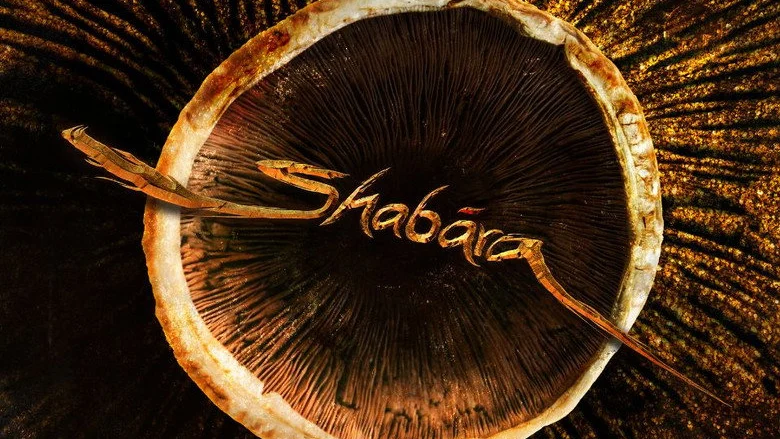
Two eras. One treasure. That’s the whole pitch, and Kilaru Prem Chand’s directorial debut is smart enough to know that a logline this clean is either a promise or a warning. What we have on record for Shabara is essentially a well-cut trailer, a production house, a cast list, and a release date that can’t decide whether it’s October 2 or October 9. Everything else, runtime, antagonist, certificate, screenplay, whether the second half collapses, is a blank the trade hasn’t filled in yet. A critic’s job is to review the evidence, not the ambition, and the evidence here is a mood board with a release schedule attached.
That’s not a dismissal. It’s a caution. The treasure-hunt thriller is Telugu cinema’s most seductive trap: cheap to pitch, expensive to sustain, and almost always defeated by its own middle hour. Shabara arrives with striking imagery from cinematographer Ajay Abraham George, an “electrifying” background score from Midhun Mukundan, and crisp editing, all of it praised specifically in teaser coverage, which is a category of praise that tells you everything about the footage and nothing about the film. For a sense of how this industry’s family dramas tend to hold their shape once the marketing ends, our desk’s take on Avaraachan Sons review is a useful counterweight to the genre spectacle on offer here.
Two Timelines, One Very Familiar Fuse
The structural architecture, as far as it’s been revealed, splits the story across “two eras.” In the past, a forest child dreams of claiming buried gold for himself, a sequence the teaser treats as mythic, almost folkloric, and it’s the most interesting idea in the package. In the present, multiple forces converge on the same treasure while Dheekshith Shetty’s Arjun is dragged into a high-stakes pursuit laced with danger, suspense, and a hinted romance.
That’s a working engine, and it’s a proven one. The dual-era conceit broadens the adventure’s scale without requiring the present-day plot to carry the entire thematic load, the past timeline supplies motive, the present supplies motion. The risk is equally legible: when a film front-loads its mythology into a past strand, the modern strand often becomes a scavenger hunt for exposition, with characters racing toward a reveal the audience has already been shown. Without a confirmed screenplay assessment from any major outlet, we simply don’t know whether Prem Chand Kilaru has solved that problem or inherited it.
The Forest Child And The Convergence: Two Beats That Actually Show Craft
Dissect the two most-discussed sequences and the film’s instincts become clear. First, the past-timeline forest-child beat: a kid in a green world, gold beneath the earth, desire written on a small face. It works because it’s staged as want rather than plot, the child doesn’t explain the treasure, he covets it. The camera and score do the mythologizing, which is precisely how genre openings should operate. If the film can sustain that register, the past timeline is its strongest asset.
Second, the present-day convergence: rival groups closing on the same prize, staged as a tension-heavy chase setup. Here the praise for crisp editing earns its keep, the cut rhythm is doing the work that dialogue would otherwise have to, stitching disparate factions into a single tightening noose. But convergence sequences are also where treasure films most often cheat, substituting cross-cutting energy for actual dramatic consequence. Shetty is positioned as the anchor, described as gritty and determined against rival forces, and the teaser gives him presence. What it can’t give him is a scene partner. No antagonist has been identified in any available source, and a treasure hunt without a face on the other side of the map is a race against scenery.
For a comparison point on how a genre framework can be sturdy and still overstuffed, our review of Bail verdict maps the same fault line from a different genre corner.
The Cast Is A Roster, Not Yet A Performance
This is where the review has to be honest about its own limits. Misha Narang, Mohan Bhagath, Rajeev Govinda Pillai, Kritika Singh, Srikanth, and Master Aarush are all confirmed. Not one of them has a role-specific performance note in any available coverage. That’s not a knock on the actors, it’s a statement about how little the film has actually been shown. A teaser that sells scale and score will always leave the ensemble invisible, and ensemble invisibility is exactly how treasure films end up with a charismatic lead sprinting through a vacuum.
Shetty himself is the one genuine known quantity in the frame. He’s been handed the “gritty, determined” brief, and the teaser supports it visually, but determination is a posture, not an arc. The film needs him to want something specific, lose something real, and pay a price the audience can feel. No source confirms whether Shabara gives him that, and until it does, the anchor is holding a rope into fog.
What The Craft Team Is Actually Bringing
Give credit where the record supports it. Ajay Abraham George’s visuals are repeatedly singled out as striking, the teaser uses image to build pursuit and mystery rather than exposition, which is the correct grammar for this genre. Midhun Mukundan’s score is described as electrifying, and in a chase-and-discovery film, the score isn’t decoration; it’s the engine that tells you when to lean forward. Crisp editing has been praised in the same breath. That’s three departments operating at a level the material may or may not deserve.
Direction is the open question. Prem Chand Kilaru is debuting, and a teaser is the one piece of filmmaking a first-timer can control completely, every frame is chosen, every cut is tested, every beat is calibrated for a two-minute window. Sustaining that control across a full runtime, particularly across two timelines that must eventually braid, is a different discipline entirely. The available sources offer no verified weakness assessment, which is not the same as a clean bill of health. It’s an absence of data.
Verdict: A Promising Blueprint Awaiting A Building
Shabara is, right now, a thesis statement without a body. The premise is commercially sound, the imagery is genuinely strong, the score and edit are doing exactly what they should, and Dheekshith Shetty has the right silhouette for the job. What’s missing is everything a review is actually built from: a climax, a villain, a runtime, a critic consensus, an audience score, a box office number. Even the release date is contested across listings. You cannot grade a film that hasn’t finished introducing itself.
Watch it if you’re a genre devotee who shows up for dual-timeline adventure, buried-gold mythology, and a strong technical package, and who’s willing to gamble that a first-time director can hold two eras together for a full runtime.
Skip it if you need verified word-of-mouth before committing a ticket, or if you’re allergic to treasure hunts that promise mythology and deliver a chase.
Rating: 2.5/5, not a judgment on the film, but on the available evidence. The teaser earns its intrigue. The feature still has to earn the rest. For more of our genre coverage and release tracking, browse Telugu Adventure reviews.

Recommended for You

Vishwanath & Sons (2026): Suriya’s Tender Drama of Duty, Love, and Fatherhood
Sanjay Vishwanath is an international shooter whose world is measured in precise distances and controlled breathing, yet the film finds him helpless…
Beyond Ratings (2026): A 2.3 IMDb Score That Speaks for Itself
Some films arrive with hype, others with hope. Beyond Ratings arrives with an IMDb score of 2.3 from 895 votes, a number…
Unmadham (2026): Kunchacko Boban Anchors A Mystery That Loses Its Grip
Kunchacko Boban walks through the first half of Unmadham with a quiet intensity that suggests something dangerous is coiled beneath the surface.…