Bail (2026): Shiva Rajkumar Anchors A Sturdy But Overstuffed Cop Drama

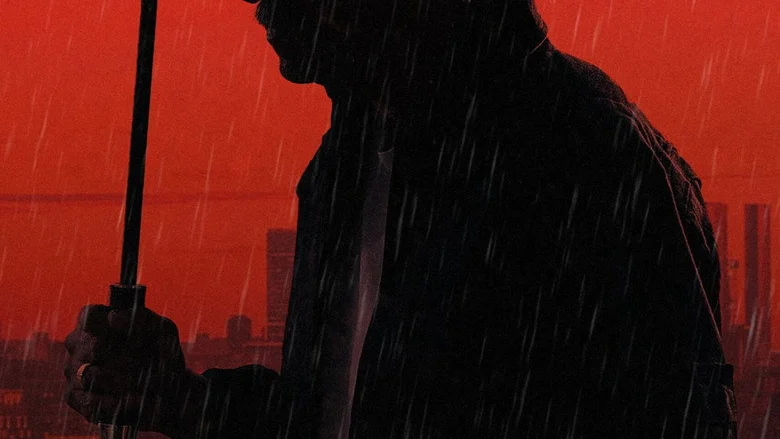
Shiva Rajkumar does not enter Bail so much as he settles into it. The first sustained image of him as retired commissioner Vijay Kumar, a man whose posture still carries the institutional memory of a uniform he no longer wears, arrives with the unhurried gravity of an actor who has spent decades negotiating the space between mass-hero iconography and genuine dramatic restraint. Pawan Wadeyar, directing from his own screenplay, understands what he has. The camera lingers on the creases around Shivanna’s eyes during the early procedural beats, letting the audience read the accumulated fatigue of a man who has watched the system fail from the inside. It is a smart, patient opening gambit.
The trouble is what comes after. Bail wants to be several films simultaneously, a righteous-cop procedural, a family melodrama, a vigilante thriller, a star vehicle, and Wadeyar’s screenplay, while structurally competent, never quite decides which of these impulses should dominate. The result is a film that moves with purpose but without a singular pulse.
When The Law Becomes The Antagonist
The central conceit is sturdy enough: a case that personally affected Vijay stalls in the machinery of legal process, and the retired commissioner steps outside the boundaries of his former office to deliver the justice the system will not. This is well-trodden territory, but it remains fertile ground for Kannada cinema specifically because the genre has historically used the righteous-outsider framework to interrogate institutional rot rather than simply celebrate extrajudicial violence. Wadeyar gestures at that interrogation. He does not fully commit to it.
Consider the film’s most-discussed sequence, the extended introduction of Vijay in his official capacity, a set piece that trade coverage consistently identified as the film’s strongest pre-release selling point. The staging is deliberate: Wadeyar blocks Shivanna in medium-wide shots that emphasise his physical stillness against the chaotic movement of junior officers around him. The sound design strips away the ambient noise of the station during his dialogue, isolating his voice in a way that signals authority without resorting to the bombast that lesser star vehicles might deploy. It is a genuinely well-constructed piece of commercial filmmaking, and it demonstrates that Wadeyar has absorbed the visual grammar of the best American procedural dramas without simply imitating them.
But the scene also reveals the film’s central problem. Vijay is defined entirely by his relationship to institutional power, first as its servant, then as its exile. The script never gives us a convincing portrait of who he is when the khaki comes off. His family life, his personal relationships, his interiority outside the case: these remain sketched rather than drawn. When the film asks us to invest in his moral crisis, it is asking us to invest in an archetype rather than a person.
The Ensemble Problem: Too Many Names, Too Few Characters
Wadeyar has assembled an unusually deep bench. Jayaram, Saikumar, Dheekshith Shetty, Sangeetha Krish, Loose Mada Yogi, the cast list reads like a roll call of Kannada cinema’s dependable supporting class. And yet, with the exception of Shivanna’s central performance, almost none of these performers are given material that allows them to register as more than functional presences. Jayaram’s role, in particular, feels like a significant waste of a genuinely gifted actor; he appears in scenes that require him to react rather than act, to support rather than shape.
This is where the overstuffing becomes most apparent. The Times of India headline describing the film as “a commercial crime drama that packs in a little of everything” is not merely a throwaway phrase, it is a diagnosis. Wadeyar seems unwilling to trust that his central story is sufficient, so he layers in subplots, red herrings, emotional beats, and action set pieces that individually work but collectively dilute. The middle section, in particular, sags under the weight of narrative obligations that the film never fully integrates. Compare this to the more disciplined approach taken in Thella Kaagitham review, where a similarly ambitious genre mix is held together by a clearer sense of whose story is being told.
Craft Above The Material
What elevates Bail above its structural limitations is the technical execution. Cinematographer Vaidy S. Pillai, whose work trade coverage specifically singled out for its “striking visuals, ” brings a textured, shadow-heavy palette to the proceedings that gives the film a visual coherence its script sometimes lacks. The night-time exteriors, in particular, are shot with a sensitivity to available light that recalls the best of 1970s American crime cinema, long lenses, deep focus, faces half-swallowed by darkness. B. Ajaneesh Loknath’s score, while occasionally over-insistent, knows when to recede and let the images breathe.
Wadeyar’s direction is most confident in the action sequences. He favours long takes over rapid cutting, allowing the choreography to register spatially rather than as a blur of motion. The trailer’s police-action montage, which trade coverage described as building “a gritty world of police action, conflict, justice, and emotional confrontations, ” translates into a film that understands how to stage violence as consequence rather than spectacle. There is a sequence in the second half, a confrontation in a confined space that I will not spoil, where Wadeyar’s control of pacing and spatial geography is genuinely impressive. It is the moment where the film briefly becomes the tight, propulsive thriller it could have been throughout.
The Villain Vacuum
One of the film’s more curious choices is its refusal to personify its antagonist. The sources describe the antagonistic force only in abstract terms, “the case, ” “the conflict, ” “the troubled world surrounding Vijay.” This is not inherently a flaw; some of the best crime dramas operate on the principle that systems, not individuals, are the true villains. But Bail does not commit to that thesis either. It gestures toward institutional critique while also delivering a conventional star-vehicle climax that requires a physical confrontation with a tangible enemy. The result is a film caught between two modes, never fully satisfying either.
This ambivalence extends to the film’s treatment of violence. The official synopsis, “After a long wait for justice in a case that affected him personally, retired commissioner Vijay Kumar becomes an outlaw who serves justice”, promises a morally complex examination of what happens when law and justice diverge. What the film delivers is more conventional: a righteous man does righteous violence against a world that has failed him. There is nothing wrong with that story, but it is not the story the film’s marketing and early framing suggested. For another perspective on how high-concept premises can test audience patience, see our review of Baththa verdict.
Shiva Rajkumar’s Quiet Authority
None of this is Shivanna’s fault. His performance is the film’s most consistent asset, a study in controlled intensity that never tips into the self-parody that threatens any actor who has worn the khaki as many times as he has. The “Happy Birthday Daredevil” tagline that accompanied the release-date announcement captures something essential about his screen presence here: he is dangerous, but he is also disciplined. The anger is real, but it is contained. When he finally allows that containment to break, and the film wisely saves this for the third act, the effect is earned rather than explosive.
The problem is that the film around him does not always trust that performance to carry the weight. Wadeyar keeps adding elements, subplots, supporting characters, thematic digressions, as if worried that Shivanna’s stillness alone cannot sustain a two-hour-and-thirty-eight-minute runtime. It can. The best moments in Bail are the quietest ones: Vijay alone in a room, Vijay staring at a photograph, Vijay listening to someone explain a situation he already understands. These are the moments where the film briefly becomes the character study it should have been.
Verdict: A Solid Star Vehicle That Wants To Be More
Bail is not a bad film. It is a frustrating one, a project with genuine craft, a committed central performance, and a clear thematic ambition that never quite coheres into the sum of its parts. Wadeyar’s direction is assured, Pillai’s cinematography is genuinely striking, and Shivanna delivers exactly the kind of grounded, authoritative work that his fans will appreciate. But the screenplay’s inability to decide what kind of film it wants to be leaves Bail feeling longer than its runtime and less impactful than its best scenes suggest it could have been.
For Shiva Rajkumar devotees and audiences who enjoy commercial Kannada crime dramas with a strong central performance, Bail delivers enough to justify a theatrical ticket. Those seeking the tight, morally complex thriller the premise promises, or the kind of restrained character study that Kannada Thriller reviews has championed elsewhere, may find themselves wishing Wadeyar had trusted his star, and his story, a little more.
Rating: 3/5

Recommended for You
Mollywood Times (2026): Naslen’s Meta-Cinematic Coming-of-Age Gambit
A teenager asks his father for a video camera, then gathers friends to shoot a horror short that will live forever in…

Itlu Kanmani (2026): A Telugu romance that trusts its actors to carry the weight
Paruchuri Venu, known for his controlled performances, brings a quiet dignity to the lead role. He lets the camera catch his reactions…

Vishnu Vinyasam (2026): A Comedy That Laughs at Its Own Emptiness
A superstitious junior lecturer falls hard for his HOD, only to discover a flaw in her Jathakam that threatens everything, it’s a…