Lambodhara 2.0 (2026): Kunal Kapoor’s Kannada Debut Is a Cold Algorithm With a Warm Heartbeat Missing

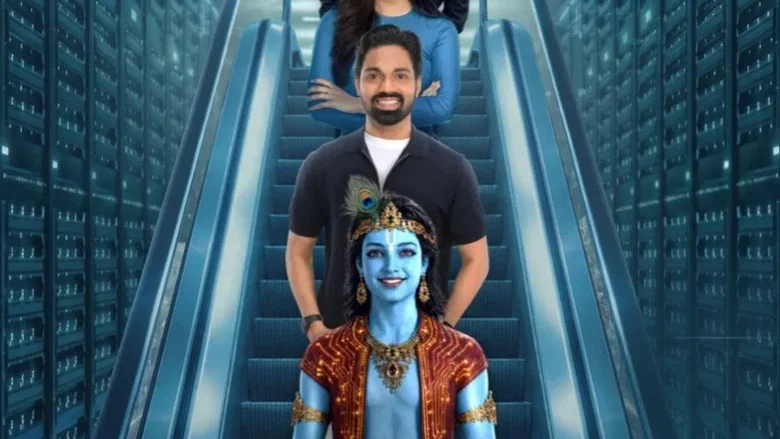
The premise lands like a diagnostic readout: a society that quantifies happiness, and a rogue hacker who refuses the verdict. Somewhere inside that elegant machine, a movie is fighting to breathe.
When A Hacker Becomes The Only Human In The Room
The opening movement establishes its dystopia through measurement, not spectacle, happiness rendered as a dashboard metric, emotional life reduced to a predictable curve. It is a quietly unnerving idea, closer to a civic audit than a sci-fi showpiece.
Our protagonist enters as an irritant in the system rather than a traditional hero, and the film’s early tension comes from watching an analogue man navigate a world that has already decided what he should feel.
The central conflict is clean: algorithmic governance versus the messy sovereignty of choice. What the screenplay struggles with is dramatizing that conflict beyond its own thesis statement.
The Middle Act Mistakes Escalation For Drama
As the hacker’s entanglement widens, the film shifts from intimate friction to systemic confrontation, and the seams begin to show. The escalation is structural rather than emotional, more territory covered, less ground gained.
There is a distinct absence of a human antagonist; the opposition remains conceptual, a control system rather than a face across a table. That choice is intellectually defensible and dramatically enervating.
Without a body to push against, the second act leans on procedural momentum, and the film’s ideas start repeating themselves in different jackets. The tension plateaus precisely where it should tighten.
The comparative discipline of a leaner genre exercise like Mr. Lucky is instructive here, that film understood that a high concept lives or dies on its willingness to stay uncomfortable.
Kunal Kapoor Carries The Weight, But The Room Is Empty
Kunal Kapoor anchors the film with a controlled, inward physicality, shoulders squared against the system, eyes doing the work his dialogue often cannot. His stillness in the quieter confrontations is the film’s most persuasive argument.
It is a performance of restraint in a film that could have used one more gear of volatility. The Black Gold register of coiled, physical menace is precisely the voltage this protagonist never quite reaches.
The supporting ensemble, including Saachi Bindra and Meghana Gaonkar, is given little scene-level function beyond moving the plot’s machinery forward. They register as faces in the system rather than people with stakes in its collapse.
When a film’s emotional core rests entirely on one performer’s internal weather, the surrounding architecture needs to apply pressure. Here, the architecture mostly observes.
Directional Precision Without A Pulse
The visual grammar is clean and deliberately clinical, cool palettes, symmetrical framing, a camera that watches rather than intrudes. It suits the surveillance logic of the premise, but it also keeps the audience at arm’s length.
Where a certain spatial discipline was tightened in Titanic, this film’s formal control sometimes reads as distance rather than tension. The craft is legible; the ache is not.
The editing keeps a steady rhythm across the two-hour-plus runtime, but the second half lacks the escalation that would justify its length. Silence and score are deployed competently, yet neither is allowed to genuinely unsettle.
What the film needs is one sequence where the system’s logic visibly breaks a person in front of us, a moment of raw consequence that the cool surfaces refuse to permit.
The Box Office Question The Studio Cannot Dodge
Presented under the Mahaveer Jain Films banner and positioned as a Kannada-Hindi bilingual, the film is making a calculated bet on crossover appetite for speculative social thrillers. That is a real market, but a demanding one.
Kapoor’s Kannada debut gives the release a curiosity hook, though the unresolved director-credit chatter around the project has muddied its public identity before opening weekend. Confusion is expensive in a crowded exhibition calendar.
The broader appetite for contemporary Kannada thrillers is genuine, but the sector’s commercial ceiling rewards films that deliver visceral payoff alongside their ideas. This one leans hard on the ideas.
A Cold Thesis Where A Fever Was Needed
The film’s final statement, that autonomy must be defended even when the algorithm promises contentment, is coherent and worth making. It simply arrives without the bruising that would make it land in the body rather than the head.
Lambodhara 2.0 is a smart film that trusts its premise more than its people, and the asymmetry shows. It asks whether we can still choose; it never quite makes us feel the cost of that choice.
You leave the theater thinking about the question, not the characters who asked it, which, for a story about the danger of reducing humans to data points, is an irony the film never intended.
Explore Cinema Hubs

Recommended for You

Idhayam Murali (2026): Aakash Baskaran risks monotony in a romance of missed chances
It is a framing device that promises self-awareness, but the film soon settles into a rhythm of repetition that threatens to dull…

Hai Jawani Toh Ishq Hona Hai (2026): A Farce That Runs on Charm, Not Logic
In the opening courtroom scene, Jass sits across from his wife Baani as a judge listens to her complain that her husband…

Titanic (2026): Kalaiyarasan & Anandhi in a Decade-Delayed Rom-Com That Tests Patience
A Tamil romantic comedy titled Titanic arrives a full decade after it first entered production, carrying the weight of four postponements and…