Mr. Lucky (2026): Raam Tej’s High-Concept Kannada Fantasy Thriller Runs on a Shoestring and a Prayer

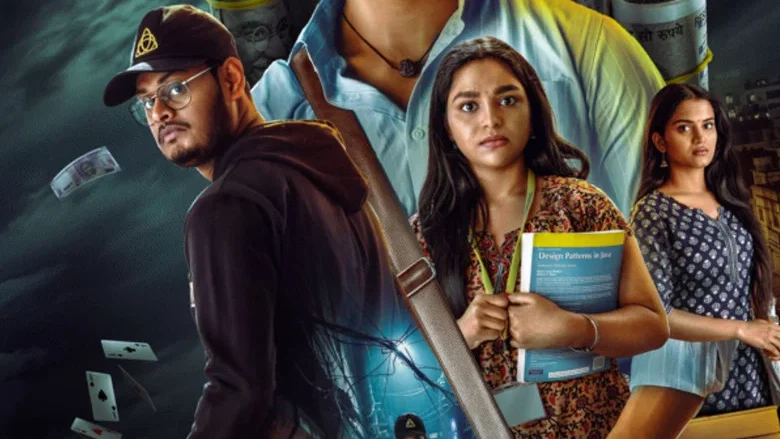
A mysterious cap lands on the head of an unlucky IT professional, and a two-hour fantasy thriller is born. Harshith Rangaswamy’s shoestring Kannada gamble asks whether a single prop can carry an entire film’s wish-fulfilment and threat.
A Nickname That Curdles Before the First Reversal
Lakshman is called Lucky with the flat, habitual cruelty that office floors perfect. Raam Tej plays the early scenes with a slouch so practiced it reads as muscle memory, shoulders rounded against a life that keeps shortchanging him.
The film’s opening stretch treats misfortune as a daily grind rather than a comic catastrophe. There is no orchestral pity here, only the quiet humiliation of a man who has stopped expecting the day to go his way.
The Cap Arrives, and the Screenplay Starts Spending Its Credit
When the cap enters, the film’s engine ignites instantly. Good fortune begins arriving in small, suspicious increments, and Rangaswamy shoots the shift with a deliberate lightness that feels almost too smooth.
This is where the premise shows its intelligence. Luck becomes a physical object with rules, and every benefit visibly writes a debt the screenplay will later have to collect.
The structural discipline echoes the tighter spatial control Rangaswamy’s contemporaries showed in Manduka, though here the device is worn on the head rather than buried in a case file.
Raam Tej Switches Registers, and the Film Finds Its Pulse
The performance’s pivot is physical. Tej straightens his spine, lifts his chin, and lets his eyes go flat with a confidence that is not quite earned, and that unease is the whole point.
He plays the newly fortunate man as someone auditioning for a better life. There is a tremor under the swagger, a sense that Lakshman knows the cap’s generosity is a loan, not a gift.
That register shift recalls the fractured identity work Jyothi Poorvaj carried through KillR, where a single self had to split into competing versions. Tej’s split is quieter, but the strain reads.
When the Hero and Villain Share One Brim
The cap is the film’s antagonistic force, and Rangaswamy stages its menace through proximity rather than spectacle. It sits on the head, always in frame, always waiting to be used again.
Consequences arrive as small, escalating costs rather than a single villainous confrontation. That choice gives the thriller its dread, but it also leaves the middle act without a face to push against.
A human antagonist never materializes with enough weight to match the object’s pull. The supporting cast, including Rithi Shetty and Srinidhi Bengaluru, orbits Lakshman without generating the friction a thriller needs.
A Sixteen-Day Shoot Shows Its Seams
Rangaswamy’s compressed schedule is a documented fact, and the film’s coverage reflects it. Dialogue scenes lean on static framing and simple two-shots, with little visual variation to mark the psychological turn.
The score does its best to separate good fortune from impending danger, but without a distinctive musical motif the shift often lands as a tonal guess rather than a designed cue.
The climax arrives with more narrative obligation than visceral force. The film knows what the cap costs, but the staging rarely makes the audience feel that cost in their chest.
Comparisons to sturdier Kannada genre work like Bail are instructive: that film had a larger canvas to absorb its excesses, while this one has nowhere to hide.
The Commercial Math of a One-Prop Gamble
With no verified production banner or budget figure in the public trade record, the film’s commercial risk sits entirely on its theatrical opening. A limited Kannada release without star-scale marketing is a narrow window.
Raam Tej’s box-office leverage remains unproven at this scale, and the cap premise, however clever, is not the kind of hook that sells tickets on a poster alone.
The broader independent filmmaking wave across contemporary Kannada thrillers has produced lean, idea-driven films before, but the ones that break out tend to pair a strong concept with at least one unmistakable set piece.
A Concept That Deserves a Second Draft
Mr. Lucky is a film built on a genuinely good idea, executed with more conviction than craft. The cap works as metaphor, mechanism, and threat, and Raam Tej’s performance gives the film a pulse it otherwise struggles to sustain.
What it lacks is the pressure a thriller needs: a rival, a clock, or a visual language that makes the cap’s cost feel like a wound rather than a plot point.
Rangaswamy has the instincts of a storyteller and the budget of a first-timer. The film’s final image lingers on the cap’s quiet presence, and that is the right note: luck is never a gift, only a deferral of the bill.
Explore Cinema Hubs

Recommended for You
The Odyssey (2026): Matt Damon s lifts key stretches, not the full runtime
Matt Damon’s Odysseus does not roar. He broods. In the opening stretch, he leaves Ithaca not as a victorious general but as…
Chand Mera Dil (2026): Ananya Panday Anchors College Romance Into Adult Reckoning
Aarav steps into engineering college in Hyderabad and locks eyes with Chandni almost immediately, a moment of pure student-life attraction that feels…
Sanjeev (2026): Anil Nakka’s One-Man Gamble on Grit and Grief
There is a particular kind of tension that arrives when a filmmaker steps in front of his own camera, and Anil Nakka’s…