Ustaad Bhagat Singh (2026): Pawan Kalyan’s Masala Machine Runs On Fumes

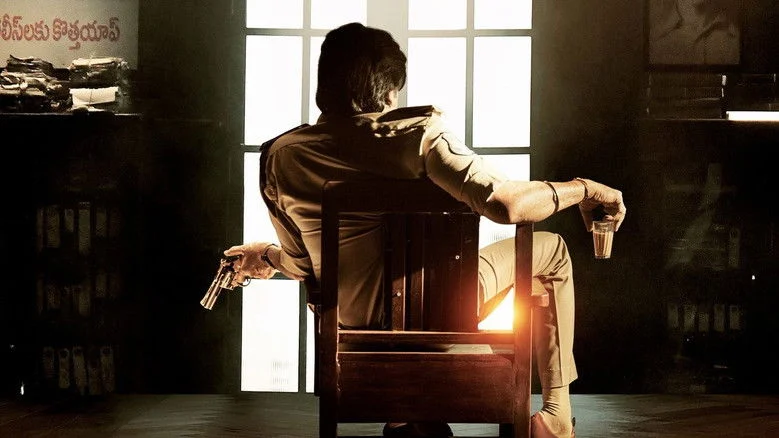
Pawan Kalyan, director Harish Shankar, and a two-and-a-half-hour runtime walk into a Telugu action film, and what emerges is exactly the kind of loud, crowded, commercially wired entertainer that Tollywood has perfected and occasionally exhausted. The combination of these names carries considerable weight, but weight alone does not guarantee momentum.
Pawan Kalyan Commands the Screen, Even When the Script Lets Him Down
Pawan Kalyan playing a character named Bhagat Singh is a casting choice loaded with expectation. He brings his signature physicality and screen authority to the role, and that presence is never in question.
What is in question is whether the material gives him enough to do beyond posturing and punchlines. I find myself respecting the star more than the film built around him.

Harish Shankar Knows the Grammar But Forgets the Sentence
Harish Shankar has consistently delivered high-energy populist cinema, and his instinct for crowd-pleasing rhythm is visible here. The film moves with purpose in its opening stretches, building a familiar but functional masala world.
The screenplay, credited to six writers including Shankar himself, is the film’s most visible liability. Six voices in a room rarely produce one clear vision, and the narrative seams show throughout the second half.
The direction handles individual scenes competently, but the connective tissue between them feels borrowed and occasionally inert. A tighter script would have made this a significantly different film.
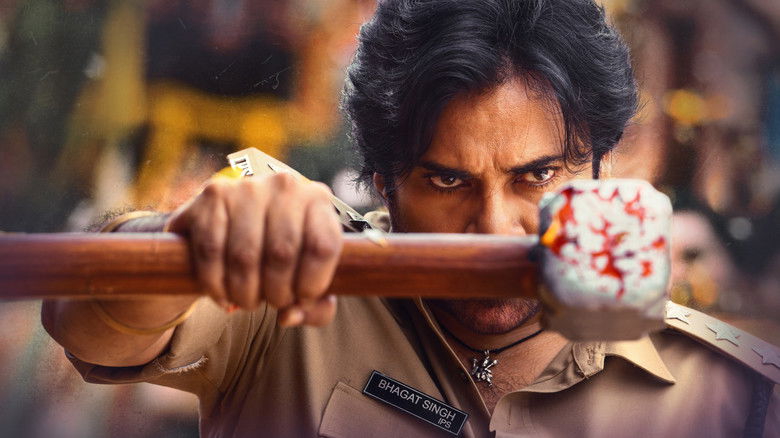
The Action Is Loud, Frequent, and Seldom Surprising
For a primary action film from Mythri Movie Makers, the setpiece ambition is understandable. The production infrastructure is clearly present, scale, stunt choreography, and the visual grammar of commercial Telugu action are all accounted for.
What the film lacks is spatial clarity in its brawls. When action sequences blur into overlapping chaos, the geography of who is hitting whom and why gets swallowed by noise and editing rhythm.
The comedy woven into the action, a Harish Shankar hallmark, lands unevenly. Some beats read as genuine wit, others as obligation. The drama, meant to anchor the spectacle, rarely earns its emotional moments through the script alone.
If you enjoy reviewing Telugu action cinema across its many registers, Telugu Drama reviews on this site cover the full spectrum from blockbusters to overlooked gems worth your time.
Sreeleela, Raashi Khanna, Ashutosh Rana, A Capable Bench Used Sparingly
Sreeleela’s presence in any Telugu film guarantees at least one sequence worth watching. Her energy is kinetic and she commands the frame naturally, though the film seems content to deploy her as spectacle rather than character.
Raashi Khanna as Shloka brings warmth to what the script allows her, but her role feels underwritten relative to her ability. Ashutosh Rana, reliable as ever in antagonist or authority roles, gives the film its sharpest adult energy whenever he appears.
Without Controversy, the Film Speaks Through Its Audience
There are no notable political controversies or censorship disputes attached to this release. What the film has instead is the weight of expectation that comes with a Pawan Kalyan vehicle in 2026, a star whose mass following remains one of Telugu cinema’s most passionate constituencies.
That constituency will likely absorb the film’s excesses with generosity. Audiences less invested in the star’s persona may find the runtime generous in the wrong places. The Mythri Movie Makers banner ensures technical polish, but polish is not the same as purpose.
If the gap between star power and script quality in big-budget actioners frustrates you, the same dynamic is worth examining in Dhurandhar The review, where a different kind of misfire plays out.
Ustaad Bhagat Singh is a film that works harder at being an event than at being a story. Pawan Kalyan’s fans will find enough to cheer, and Harish Shankar delivers intermittent flashes of the entertainer he clearly intended to make. Watch it in a theatre if the star means something to you, the big screen at least gives the noise somewhere to go.
Ustaad Bhagat Singh earns a cautious 2.5 out of 5, a film that has the right people and the wrong blueprint, worth one viewing for the star’s gravity alone, not for anything the screenplay builds around it.
For another comedy-drama that wrestles with the burden of legacy and audience expectation, the Aadu 3 verdict raises similar questions about returning franchises and whether nostalgia is enough.

Recommended for You

Soulmates – Oru Saathukkudi Pranayam (2026): Nivin Pauly Anchors Meta-Romance That Plays Too Safe
Joel Davis walks into the frame of a film that is not quite his own, pitching a short film about a mosambi,…
Mollywood Times (2026): Naslen’s Meta-Cinematic Coming-of-Age Gambit
A teenager asks his father for a video camera, then gathers friends to shoot a horror short that will live forever in…
Governor (2026): Manoj Bajpayee Anchors Nation’s Economic Reckoning
India teeters on bankruptcy’s edge as fuel shortages spread panic and inflation devours the economy whole. A reluctant bureaucrat named A. Ramanan…