Kidney (2026): Aakarsh and Agrim Sansanwal’s Festival Darling Risks Too Much on Silence

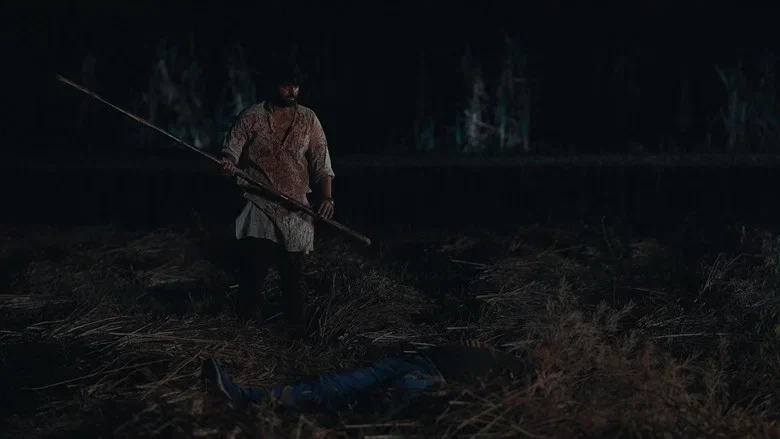
The opening night crowd at the Tallinn Black Nights Critics’ Picks screening settled in expecting a rural Hindi black comedy about an inheritance war. What they got was something far more withdrawn, a film that keeps its lovers at arm’s length and dares you to lean in.
An Inheritance Feud That Eats Its Own Romance
Two young people from rival village families fall in love. Then a quarrel over property drags the old hostility back into the open, and their private bond becomes collateral damage in a public war.
That premise is sturdy, almost classical, and the Sansanwal brothers stage it with an isolation that feels deliberate. The village is not a backdrop here so much as a pressure vessel, every courtyard, every threshold, every shared well becomes a site where family loyalty is audited in front of witnesses.
What the film resists is the obvious. It does not turn the inheritance dispute into a courtroom procedural, nor does it let the lovers become martyrs for a message. Instead, greed and betrayal operate as ambient weather, soaking into conversations that begin as pleasantries and end as threats.
When The Lovers Are The Least Interesting People In The Room
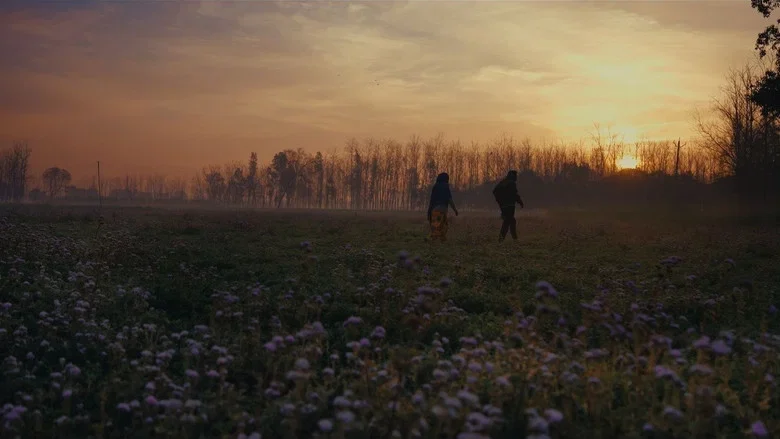
Here is the risk the directors take, and it does not fully pay off. The central couple, played by Rudrashish Majumdar and Simran Tandon, is written as a still point in a spinning world, which means they spend long stretches reacting rather than acting.
Majumdar has a watchful, guarded physicality that suits a man raised to keep secrets. His stillness works in the early scenes, when the romance is a conspiracy of glances across a courtyard.
But the screenplay never gives him a moment of real rupture, no scene where the inherited hostility cracks his composure in a way that changes the room.
Tandon fares slightly better in the quieter registers, particularly in a sequence where she listens to a family elder’s grievance and her face registers three separate calculations before she speaks.
The supporting ensemble is a different matter. Nitin Kumar Singh and Prabhat Mishra appear as village men whose loyalties shift with the inheritance arithmetic, and they bring a lived-in texture to their scenes.
Yet the film uses them as atmosphere rather than architecture. They enter, they mutter, they exit, and the audience is left to infer their stakes from costume and posture rather than from anything the script gives them to do.
The Black Comedy That Forgets To Bite
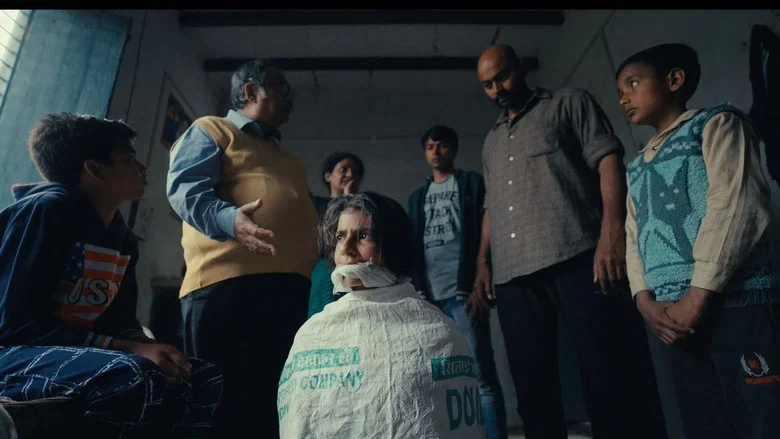
Trade coverage has labeled this a black comedy, and the festival placement suggests a filmmaker with a taste for moral absurdity. The film gestures at that register, a funeral where the will is read before the body is cold, a negotiation conducted over a meal that nobody eats.
These are promising beats. But the comedy is played so dryly that it often reads as mere awkwardness, and the film’s refusal to push into genuine cruelty leaves the satire toothless.
Compare the tonal discipline on display in Dark Chocolate, where the filmmakers understood that black comedy requires a willingness to let the audience laugh at something they will later feel guilty about. Kidney keeps its hands clean, and the result is a film that observes greed without ever tasting it.
The theatrical landscape has been kinder to films that commit to their ugliness. The moral fallout in this film’s final act echoes the unresolved tension analyzed in Saheb Bhai ki khoi Redmi, but where that film let its characters drown in their own compromises, this one pulls back just as the water reaches the chin.
Faces In Doorways, Silence In Rooms
The Sansanwals have an eye for spatial politics. The lovers are almost never framed in open space; they meet in doorways, behind grain sacks, at the edges of courtyards where the family gaze cannot quite reach.
That visual grammar is the film’s most articulate argument. The camera keeps its distance during confrontations, holding wide enough that the audience must read the room rather than the faces.
Shray Saxena’s score is used sparingly, sometimes to the point of absence. In the inheritance quarrel that ignites the second act, there is no music at all, just the sound of a man’s hand slapping a wooden table and the sudden quiet that follows.
That quiet is the film’s best special effect. It is also its most overused one, deployed so often that the silences begin to feel like a tic rather than a choice.
The Performance That Almost Breaks The Film Open
There is one sequence, roughly two-thirds through, where the film briefly becomes the movie it could have been. A village elder, played with unnerving calm by one of the supporting performers, explains the history of the feud to the young couple, and the camera stays on his hands rather than his face.
Those hands do more acting than most of the dialogue. They fold, unfold, and finally rest on a walking stick with the finality of a judge’s gavel.
It is a reminder that this cast is capable of far more than the script asks of them. The restraint that Majumdar brings to his final confrontation recalls the psychological weight of the turn in Lambodhara 2.0, but where that performance found a pulse beneath the coldness, this one too often settles for surface composure.
A Studio Bet On Festival Prestige Over Star Power
Enfant Terrible Productions, the banner founded by the Sansanwal brothers, is making a calculated wager here. Platoon One Films joined as co-producer before the Tallinn screening, and that timing tells you everything about the release strategy.
This is a film built for the festival circuit first and the Indian multiplex second. The absence of a star anchor is not an accident; it is an economic position.
The question is whether that position can sustain a theatrical release in a market that rewards familiarity. The film’s closest commercial cousins are the mid-budget rural dramas that have found audiences through word of mouth rather than opening-weekend muscle.
Whether Kidney can generate that kind of slow burn depends on whether audiences are willing to meet it on its own terms. This patient, withholding approach signals a broader appetite for character-driven storytelling across contemporary Hindi dramas, but patience is a luxury that exhibitors rarely extend.
The Ending That Refuses To Resolve
Without spoiling the final movement, it is fair to say that the film’s resolution is less a climax than a suspension. The inheritance dispute reaches a kind of conclusion, but the emotional cost is left hanging in the air like dust after a cart has passed.
That choice is defensible in theory. In practice, it leaves the audience with a question the film has not earned the right to ask: what was all this silence for?
The lovers survive their families, but they do not survive the film’s reluctance to let them feel anything fully. By the final shot, the village has swallowed them, and the camera watches from a distance that feels less like restraint and more like indifference.
Kidney is a film of considerable craft and insufficient conviction. It knows how to build a pressure vessel, but it forgets that pressure needs a release valve, and that the audience, sitting in the dark, has been waiting for one all along.
Explore Cinema Hubs

Recommended for You
Main Vaapas Aaunga (2026): Imtiaz Ali’s Partition Romance Weaves Memory and Melancholy
A 95-year-old man on a deathbed in Chandigarh fixes his gaze on a map of Sargodha and whispers, “Main vaapas aaunga.” The…
Prahaar (2026): Rajkummar Rao’s Controlled Prosecutor vs. A Courtroom That Won’t Hold Still
The single chargesheet lands on the judge’s desk like a closing fist, and for one clean moment the chaos of 26/11 has…
Vibe (2026): Kunal Khemu’s Spy Caper Is a Great First Half Trapped in a Bloated Second
Somewhere around the ninety-minute mark of Vibe, a Bangkok corridor fills with the sound of two grown men bickering over a wire…