Prahaar (2026): Rajkummar Rao’s Controlled Prosecutor vs. A Courtroom That Won’t Hold Still

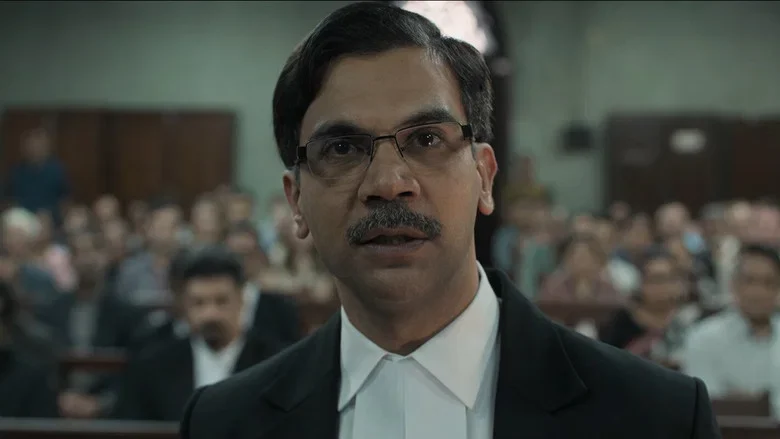
The single chargesheet lands on the judge’s desk like a closing fist, and for one clean moment the chaos of 26/11 has a shape. Avinash Arun’s film knows that paperwork, not gunfire, is where this war gets won.
A Prosecutor Who Wins By Not Raising His Voice
Rajkummar Rao plays Ujjwal Nikam as a man who has traded volume for velocity. His authority lives in the pause before an objection, in the way he keeps both palms flat on the desk while Kasab’s denials fill the room.
Watch the middle stretch, where he absorbs contradiction after contradiction without breaking procedural stride. It is a performance built on withholding, and it mostly works, until the accent drifts back toward Rao’s familiar cadence mid-argument and the illusion cracks.
That slippage matters because the entire architecture rests on his consistency. Where he once found a man negotiating duty against conscience in a messier romantic register, here the register is narrower and less forgiving of a wobble.
Kasab As A Defendant, Not A Spectacle
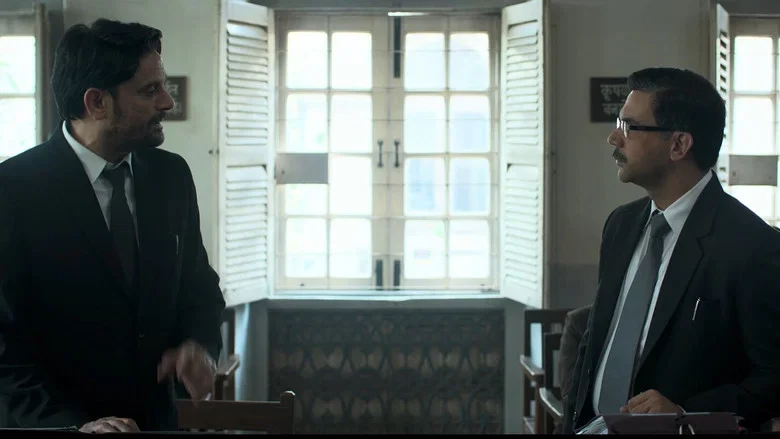
Lalit Prabhakar refuses the obvious trap. His Kasab denies, adjusts, and contests rather than glowers, generating dread through instability instead of menace.
The courtroom becomes a credibility machine. Every time the defence fractures the evidentiary chain, the film tightens rather than inflates, a discipline that peers like a recent comic misfire could learn from.
Sikandar Kher gives Qureshi a grounded adversarial weight, so the prosecution never gets a free swing. Jaideep Ahlawat’s Nazzar, brief as it is, weaponises a Sahir Ludhianvi line into something closer to ideology than evidence.
The Personal Track That Never Earns Its Screen Time
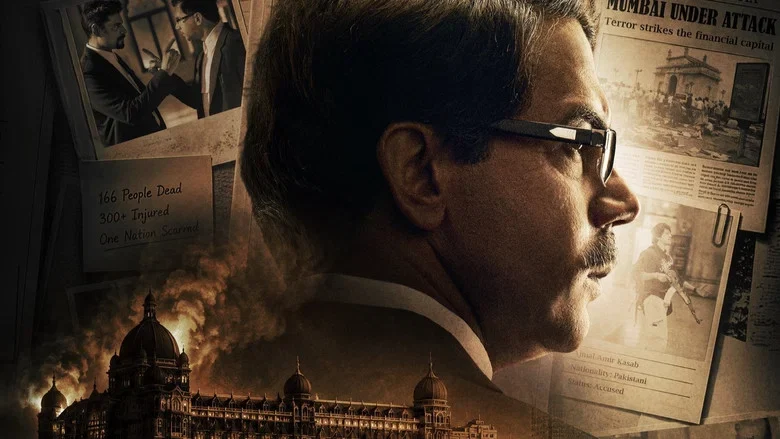
Wamiqa Gabbi is handed a role, not a character. She grounds her scenes with a quiet stillness, but the screenplay keeps cutting away before the material can breathe.
This is where the film’s balance tips. The prosecution-versus-defence engine hums; the domestic counterpoint sputters, and the emotional cost of the case never lands with the force the verdict demands.
It’s a structural imbalance that echoes the unresolved tensions of Kalpana Aur Yatharth, except here the blurring isn’t intentional, it’s neglect.
Procedure As Suspense, And The Cost Of Exposition
Avinash Arun keeps the camera close to faces and legal documents, letting testimony do the work of action. The mid-budget craft is genuinely impressive, lighting that flattens the courtroom into institutional grey, framing that traps Nikam and Kasab in the same unbroken eyeline.
The cost is a second half that leans hard on legal exposition. Momentum depends on successive objections and rebuttals, which works when the writing is sharp and sags when it isn’t.
This patient, procedure-first approach is part of a broader shift across contemporary hindi dramas, where institutional conflict is starting to replace manufactured plot theatrics.
What Maddock Is Betting On, And Why It’s Risky
Dinesh Vijan’s Maddock Films is staking a mid-budget prestige play on a known national wound. The commercial logic is clear: Rao’s box-office leverage plus a landmark trial equals a theatrical event for mature audiences.
But the courtroom-biopic pipeline is crowded, and the film’s refusal to broaden beyond 26/11 limits its reach. The postponed August date suggests the studio knew the calendar was hostile.
Whether Maddock’s gamble pays depends on whether audiences want procedure over catharsis. On this evidence, the film bets everything on the former.
The Verdict: Justice As Discipline, Not Revenge
The conviction lands not as triumph but as exhaustion, the system grinding toward an inevitable end. Nikam’s win is institutional, and the film refuses to dress it as personal victory.
That restraint is both Prahaar’s integrity and its ceiling. It is a rigorously performed, technically assured courtroom drama that never quite earns the emotional weight it keeps reaching for.
Rao holds the centre with a stillness that will be studied; everything around him is either sharp or thin, rarely both. The film ends where it began, with a document, a signature, and the quiet cost of getting it right.

Recommended for You

Sarvagunn Sampann (2026): Vaani Kapoor’s Identity Comedy Is a Curious Oddity
The teaser’s defining image is unmistakable: Vaani Kapoor split across two looks, one demure and one dangerously close to a public fantasy,…
Enna Vilai (2026): A Fisherman, a Gold Pendant, and the Quiet Machinery of Injustice
The first image that sells Enna Vilai is almost insultingly simple: a coin sinking through green water, caught between a devotee’s fingers…
Karuppu (2026): Suriya’s Courtroom Divinity Shines, Fantasy Falters
A lawyer with divine origins descends into a corrupt courtroom to defend a powerless father and his ailing daughter, armed with immortal…