Vibe (2026): Kunal Khemu’s Spy Caper Is a Great First Half Trapped in a Bloated Second

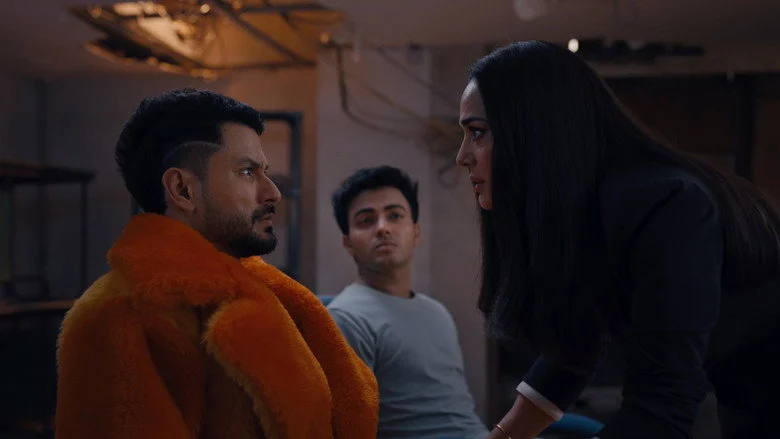
Somewhere around the ninety-minute mark of Vibe, a Bangkok corridor fills with the sound of two grown men bickering over a wire transfer while a terrorist cell quietly assembles a plot in the adjacent room. The camera keeps cutting back to the bickering. The terrorists keep waiting. By the third cut, you realise you are watching the exact moment a promising comedy decides it wants to be a thriller, and loses its nerve on both fronts.
That tonal wobble defines Kunal Khemu’s sophomore feature, a 145-minute action-comedy that opens with the looseness of a filmmaker who has figured out what he’s good at, then spends its back half auditioning for a genre it doesn’t understand.
The Setup: A Slacker, a Sidekick, and a Conspiracy Nobody Earned
Khemu casts himself as Hardik, a man fresh out of rehab and immediately into trouble, tagging along with his friend Bugs (Sparsh Shrivastava) at a tech company. Within twenty minutes, Hardik has pursued intern Kareena (Vanshika Dhir, in a genuinely confident debut), botched a date, and stumbled into a conspiracy that eventually lands both men in the orbit of intelligence operative Madam H (Preity Zinta).
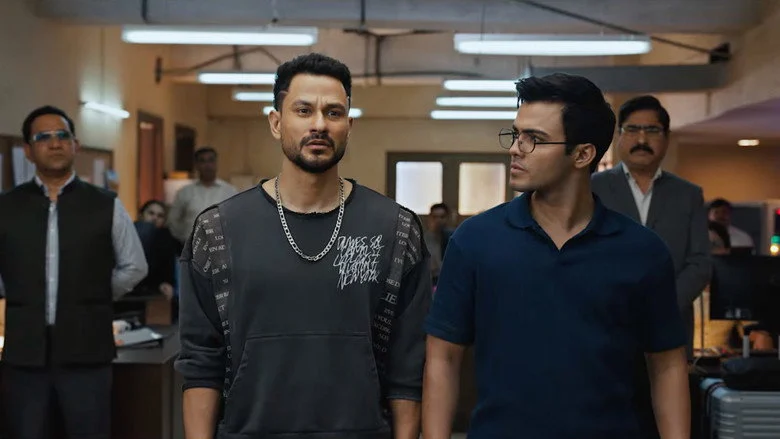
The first act works because Khemu resists the urge to explain himself. Hardik’s name-based jokes land not because they’re clever but because Khemu commits to the bit with the shamelessness of a man who knows the audience came for exactly this. The company recruitment sequence, Hardik wandering through cubicles like a tourist in a country he has no visa for, establishes the film’s central engine: unqualified people in rooms they shouldn’t be in.
It’s a premise with genuine comic potential, and for roughly seventy minutes, Vibe cashes it in.
Where the Film Actually Works: Bugs, Madam H, and the Art of the Foil
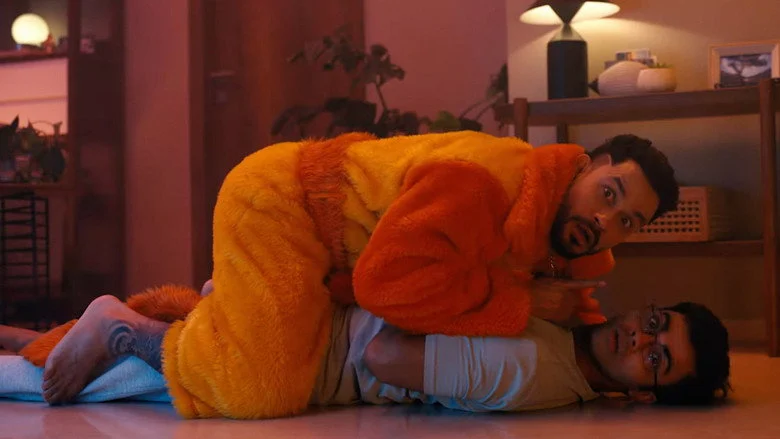
The most praised element of Vibe, and deservedly so, is the interplay between Hardik and Bugs. Sparsh Shrivastava plays the straight man with a precision that makes Khemu’s buffoonery legible. Watch the mission briefing scene: Bugs takes notes. Hardik asks whether the target’s name is a pun. Bugs closes his eyes. Hardik asks again. The rhythm here isn’t accidental; it’s the product of two performers who understand that comedy lives in the pause before the punchline, not the punchline itself.
Preity Zinta’s Madam H arrives as the film’s most pleasant surprise. She plays the role with a loosened physicality that suggests she’s been waiting years for a part that lets her throw a punch and a smirk in the same beat. The action-comedy register suits her; the film’s best moments often involve Madam H reacting to her two incompetent assets with the exhausted patience of a woman who has clearly made worse hiring decisions.
And Vanshika Dhir’s Kareena is more than a romantic interest. She uses “unlikely wiles”, the film’s own framing, to insert herself into the plot, and Dhir plays the transition from intern to conspirator without overplaying the shift. It’s a debut that suggests a career worth tracking.
The Second Half Problem: When Espionage Mechanics Eat the Comedy
Here is where Vibe collapses under its own ambition. The screenplay, also by Khemu, treats the terrorist plot as a narrative obligation rather than a source of tension. The villains, including roles by Hiten Paintal and Mark Bennington, exist as backdrop, their planning sequences shot with a flatness that suggests the director’s heart isn’t in it. When the film cuts from Hardik’s chaos to the terrorists’ hushed meetings, the energy drains visibly.
Shubhra Gupta of the Indian Express nailed the film’s central limitation: “It’s not so much a spoof, but a goof-off.” That’s an astute distinction. Vibe doesn’t have the satirical precision to send up spy tropes, nor the commitment to play them straight. It splits the difference, and the result is a film that feels rudderless whenever it leaves the buddy dynamic behind.
The Bangkok confrontation, the one sequence that should function as the film’s action centerpiece, gets buried under AI references and plot mechanics that arrive too late to matter. By the time the film reaches its climax, the stakes have been so thoroughly diluted by hasty switches between plot lines that the resolution feels less like a payoff and more like an obligation.
Khemu the Director vs. Khemu the Screenwriter
There’s a version of Vibe that works. It’s about ninety minutes long, keeps the focus on Hardik and Bugs, treats Madam H as a recurring comic presence rather than a plot device, and trusts that the audience came for chemistry, not conspiracy. That version exists in fragments, particularly in the first half’s joke density, which is genuinely impressive, but Khemu the screenwriter keeps undermining Khemu the director.
The comparison to Madgaon Express (2024) is inevitable, and it’s instructive. That film was tighter, more focused, and understood its own limits. Vibe has a bigger canvas, a spy mission, international locations, a larger cast, but loses the momentum that made its predecessor work. For a broader look at how recent Hindi comedies have handled tonal shifts, see HALF review, another film that struggled to balance humour with darker undercurrents.
The technical craft is competent without being distinctive. The cinematography captures Bangkok’s texture adequately, and the music, with songs like “Raaton Mein Aana” and “Aisi Meri Vibe”, fits the film’s mood without elevating it. Amit Trivedi’s contributions are reliable as always, but the soundtrack won’t outlast the film.
The Verdict: A Comedy That Forgets to Be Funny
Vibe earns its A certificate not through intensity but through the sheer exhaustion of its runtime. At 145 minutes, it asks the audience to forgive pacing issues that a tighter edit could have solved. The early box office figure of ₹.53 crore (per Wikipedia’s post-release update) suggests a soft opening, and while release-day data is insufficient for a definitive trade verdict, the film’s structural problems don’t inspire confidence in word-of-mouth longevity.
What works: the first half’s camaraderie, Shrivastava’s grounded foil work, Zinta’s reinvention as an action-comedy presence, and Dhir’s confident debut. What doesn’t: the second half’s slack pacing, the overloaded screenplay, and the sense that Khemu hasn’t yet figured out how to sustain his strengths across a larger canvas.
For another perspective on recent genre-blending efforts that struggle with similar tonal issues, see Enna Vilai verdict. And for more coverage of Hindi cinema’s evolving relationship with action-comedy, check out Hindi Thriller reviews.
Who should watch: Fans of Madgaon Express-style humour and viewers who value chemistry over plot coherence. Who should skip: Anyone expecting a tight espionage thriller or consistent pacing. Best format: Theatres for the first half’s communal laughter; OTT for the ability to fast-forward through the second.
Rating: 3/5, A film that knows how to make you laugh but forgets that comedy needs momentum, not just jokes.

Ankit Jaiswal is the Chief Author, covering Indian cinema and OTT releases with honest, no-filler criticism. An SEO strategist by background, he brings a research-driven approach to film writing, cutting through hype to tell you exactly what's worth your time.

Recommended for You
Magudam (2026): Vishal s Crown lifts key stretches, not the full runtime
The harbour air in Visakhapatnam carries salt, rust, and the memory of a 1965 child-trafficking escape that opens this 185-minute revenge saga.…
Batwara 1947 (2026): A Message of Harmony Buried Under Overwrought Drama
The first time Sikander Mirza’s refugee family steps into that Lahore haveli, they find an elderly Hindu widow already occupying the space,…
Sudesha (2026): A 35-Minute Portrait of Chipko Resistance That Stays Earnest, Uneven
The village women carry firewood and water while the men argue about timber contracts, and Sudesha Devi moves between both worlds, a…