Main Vaapas Aaunga (2026): Imtiaz Ali’s Partition Romance Weaves Memory and Melancholy

A 95-year-old man on a deathbed in Chandigarh fixes his gaze on a map of Sargodha and whispers, “Main vaapas aaunga.” The promise is a thread that binds 78 years of unspoken grief, and Imtiaz Ali pulls it with the measured restraint of a director who knows that silence, not dialogue, carries the heaviest weight.
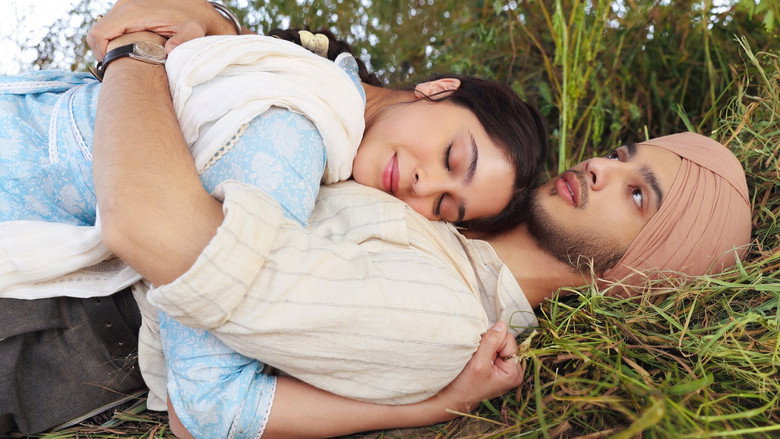
Naseeruddin Shah Makes Dementia a Living Archive
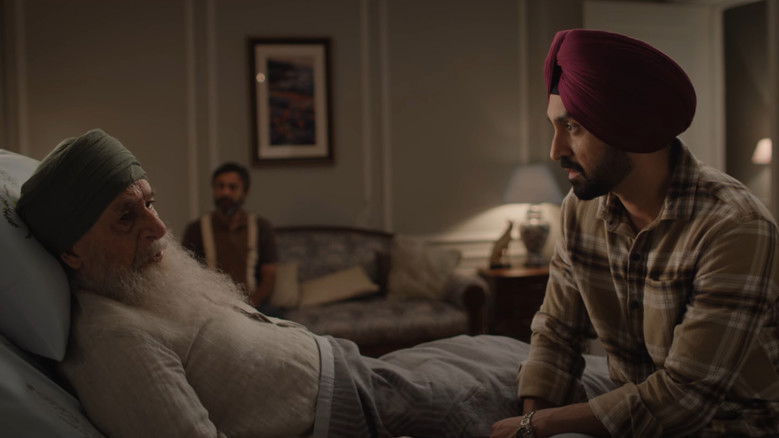
Naseeruddin Shah does not act the role of Ishar Singh Grewal, he inhabits the man’s fractured consciousness. The physical frailty is evident in every tremble, but it is the subtle facial movements, a flicker of recognition or a sudden vacancy, that ground the portrayal in unsettling realism. In the climactic revelation, when his grandson tells him Afsana died waiting, Shah’s face contracts with a grief so interior it feels almost voyeuristic to watch.
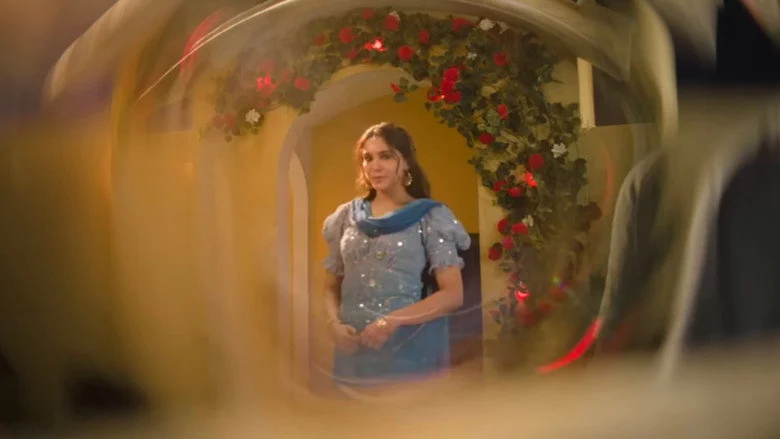
Imtiaz Ali’s Direction: Flowing River, One Dead Branch
Ali’s greatest strength here is the seamless marriage of timelines, the warm, golden hues of a 1947 flashback against the cool, muted tones of the present. The screenplay moves from deathbed to partition chaos without a single jarring cut. However, the decision to include a meta-narrative device where Nirvair creates a “movie” to transport Ishar back in time feels like a director second-guessing his own elegiac tone. It breaks the spell.
The Train Station Sequence Anchors the Period Romance
The setpiece that everyone will remember is the separation at the train station during the 1947 Partition. The camera does not flinch from the chaos, bodies push, children cry, and the frame stays tight on Young Ishar’s face as he loses sight of Afsana in the crowd. It is a moment of historical cinema that trusts the visual language of violence and longing over exposition.
A.R. Rahman’s score here does not announce itself; it hums underneath, a low thrum of dread and melody that refuses to let go. The editing in this sequence is urgent, cutting between the stampede and the stillness of a hand slipping away, creating a rhythm that feels both cinematic and deeply personal. This is Ali returning to his old-school romance storytelling, as confirmed by Magicpin’s assessment, and it works because the genre-core is built on a singular, unbreakable promise.
The integration of music throughout the film bridges the emotional chasm between past and present, with Irshad Kamil’s lyrics reinforcing the theme of a love that cannot be physically reclaimed but is never surrendered. If the meta-film subplot had been cut, this section alone would have anchored the entire 166-minute runtime.
Diljit Dosanjh and the Lost Art of Being the Witness
Diljit Dosanjh as Nirvair is the audience’s surrogate, but he does more than just react. His confusion slowly morphs into a quiet determination, and when he finally sits beside his dying grandfather, his stillness mirrors the old man’s frailty. Vedang Raina and Sharvari capture the lightness of first love in the flashback, Raina, in particular, has a scene where he simply holds Sharvari’s hand at a village fair, and the frame holds on their linked fingers longer than most directors would dare. It is a risky choice that pays off.
Sayani Gupta, Rajat Kapoor, and Sanjay Suri appear in family scenes that feel slightly underwritten, their characters sketched rather than drawn. Their presence signals the film’s intent to root the epic romance in domestic detail, but the script gives them little to work with beyond functional reactions.
Audience Reception and the Weight of a Sad Ending
The social media sentiment is overwhelmingly positive, with the grandfather-grandson dynamic receiving particular praise for its emotional honesty. Yet some viewers found the ending too sorrowful, and the film’s length at 2 hours 46 minutes tested patience during the slower investigation scenes. The hit status, backed by a rare 115% second-weekend jump in trade reports, suggests word-of-mouth is strong, even if the meta-narrative choice remains a point of contention.
If you have ever loved someone across a border, real or imagined, this film will coil around your ribs and stay there. Skip it if you need catharsis; choose it if you trust a director to sit with grief. Watch it on an IMAX screen for the Partition visuals, or in a regular hall for the intimacy of that whispered promise.
Main Vaapas Aaunga is a deeply flawed, achingly beautiful film that earns a 3.5 out of 5 for its craft, even as its ambition occasionally stifles its own heart.
For more works in this vein, browse our Hindi Drama reviews.
This film’s emotional architecture echoes the layered memory play of Cocktail 2 review, though Ali’s focus is narrower and more devastating.
The portrayal of waiting as a form of violence finds a haunting companion in the psychological fractures of Naina verdict.

Recommended for You
Character’s Creation (2026): The Missing Frame keeps the film tense but uneven overall
There is a moment in *Character’s Creation* where the frame goes empty, no actor, no dialogue, just a held silence that stretches…
Hushar Pittalu (2026): A Predictable Youth Drama Undone by Its Own Boldness
Ansh Thorat plays Ravi as a Class 10 topper whose studious foundation crumbles the moment romance enters the frame. There is an…
Beyond Ratings (2026): A 2.3 IMDb Score That Speaks for Itself
Some films arrive with hype, others with hope. Beyond Ratings arrives with an IMDb score of 2.3 from 895 votes, a number…