Titanic (2026): Kalaiyarasan & Anandhi in a Decade-Delayed Rom-Com That Tests Patience

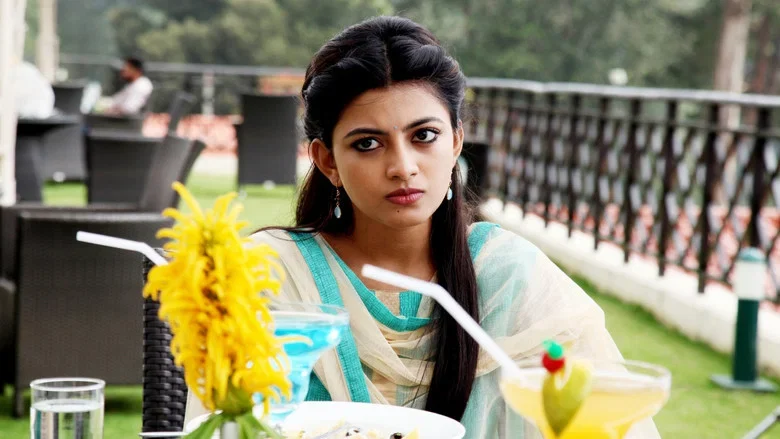
A Tamil romantic comedy titled Titanic arrives a full decade after it first entered production, carrying the weight of four postponements and the ghost of a far more famous vessel. The film stars Kalaiyarasan and Anandhi as the romantic pair, and it is directed by M. Janakiraman under C. V. Kumar’s Thirukumaran Entertainment.
The Decade-Long Voyage That Never Quite Leaves the Harbour
You feel the delay in the film’s bones before a single line of dialogue lands. There is a certain stiffness to the opening passages, a hesitancy that suggests a screenplay drafted in a different era of Tamil cinema and never quite retrofitted for the present.
The romance between Kalaiyarasan and Anandhi is positioned as the film’s emotional engine, but the film treats that engine with the care of a driver who has forgotten how the gearshift works. We get the meet-cute, the tentative glances, the inevitable misunderstanding, all delivered with a reverence for formula that borders on superstition.
What the film does offer, at least initially, is a genuine warmth in its depiction of small-town courtship rituals. The camera lingers on street corners and tea stalls with the affection of someone documenting a world they fear is disappearing.
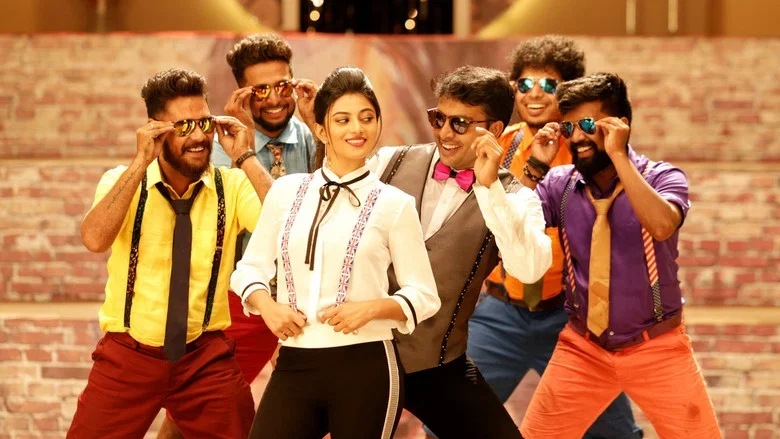
When Comic Timing Becomes a Waiting Game
Kaali Venkat appears in the supporting ensemble, and his presence initially promises the kind of lived-in comic relief that has become his signature. But the screenplay gives him little room to manoeuvre, trapping him in reaction shots and half-written punchlines that land with a thud rather than a laugh.
Jangiri Madhumitha fares slightly better in her limited screen time, bringing a sharpness to her delivery that suggests a more interesting film lurking somewhere in the margins. The problem is structural: the comic beats are spaced so far apart that the audience has ample time to notice the silences between them.
The second act attempts to deepen the emotional stakes through familial opposition and class friction, but these complications feel borrowed rather than felt. The film’s reluctance to commit to genuine conflict leaves the middle stretch drifting, much like its namesake vessel before the iceberg.
Where the screenplay does show flickers of ambition is in its refusal to demonise anyone. The opposing parties are given reasons, however thin, and the film’s ultimate reconciliation feels earned rather than forced, even if the path there is unnecessarily scenic.

The Stillness That Fails to Manufacture Pressure
Anandhi carries the film’s most demanding emotional passages, and her work here recalls the grounded intensity she brought to Garividi Lakshmi.
There is a moment in the second half where she simply sits, hands folded, listening to a conversation she is not meant to hear, and the camera holds on her face for what feels like an eternity.
It is the film’s most accomplished sequence, and it works precisely because the director trusts the silence. Kalaiyarasan, by contrast, is given little to do beyond reacting, his character is defined by his patience, which is a polite way of saying he lacks agency for much of the runtime.
When the two leads finally share a sustained confrontation in the third act, the scene crackles with the kind of friction the rest of the film has been missing. Their physical proximity is carefully calibrated, the dialogue overlapping in ways that suggest real people interrupting each other rather than actors reciting lines.
It is a reminder of what the film could have been had it trusted its performers more consistently.
A Visual Language Stuck Between Eras
The cinematography favours warm, golden-hour lighting for the romantic passages and cooler, desaturated tones for the moments of conflict, a visual grammar so familiar it barely registers. There are occasional flourishes, particularly a mirrored composition during a key reconciliation that suggests the director’s awareness of his own visual storytelling.
Nivas K. Prasanna’s score does the heavy lifting in scenes that might otherwise collapse under their own inertia, though the songs themselves are forgettable. The background score, particularly in the film’s final twenty minutes, pushes the emotional register harder than the images can support.
Pacing is the film’s most persistent adversary. The first half meanders through comic detours that serve no narrative purpose, while the second half rushes through the emotional resolutions that actually matter. It is as if the editing team ran out of patience at precisely the moment the audience might have found theirs.
Compared to the tighter spatial discipline demonstrated in Black Gold, this film feels almost directionless in its visual construction. The camera moves without purpose, cutting between angles that add little to the emotional stakes.
A Franchise That Never Was, A Formula That Wears Thin
Thirukumaran Entertainment has built its reputation on mid-budget productions with strong regional appeal, and Titanic fits that slate without distinguishing itself. The film’s prolonged development cycle is not merely trivia, it is visible in the finished product, a time capsule of a romantic comedy template that has since been refined by sharper hands.
The Tamil rom-com pipeline remains commercially viable, but the audience’s tolerance for recycled formulas has narrowed considerably. This film’s U certificate positions it for family viewing, yet the lack of genuine conflict makes it feel toothless rather than wholesome.
Kalaiyarasan’s box-office leverage has always rested on his ability to ground heightened material in recognisable human behaviour. Here, he is given neither the height nor the recognisable behaviour, just a series of scenes that require him to look concerned and then relieved.
The film’s commercial prospects are further complicated by its crowded release window and the absence of a clear marketing hook beyond its title. Nostalgia for the 1997 film will draw curiosity, but curiosity is not the same as sustained theatrical engagement.
The Verdict: A Voyage Without a Destination
Titanic is not a disaster in the way its namesake was. It is something quieter and arguably more frustrating: a film that consistently gestures toward emotional depth without ever committing to the plunge.
The final scene, which should land with the weight of everything that came before, instead feels like an ending imposed by runtime rather than earned by narrative. The characters find their way to each other, but the audience is left wondering what, precisely, they were fighting against.
The film’s most telling failure is its inability to answer that question. A romantic comedy without a credible obstacle is just two people waiting for the credits to roll.
For those seeking the sharper, more emotionally coherent pleasures of contemporary Tamil comedy, the bar has been raised elsewhere, as evidenced by the charm that carried Hi through its familiar courtship beats. Titanic sinks not because it aims too high, but because it never quite decides where it wants to go.
What remains is a curious artifact of a film that spent ten years preparing to say something and then forgot what that something was. The iceberg, it turns out, was always internal.
The broader landscape of contemporary Tamil comedies has moved past this kind of hesitant storytelling, and audiences have moved with it.
Explore Cinema Hubs

Recommended for You
Mookuthi Amman 2 (2026): Nayanthara’s Divine Double Act Frays Under Sundar C’s Two-Timeline Bloat
The opening night crowd at the Diwali screening came for the goddess and stayed for the cop. Sundar C’s sequel arrives with…

Aligned Apart (2026): Greek Dance Romance Is A Quietly Moving Character Study
The moment Aeneas is paired with Alex for a dance thesis project, you can feel the film shifting gears. What starts as…
DC (2026): Arun Matheswaran’s Romantic Action Gamble Remains A Mystery
Arun Matheswaran is a director who doesn’t do small. After the brutal *Saani Kaayidham* and the sprawling *Captain Miller*, his next move…