Toxic: A Fairy Tale for Grown-ups (2026): The Opening Scene gives the film energy despite weak payoffs


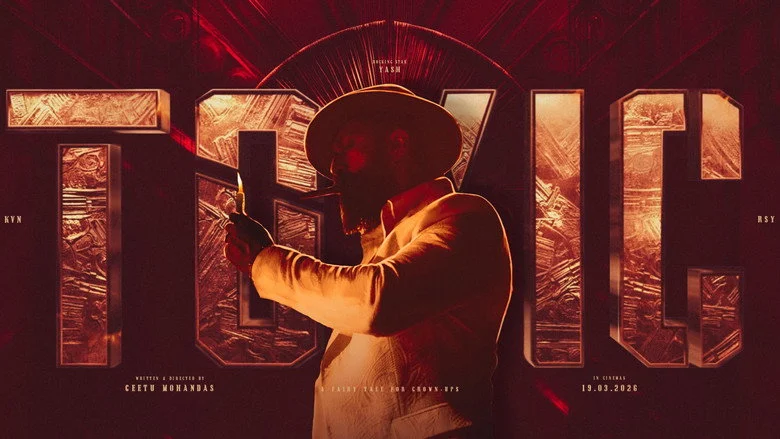
The first glimpse of Raya is pure spectacle. Yash towers over the frame, the Goa underworld bending to his will as the camera drinks in the period textures. It is a moment designed to announce a star’s return, and it works, briefly. The introduction carries the weight of an event film, promising a gangster saga of operatic proportions. But that promise begins to fray almost immediately.
Yash’s Screen Presence vs. the Thin Script
Yash’s charisma is undeniable. He owns the confrontational sequences, especially the power-introduction material that drew the most attention. His physicality and stillness make Raya feel like a man who has already won every war that matters. Yet the role depends entirely on presence rather than layered writing, and the actor is left to carry a character whose motivations remain frustratingly opaque. The strained father-son dynamic with Ticket, framed as the emotional core, never lands with the impact it should.
Mathrubhumi’s 2-star rating captures the disconnect. The screenplay is underdeveloped relative to the visual ambition, and the emotional beats are uneven and frequently underwritten. Yash delivers what he can, but he cannot compensate for a script that reduces his character to a series of poses.
The Gangster Drama That Forgets Its Own Rules
As a gangster action drama, “Toxic” understands the iconography but misses the mechanics. The underworld hierarchy and betrayal are present, but the film’s reliance on style over narrative momentum leaves the genre machinery sputtering. The period setting differentiates it from contemporary crime dramas, yet the world-building never translates into coherent character motivation.
The Raya introduction sequence is the clearest example of mass-gangster execution, staged for maximum theatrical impact. It is here that the film’s craft shines brightest, with stylized framing and a sense of scale that justifies the big-screen format. The father-son conflict material shows how the film attempts to blend drama with crime-world stakes, but these moments are too few and too shallow.
The second half loses steam as the film leans further into style and conflict expansion. Pacing becomes uneven, and the ensemble-driven progression stalls. The action is star-centered rather than tactical, which works for the hero’s positioning but leaves the genre elements feeling undercooked. One review put it bluntly: the film has “plenty of style but very little substance.”
The Ensemble Gets Lost in the Scale
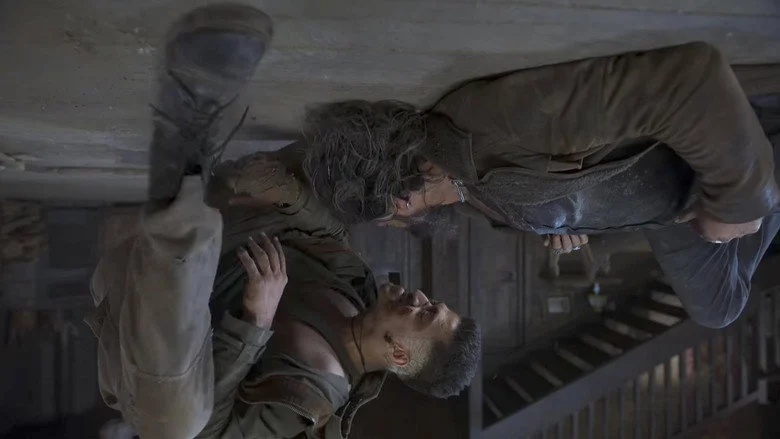
Nayanthara’s Ganga functions as Raya’s protector and partner-in-crime, adding family and loyalty tension to the plot. Her presence suggests a deeper relationship web that the screenplay never fully explores. Kiara Advani’s Nadia is positioned as a disruptive romantic force, tied to emotional chaos rather than action dominance, a role that feels underwritten in execution.
Tara Sutaria’s Rebecca represents the stable romantic arc, defining Raya’s aspirational personal side, while Rukmini Vasanth’s Mellisa supports the relationship web. Huma Qureshi’s Elizabeth is the clearest revenge-oriented counterforce, but her antagonism remains functional rather than deeply explored. The casting gives the film scale and variety, but the character arcs are not fully integrated across the ensemble.
The Box Office Reality and Audience Verdict
The opening day delivered a live estimate of ₹27.45 crore net in India, as reported by ABP Live on release day. That figure signals massive audience anticipation for Yash’s comeback. Yet the social media sentiment and audience complaints paint a different picture: the story is seen as thin compared with the visual packaging, and the emotional track is underdeveloped.
This is a film for fans and mass audiences who prioritize star presence. Viewers expecting tight screenplay construction or balanced ensemble writing will leave frustrated. The production design and period setting create a distinctive visual world, but they cannot compensate for the narrative incoherence. If you go, watch it in a regular theatrical format, the scale demands a big screen, even if the story doesn’t.
For more coverage of the biggest Indian releases, browse our Kannada Action reviews.
Toxic is Yash’s most ambitious swing yet, but ambition without discipline produces only spectacle. If you want a gangster drama with actual narrative weight, this one tests patience, a 2-star effort that will please only the most devoted fans. The film’s style-over-substance approach is a frustrating let-down, and I find myself wishing the script had matched the scale of its star.
For a deeper look at how star power can transcend weak scripts, see Beyond Ratings review.
For a contrasting take on a single-man gamble in cinema, check out Sanjeev verdict.

Recommended for You
Mother Promise (2026): Dhananjaya Anchors A Chaotic Kannada Comedy-Thriller
A hapless gambler (Dhananjaya) sprints through a fictional Bengaluru, dodging debt and two powerful dons, when his mother (Vinaya Prasad) suddenly joins…
Hushar Pittalu (2026): Bold Content Overshadows an Honest Youth Drama
The secret is out before the interval in Hushar Pittalu, two teenagers, Ravi and Chitti, are caught in a relationship their families…

Alpha (2026): A Tattoo That lands hard though the screenplay stays patchy
The opening scene of *Alpha* (2026) does not waste a second. Alia Bhatt’s protagonist walks home from a party, rolls up her…