Pulse (2026): Master Mahendran’s Survival Thriller Dares You to Look Away


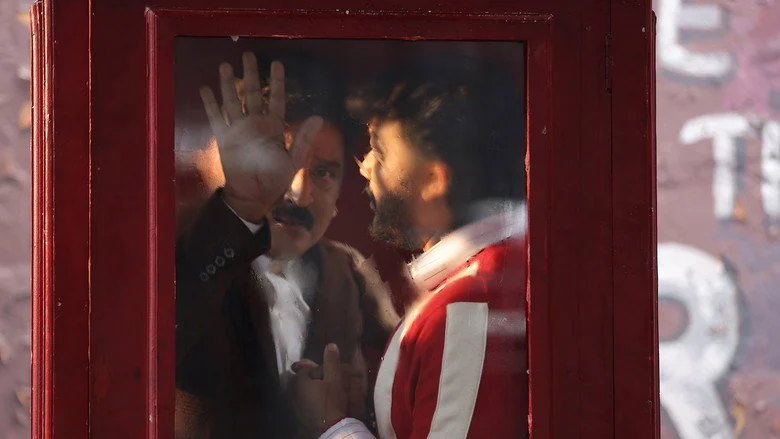
Nawin Ghanesh opens Pulse with a man screaming into a crowd that cannot hear him, and the film never quite recovers from that image’s terrible efficiency.
It is a survival thriller built on one clean, brutal idea: invisibility as the cruelest possible handicap.
The Premise Is a Trap Door, Not a Plot
Master Mahendran’s protagonist searches for a woman across a government hospital campus, and the film’s engine is his inability to be seen or heard by anyone around him.
That is a genuinely vicious dramatic constraint, no rescue, no warning, no coordination, no proof he exists at all.
Ghanesh pairs this private nightmare with a public one: a protest swelling outside the hospital walls, turning a medical setting into a pressure cooker of bodies and noise.
The social-issue framing around government hospitals gives the chaos a systemic spine rather than a decorative backdrop.
A Hero Who Cannot Testify to His Own Existence
What separates this from the standard Tamil survival template is that the obstacle is not a villain with a knife but the absence of an audience.
Every attempt at communication becomes a scene about bureaucratic and physical indifference, a man negotiating with a world that has quietly deleted him.
The romantic objective keeps the film from calcifying into pure procedure; he is not merely fleeing, he is searching, and that gives the running a destination.
Where the screenplay risks losing its grip is in sustaining that gimmick across a full runtime without letting the protest chaos swallow the intimacy.
Mahendran’s Body Does the Arguing
Mahendran plays the isolation physically, the craned neck, the hands raised too late, the throat working through a shout that lands on no one.
His performance carries the film’s tension in posture and failed gesture rather than dialogue, which is precisely the right instinct for a character denied a voice.
The weight he brings to desperation recalls the stripped-bare physicality Amit Sadh anchored in Pratap, where a man’s dignity is measured by what he can still hold onto.
Rishika Rajveer occupies the emotional center of the search, though the film gives her presence more weight as an absence than as a person.
The Protest as a Living Antagonist
Ghanesh stages the crowd as the film’s true threat, a shifting organism of shoulders, placards, and noise that turns every corridor into a gamble.
With no named villain in the frame, the danger is situational and systemic, which is a braver choice than a snarling face at the end of a hallway.
That structural decision echoes the courtroom arithmetic of Appa Kutty, where institutions rather than individuals do the crushing.
Abhishek AR’s score leans on low pulses and sudden silences, though the film occasionally mistakes volume for tension.
Where the Camera Betrays the Concept
The premise demands a subjective lens, we should feel the crowd’s indifference from inside his skull, not observe it from a safe distance.
Too often the camera steps back to admire the scale of the protest, diluting the claustrophobia that made the opening so potent.
Compare the tighter spatial discipline Ghanesh’s peers brought to Shankarabharana, and the difference in control becomes instructive.
When the film locks to Mahendran’s eyeline and lets the sound drop out, it is genuinely suffocating; when it pulls wide, the spell breaks.
T Series South Bets on a High-Concept Hook
T Series South is backing a premise-first thriller in a market that increasingly rewards novelty over star wattage, and the gamble is legible.
Mahendran’s theatrical leverage rests on whether audiences will buy him as a solo anchor without a familiar commercial scaffold around him.
The survival-thriller lane has proven durable across contemporary Tamil thrillers, but the invisibility gimmick must deliver a payoff the marketing cannot promise.
If word of mouth holds, this is a profitable mid-budget play; if the third act fumbles its logic, the opening weekend will be the whole story.
The Cruelest Question the Film Asks
Pulse ultimately asks whether a man can matter in a system designed to process him rather than see him, and it refuses to answer cheaply.
The protest, the hospital, the unheard scream, all of it converges on a single uncomfortable truth about who gets listened to and who gets erased.
Ghanesh has made a thriller with a conscience and a camera that sometimes forgets which one is doing the work.
It is a film worth arguing with, and in a season of safe bets, that alone earns it a hearing.
Explore Cinema Hubs

Recommended for You
Your’s Sincerely RAAM (2026): A Kannada Drama That Puts Memory Before Momentum
The pre-release buzz around Your’s Sincerely RAAM leaned heavily on one image: Ganesh in a Hanuman avatar. That single visual promised spectacle,…

Photographer (2026): Ashraf A’s Forest Thriller Is a Promise Waiting to Develop
The trailer’s most telling moment isn’t a jump scare, it’s Veera standing at the edge of Mathikettan Solai, told that twelve people…

Mirzapur: The Movie (2026): Big-Screen Return Lacks Series’ Ruthless Precision
The gaddi is silent, the air thick with the promise of retaliation, as Akhandanand Tripathi walks back into frame. This isn’t the…