Bhāvāntara (2026): Karthik Sharma’s Quiet Transgender Drama Is a Fragile, Flawed Debut

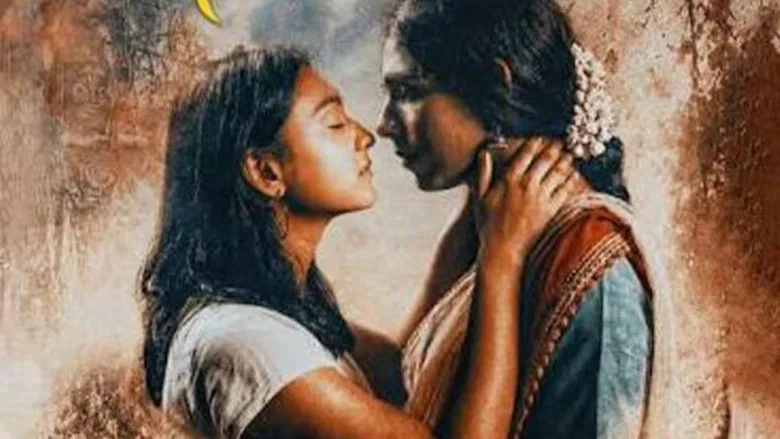
Karthik Sharma’s directorial debut opens not with a thesis but with a body in transit, a self being remade while a lover watches, uncertain whether to hold on or let go. That image carries the whole film’s weight, and occasionally buckles under it.
Sharma, who directs, writes, composes, produces and performs the lead, has built a Kannada social drama around a triangular romance fractured by gender transition. The ambition is enormous. The execution is uneven, but the commitment is real.
When the Lover Becomes the Stranger in the Room
The premise is deceptively simple: a relationship is upended when one partner transitions, and the film asks whether love can survive an identity it never bargained for. What distinguishes the approach is that Sharma refuses to frame transition as tragedy alone.
Instead, the rupture is interpersonal. Radhe, played by Tanvi Rao, is positioned at the emotional center of that rupture, the woman who must decide whether her attachment was to a person or to a category.
Rao’s work in the film’s quieter confrontations carries a specific weight: her stillness when she looks at her partner and cannot locate the familiar face.
That choice, letting the drama live in glances rather than speeches, is the film’s most disciplined instinct. It recalls the spatial restraint of Angelina, another recent theatrical release that trusted proximity over exposition.
The Koovagam Footage Is the Film’s Conscience
The most striking formal decision is the incorporation of live footage shot during the Koovagam Festival, real communal movement, ritual, and transgender cultural practice embedded inside a fictional narrative.
Cinematographer Sagar Athadkar places staged drama against actual gathering, and the friction between the two registers is where the film briefly becomes something more than a message drama.
Those sequences have documentary texture. Bodies in procession, the noise of a real crowd, the unglamorous light of a real place. When the scripted story pauses and the camera simply observes, the film exhales.
A Lead Performance Stretched Across Too Many Roles
Sharma’s central performance is the film’s most complicated asset, and its most compromised. Because he also wrote, directed, composed and produced, there is no external eye to tell him when a beat needs trimming or a close-up needs distance.
His register is earnest and physically contained; he plays the transformation as a gradual settling of the shoulders rather than a dramatic reveal. But the performance lacks the sharp edges that a second directorial perspective might have carved.
Compare the self-possession demanded of a performer working under a firmer hand, the calibrated physical control on display in Ramayana, and the gap becomes visible.
The supporting ensemble, meanwhile, is functional rather than distinctive. Pranav Sridhar and Shree Vaishnav appear in principal roles but are given little scene-level architecture; they register as presences, not characters with interiority. The film’s dramatic opposition is not a villain but social stigma itself, which is thematically honest and dramatically diffuse.
The Score and the Silence Fight Each Other
Sharma’s own music cues are the film’s least disciplined element. Where the Koovagam footage earns its silence, the romantic passages are over-scored, the composition tells us what the framing already says, and the result is a loss of trust in the image.
A leaner sound design would have let Rao’s face do the work. The editing by Ashish Hulakund shows a similar impatience: the first half builds relationships with patience, while the second half accelerates toward social consequence and loses some of its intimate grip.
The Kannada Drama Problem Nobody Wants to Name
Bhāvāntara arrives in a landscape where regional social drama is caught between festival-circuit sincerity and commercial viability. The film’s reported two-day worldwide gross of ₹2 lakh is not a verdict, it is a warning about the exhibition math facing small Kannada releases with difficult subjects.
The producing team, including Pratap Krishna and Manoj Kumar Anban, has backed a decade-long development process for a film that the market was never likely to reward theatrically. That is a structural problem, not a moral one. The theatrical lifecycle for issue-driven Kannada cinema increasingly depends on word-of-mouth that never arrives fast enough.
What the film shares with the unresolved gamble of America America 2 is a willingness to sit inside discomfort rather than resolve it. Whether audiences follow is a separate question.
A Debut That Earns Its Dignity, Not Its Craft
Sharma’s film ends where it must, on the question of whether dignity can be granted rather than earned. The answer it offers is quietly devastating: acceptance, when it comes, arrives too late to undo the damage of having been withheld.
That is a real idea, and the film deserves credit for refusing to soften it. But a real idea is not the same as a fully realized film.
Bhāvāntara is a debut of conscience and uneven control, a work that signals a voice worth watching across contemporary Kannada dramas, even as it struggles to find its own rhythm.
See it for Rao’s stillness and the Koovagam footage. Remember it for what Sharma might do next, once he learns to direct himself the way he directs a scene.
Explore Cinema Hubs

Recommended for You
Meethe Mein Kya Hai (2026): Ritwik Bhowmik Anchors a Diwali Grief Drama That Never Quite Boils Over
The Diwali lamps are lit before the grief is. Radhika Bansal’s direct-to-Netflix debut drops a widower back into his grandmother’s crowded Lucknow…
KD – The Devil (2026): Dhruva Sarja Anchors Prem’s Scale-Heavy Crime Drama
A naive young man named Kaali glides through early-1970s Bangalore as if untouched by the city’s underworld machinery, until circumstance and proximity…
Aadu 3 (2026): Shaji Pappan Returns, But Nine Years Is a Long Wait
Shaji Pappan and his magnificently chaotic gang are back, stumbling headfirst into another absurd predicament that only Midhun Manuel Thomas could dream…