Meethe Mein Kya Hai (2026): Ritwik Bhowmik Anchors a Diwali Grief Drama That Never Quite Boils Over

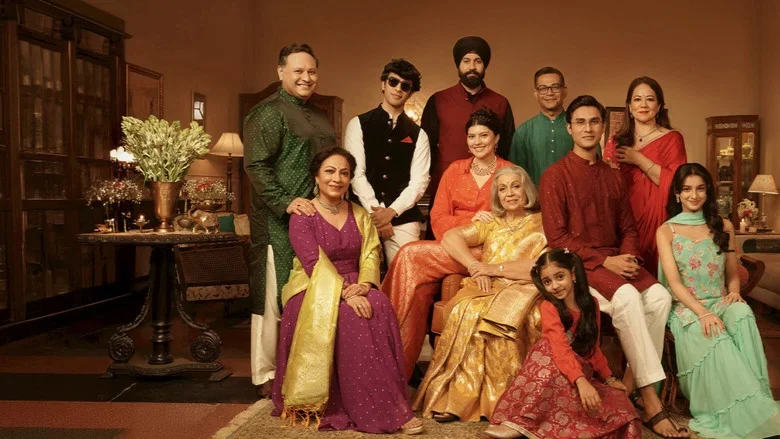
The Diwali lamps are lit before the grief is. Radhika Bansal’s direct-to-Netflix debut drops a widower back into his grandmother’s crowded Lucknow home, and the film spends two hours deciding whether to let him break.
A Festival Reunion That Arrives Already Exhausted
Jai returns to Nani’s house carrying the kind of silence that makes a loud family feel louder. The film’s first half sets the table with overlapping voices, kitchen traffic, and the low-grade surveillance of relatives who think they are being kind.
That pressure chamber is the film’s best idea. Bansal stages the reunion as a space where nobody can grieve privately, which is both the comedy and the cruelty of the premise.
Where a peer release like Aadarsha Kutumbam House No built its architecture around a grand facade hiding a hollow frame, this one inverts the trick, the house is genuinely warm, and the hollowness lives inside the widower.
The Marriage Announcement Is The Engine, Not The Story
When Jai’s sister drops her surprise wedding on the household, the film briefly becomes the movie it should have been all along. Festivity curdles into negotiation, and the family’s old fault lines become audible.
Then it retreats. The screenplay treats the announcement as a plot device rather than a moral earthquake, and the disputes it triggers never carry the weight of the secrets supposedly behind them.
Grief and comedy coexist here the way they do in most Indian family dramas, politely, in adjacent rooms. The film rarely lets them collide in the same shot.
Bhowmik Plays The Stillness, And The Stillness Holds
Ritwik Bhowmik’s Jai is a study in withheld motion. He sits at the edge of the frame during group scenes, holds eye contact a beat past comfort, and lets his voice drop to a register the room has to lean in to hear.
It is a performance of subtraction, and it works because the actor resists the temptation to announce his pain. The physical exhaustion he carries into the quieter scenes recalls the same restraint he brought to Little Thomas, where stillness did the work dialogue couldn’t.
Rohini Hattangadi’s Nani is the film’s other anchor, a woman who runs a household by moving through it rather than raising her voice. Her best moment is a wordless one at the kitchen counter.
Ayesha Raza’s Amrita gets the sharper edges, but the screenplay gives her too few scenes to sharpen them against anyone worth fighting.
Bansal Directs The Room, Not The Camera
The film’s visual grammar is deliberately unshowy, keeping the ensemble in medium-wide frames so the domestic clutter stays in view. It is a choice that serves the material without ever elevating it.
What the direction lacks is rhythm. Scenes end on the beat you expect, and the film’s two-hour runtime starts to feel like three once the second half settles into reconciliation mode.
The screenplay is linear to a fault, return, gather, announce, dispute, reconcile, with no structural surprise to match the emotional one it keeps promising. The genre sibling Doosra proved that a tight, clockwork structure can generate real tension from small stakes. This one has bigger stakes and less clockwork.
Netflix Gets A Warm, Underpowered Family Drama
As a direct-to-Netflix release, the film skips the theatrical ledger entirely, which is probably wise. It is a mid-budget, ensemble-led family drama with no franchise hooks and no star vehicle engine to sustain a wide release.
For the platform, it slots neatly into the festival-season viewing window, Diwali-set, family-forward, and undemanding. For Bhowmik, it is a useful lead-actor showcase that doesn’t quite translate into box-office leverage because there is no box office to leverage.
The commercial question is whether this signals a broader appetite for patient, grief-driven family dramas across contemporary hindi dramas. On this evidence, the appetite exists; the execution just hasn’t caught up to it.
The Ending Resolves The Family And Leaves The Man Behind
By the final act, the household has done what households do, absorbed the rupture, redistributed the blame, and moved on. Jai’s grief eases through reconnection, which is the film’s thesis and also its softest landing.
What lingers is the sense of a movie that trusted its premise more than its own nerve. The Diwali lamps stay lit; the widower stays mostly intact.
Bansal has made a film that knows how families survive each other. It just hasn’t decided yet whether surviving is the same thing as healing.
Explore Cinema Hubs

Recommended for You

Magudam (2026): Vishal s Crown lifts key stretches, not the full runtime
The harbour air in Visakhapatnam carries salt, rust, and the memory of a 1965 child-trafficking escape that opens this 185-minute revenge saga.…

Jana Nayagan (2026): Vijay s Vetri stands out while the narrative loses grip
C. Joseph Vijay, credited here as Thalapathy, delivers a performance that holds a sprawling 183-minute runtime together. He plays Vetri Kondan, an…
Sathyavan Savithiri: A Courtroom Drama That Rests on Keerthy Suresh’s Shoulders
The teaser places us inside a sterile courtroom, where the camera lingers on the polished wood of the benches before settling on…