Magudam (2026): Vishal s Crown lifts key stretches, not the full runtime

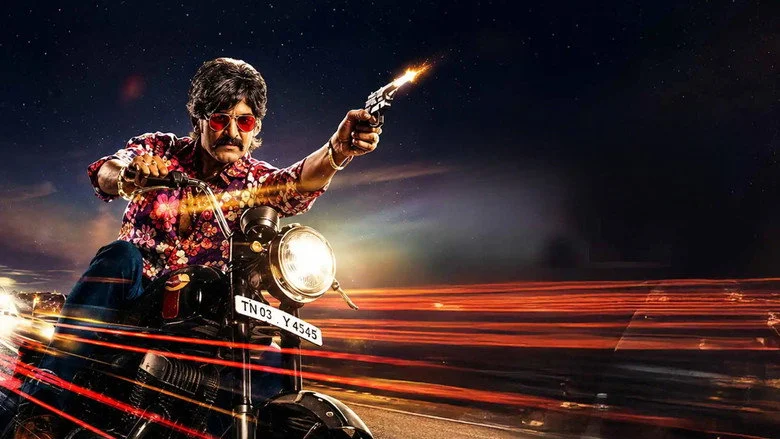
The harbour air in Visakhapatnam carries salt, rust, and the memory of a 1965 child-trafficking escape that opens this 185-minute revenge saga. A young boy survives, grows into two men, one a peaceful medical representative named Krupakaran, the other a violent patriarch named Linga, and the collision of those identities drives everything that follows. You know within the first twenty minutes whether you can surrender to this scale or whether you’ll be checking your watch by the interval.
Vishal’s dual-role commitment is the film’s single undeniable asset, but it’s a crown too heavy for the weak storytelling that carries it. Cinema Express put it bluntly: “A crown too heavy for weak storytelling.” India Today echoed the sentiment with “Vishal’s crown slips in his directorial debut.” The ambition is visible in every frame, yet the screenplay never earns the weight it places on itself.
Krupakaran and Linga: Two Faces, One Tired Formula
Vishal plays the subdued family man with restraint, but it’s his older gangster persona that carries the emotional and action weight. The transitions between the two roles are reveal-driven, and while the commitment is visible, the writing around them is dated and borrowed. Times of India called it “an overstuffed formula film that never quite lands.”
The dual-role structure creates an identity conflict within the revenge frame, but the execution feels like a greatest-hits compilation of Tamil action tropes rather than something new. Vishal’s performance lifts otherwise weak material, but even he can’t fully rescue the muddled characterisation.
The Harbour as Stage: Genre Execution That Nearly Works
The coastal harbour setting gives the film a distinct backdrop, and the action staging benefits enormously from it. The opening escape sequence from the child-trafficking racket is genuinely tense, establishing the violence and betrayal that seeds the entire revenge motivation. The period framing in 1965 is a smart choice that the film unfortunately doesn’t sustain.
The climax, set in the harbour and built around revenge and confrontation, is the most consistently praised section. Critics and audiences alike noted the scope and performance energy in these final setpieces. The action sequences here are stronger than the narrative scaffolding around them, the geography of the port, the shipping containers, and the water create a physical language that the dialogue never matches.
But the middle stretch is where the film loses its grip. The setup-heavy first half drags through backstory, and the second half, while more action-focused, remains structurally strained. The genre aims for family sentiment alongside violence, but the balance is inconsistent, one moment you’re in a tender domestic scene, the next you’re in a blood-soaked confrontation, and neither lands with the intended impact.
For those who enjoy this brand of mass-action filmmaking, there’s plenty more to explore in our Tamil Action reviews.
Supporting Players: A Network of Faces, Few Defined Characters
Anjali and Dushara Vijayan occupy the emotional line of the film, though neither gets material worthy of their presence. The available sources don’t provide detailed scene analysis for either actress, which itself suggests how thinly their roles are written. Their casting signals an intent to ground the violence in family sentiment, but the screenplay never commits to that thread.
John Vijay and Jayaprakash round out the supporting force, operating more as part of a network than as sharply defined individuals. Ajay and Vamsi Krishna are listed among the negative forces, but character-specific observations are limited in the gathered material. The villainy functions as a collective harbour power structure rather than a memorable single antagonist, which weakens the dramatic stakes.
The Verdict: Flop, But Not Without Ambition
The box office tells a sobering story. Day 1 India gross was just Rs 0.68 crore, reported by Cinema Express on 16 August 2026 using Sacnilk trade estimates. By Day 2, the total had reached Rs 1.48 crore gross with Rs 1.30 crore net, and by Day 3 it climbed to Rs 2.10 crore gross with Rs 1.84 crore net. These figures, tracked by Sacnilk and reported through Cinema Express, confirm a weak theatrical run that trade analysts have already labelled a flop.
The excessive runtime, 185 minutes for a story that could have been told in 140, is the film’s most unforgivable sin. The visual effects drew criticism in at least one major review, and the pacing issues in the middle section were a consistent complaint from both critics and audiences. The predictable, formula-driven writing compounds these problems, leaving a film that feels like it was designed by committee rather than by a director with a singular vision.
Yet I can’t dismiss it entirely, there’s something admirable about a star who steps behind the camera and attempts a layered revenge drama with a period opening and a harbour milieu. The ambition is real, even if the execution falters.
If you’re a Vishal fan who can tolerate bloated storytelling for the sake of his committed dual performance, this is a matinee watch at best. For everyone else, wait for the OTT release and skip the middle hour. The harbour-set climax deserves a big screen, but the journey there is a test of patience.
Magudam is a noble failure that earns a modest 2 out of 5, watch it only for Vishal’s commitment and the action staging, not for the screenplay that lets him down.
For a tighter take on courtship and charm, check out our review of Hi review.
If you prefer dense mysteries that value evidence over excitement, our Tadviruddha verdict offers a sharper contrast.

Recommended for You
Khalifa Part 1 (2026): Prithviraj’s Antihero Gambit Needs More Than Legacy
We have no verified scene-level analysis of Prithviraj’s performance, which is telling. The pre-release chatter frames Aamir Ali as a criminal lead,…
Happy Raj (2026): G.V. Prakash’s Comedy Charm Runs Thin Fast
A musician-turned-actor steps into a world of romantic chaos and comic misadventure, that is the universe Happy Raj promises to inhabit. Director…
Peddi (2026): Ram Charan’s Rural Sports Drama Tests Craft Against Ambition
A village spirals under the boot of a powerful oppressor. One man decides sport is the language of resistance. Buchi Babu Sana’s…