Doosra (2026): Abhinay Deo’s Cricket-Nostalgia Experiment Is a 78-Minute Tightrope Walk

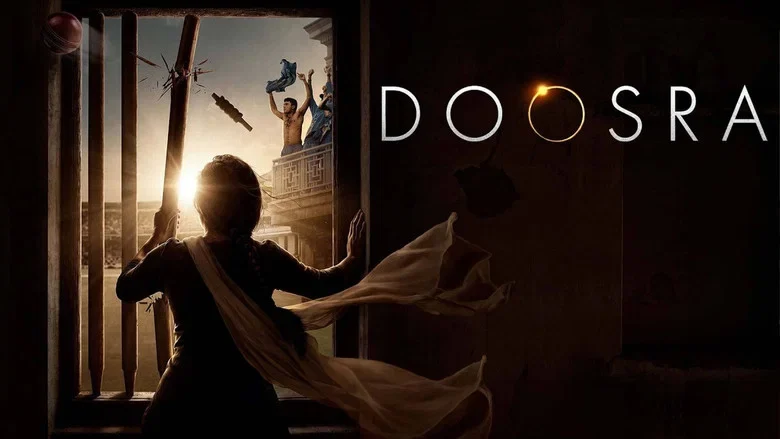
Abhinay Deo’s latest opens not on a cricket pitch but in a Rajasthani courtyard, where a girl learns to make herself small. Doosra: India’s Other Freedom Struggle wants that girl and Sourav Ganguly to share a heartbeat.
When a Shirt-Wave Becomes a Girl’s First Vocabulary for Defiance
The premise is elegant on paper: 1990s liberalisation, economic anxiety, and a national cricket team finding its spine all running parallel to one daughter’s quiet war against household patriarchy.
The film’s structural gamble is to let a real, televised act of public rebellion teach a fictional young woman how to breathe. Tara (Plabita Borthakur) watches Ganguly shed his shirt at Lord’s in 2002, and the image lands as instruction rather than nostalgia.
That single intercut is the film’s most intelligent gesture, converting a documented celebration into private vocabulary for refusing imposed respectability. It is also where the film’s ambitions begin to strain against its own 78-minute frame.
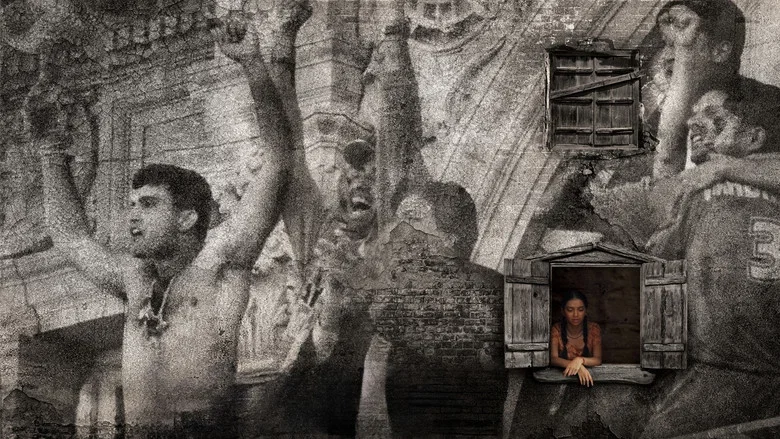
A Docu-Fiction Hybrid That Lets the Archive Outshout the Bedroom
The screenplay, credited to Agnello Dias and company, is linear in Tara’s chronology but hybrid in presentation, periodically interrupted by documentary-style material about India’s political and economic climate. That collage is ambitious, and it is also the film’s most persistent liability.
Reviewers who admired the concept consistently noted the same imbalance: the cricket material sometimes overwhelms Tara’s emotional arc. When the recreated sporting footage dominates a scene that needed a family confrontation, the film’s thesis begins to argue with itself.
The tension is structural, not incidental. The archive arrives with built-in emotional force; the domestic drama has to earn its own. Too often, the film lets the familiar image do the heavy lifting where a scripted scene should be doing the work.
Borthakur’s Restraint Against Vikal’s Domestic Surveillance
Plabita Borthakur plays Tara as emotionally isolated inside her own home, carrying the conflict through restraint rather than overt melodrama. Her performance is the film’s quiet engine, accumulating suppressed reactions rather than announcing a transformation.
The turning point is in her face at the television: observation hardening into identification. Borthakur lets that shift register in the eyes and the set of the jaw, and it is the most persuasive piece of acting in the film.
Ankur Vikal’s father embodies authority through household control rather than external threat. His strongest moments are the ones where Tara’s choices are treated as violations of family order, turning ordinary domestic spaces into sites of surveillance and pressure.
Samidha Guru’s mother represents accommodation to patriarchy, her compliance reinforcing the limited options available to Tara. The generational contrast between surviving restrictive norms and actively challenging them is the film’s most underused asset.
The older brother, played by Navin Ratwa, occupies the family structure’s gendered privilege, and his presence helps demonstrate that the restrictions imposed on Tara are not applied equally across the household. It is a sharp observation that the screenplay never quite develops into sustained conflict.
Deo Directs the Parallel, Not the Person
Deo’s strongest directorial choice is using a nationally familiar cricket image to externalise Tara’s private desire for freedom. The film contrasts the enclosed domestic world of the Rajasthan household with the expansive public spectacle of Lord’s, and television functions as the visual bridge between them.
The weakness is balance. The historical cricket material can become more emotionally forceful than the fictional domestic storyline, and the short runtime creates thematic compression at the cost of developing Tara’s family relationships.
Ram Sampath’s score is tasked with connecting the period setting, cricketing momentum and Tara’s emotional awakening. It largely succeeds at the connective work, though the film’s real rhythm comes from the editing, which moves quickly across a decade in the first half and lets the cricket parallel drive the second.
That compression is both the film’s discipline and its limitation. Just as he demonstrated a tighter spatial discipline in Dhood (Sandstorm), Deo strips away decorative camera moves here to prioritise psychological friction, but the sparse approach leaves the family confrontation underdramatised.
The Parallel Is More Interesting Than It Is Felt
The connection between Ganguly’s defiance and Tara’s liberation is intellectually satisfying but only partially dramatised. The film tells us that public defiance can give marginalised people the confidence to challenge private systems of control; it rarely lets us feel that transmission happen in a sustained scene.
The restrained physical exhaustion Borthakur brings to the final movement recalls the psychological weight of the lead turn in Naa Wife Missing, where interior pressure had to carry a lean frame. Here, the interior pressure is present, but the screenplay gives it fewer rooms to occupy.
The ending resolves around Tara finding the courage to assert her identity rather than around a conventional sports victory. That choice is admirable, and it leaves the film’s most discussed narrative device feeling more like a thesis statement than a lived experience.
The screenplay resists the kinetic sensationalism that overtook Sumo Didi, opting instead for a deliberate, compressed dread. What it loses is the sustained character development that made that film’s central figure legible beyond her circumstances.
What the Film Gets Right About Rebellion as Inheritance
The film’s best idea is that a girl can borrow courage from a stranger on a television screen. That is a genuinely adult observation about how identity forms: not through a single breakthrough, but through accumulated models of refusal.
The 1990s montage, connecting liberalisation, depleted national finances, political upheaval and Indian cricket, is an ambitious attempt to place Tara’s personal story inside a national transition. It is also the film’s most self-conscious passage, and it occasionally mistakes context for drama.
This patient, issue-driven character study signals a welcome tonal maturity across contemporary Hindi dramas, proving that tension can thrive without manufactured plot theatrics. The question is whether the film’s formal experiment earns its emotional conclusion, or merely argues for it.
The Commercial Tightrope of a 78-Minute Hybrid
The producing team of Masha Sajdeh and Rohan Sajdeh, with Neeta Shah co-producing, is betting on a short, formally experimental release rather than a conventional sports entertainer. That is a calculated risk in a theatrical market that rewards spectacle and star-driven scale.
The film’s theatrical lifecycle depends on a narrow audience: cricket-nostalgic viewers, urban festival-oriented crowds, and audiences receptive to docu-fiction and identity-driven drama. It is unlikely to convert the mass sports-film audience that expects a full match narrative.
Deo’s commercial leverage here is different from his broader filmography, and the film’s 78-minute compression reads as a deliberate theatrical strategy rather than an accident. Whether that compression translates into repeat viewing or word-of-mouth momentum is the real box-office question.
The regional remake pipeline and franchise logic that dominate current exhibition have little purchase on a film like this. Its sustainability depends on critical conversation and niche theatrical traction, not on opening-weekend arithmetic.
The Uncomfortable Resolution and the Film’s Real Verdict
Doosra ends by linking national self-expression and personal liberation as connected forms of freedom. That is a clean thesis, and it is also the film’s central limitation: the connection is asserted more powerfully than it is dramatised.
Borthakur’s Tara is the reason to see it. Her restraint gives the film a center of gravity that the structure keeps threatening to abandon, and her final assertion lands because she has been holding it in for the entire runtime.
What lingers is not the cricket, but the image of a girl watching a man refuse to be small, and deciding, quietly, that she might do the same. The film’s tragedy is that it trusts the shirt more than it trusts her.

Recommended for You

Spider-Man: Brand New Day (2026): A Lonely Hero’s Evolution Teases Marvel’s Boldest Reset
The trailer opens on an empty apartment. Peter Parker pours cereal alone, the silence louder than any explosion. This is the most…
KJQ (2026): A Gritty Crime Drama Trapped in Its Own Trailer
Dheekshith Shetty walks into KJQ as Raju, a man whose friendship curdles into rivalry. The trailer positions him in a confrontational space,…

Accused (2026): Konkona Carries a Film Too Cautious to Fully Commit
A surgeon stands over an open incision and calls her colleague’s work a bloody disaster, cool, clinical, almost bored in her contempt.…