Scene (2026): Suriya and Jithu Madhavan’s Dark-Comic Procedural Is a Gamble That Mostly Pays

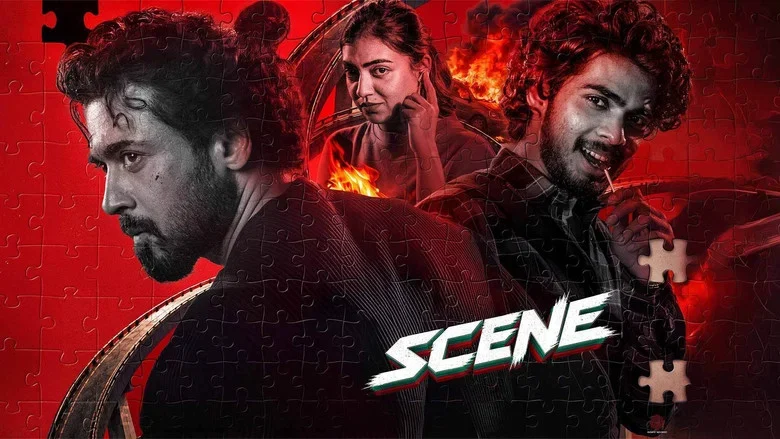
Jithu Madhavan opens his Tamil debut with a police station in disarray, and the film’s central tension arrives before a single clue does. Suriya’s DSP Inbaraj is not a hero who commands a room; he’s a man who destabilizes it.
A Defiant Cop Who Refuses the Heroic Posture
Madhavan’s screenplay reintroduces Inbaraj through an old failure, a case he never closed. The film’s gamble is that a protagonist defined by unfinished business is more compelling than one defined by competence.
Where a conventional procedural would arm its lead with certainty, Scene arms him with friction. Inbaraj’s rebellion isn’t stylistic swagger; it’s a refusal to perform the institutional choreography his rank demands.
That choice gives the film a different engine than the kinetic sensationalism that overtook Enemy Of The Smuggler, opting instead for interpersonal volatility as its primary dramatic fuel.
The Team as Antagonist, and the Case as Backdrop
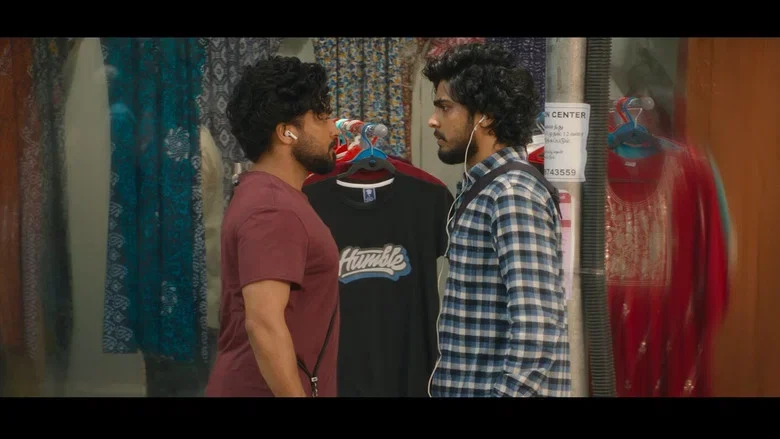
The most interesting structural decision here is the absence of a conventional villain. The opposition is the case itself, the bureaucracy around it, and the chaotic unit assigned to help.
That’s a risky inversion. Without a face to push against, the film must generate tension from within the group, and for long stretches it does exactly that.
Suriya’s Inbaraj and his troublesome colleagues operate in a state of permanent negotiation, each interaction a small power struggle disguised as procedure. The comedy lives in that friction, not in punchlines.
Suriya’s Physical Register and the Comedy of Authority
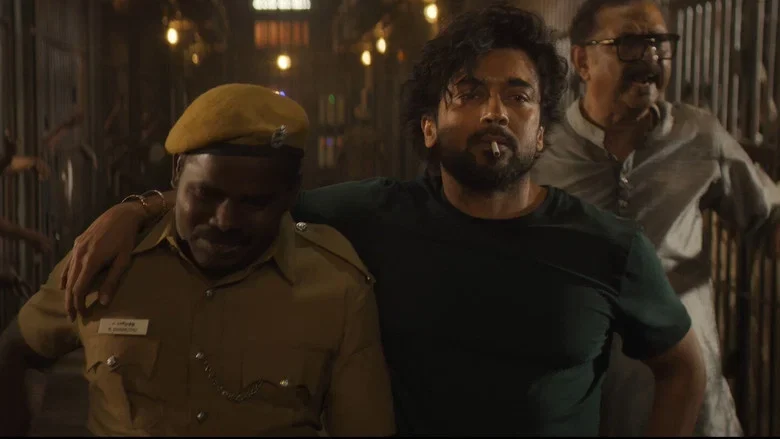
Watch how Suriya holds his shoulders in the team scenes. There’s a stiffness to Inbaraj’s posture, a man used to being obeyed now forced to cajole, and the performance finds humor in that physical discomfort.
It’s a controlled piece of comic acting, closer in register to the looser charm he brought to Vishwanath and Sons than to the coiled intensity of his earlier police roles.
Nazriya Nazim’s Maya registers as a presence rather than a function, her stillness in group scenes a useful counterweight to the surrounding noise. Naslen’s Eeswaran carries the ensemble’s chaotic energy, though his arc remains underdeveloped.
Where the Tonal Balance Slips
The film’s central problem is that the dark humor and the investigation don’t always share the same room. When the comedy escalates, the case recedes; when the mystery tightens, the ensemble’s chaos feels like an interruption.
Madhavan’s control of group dynamics is sharper than his control of plot mechanics. The procedural beats feel dutiful where the character beats feel alive.
Compared to the tighter spatial discipline he showed in Geriga, this film’s staging is looser, more reliant on the performers to carry scenes the script doesn’t fully resolve.
Sushin Shyam’s Score and the Rhythm Problem
Sushin Shyam’s score does heavy lifting in the transitions, pushing tonal shifts the screenplay hasn’t earned. The music often signals comedy before the scene has located its own joke.
Vineeth Augustian’s camera keeps a functional distance, favoring group framings that let the ensemble’s spatial chaos play out. It’s competent work that rarely imposes a distinct visual idea.
At two and a half hours, the film’s middle stretch sags under repeated team-conflict variations. A tighter edit might have preserved the escalation without the repetition.
2D Entertainment’s Bet on a Cross-Industry Experiment
For Suriya and Jyotika’s 2D Entertainment, this is a calculated pivot away from star-vehicle convention. The film’s commercial viability depends on whether Suriya’s fanbase accepts a police role that deliberately withholds heroic catharsis.
The cross-industry casting of Nazriya and Naslen signals an attempt to broaden the film’s appeal beyond Tamil mass audiences, and the advance booking figures suggest curiosity translated into early momentum.
Whether that translates into sustained theatrical performance depends on word-of-mouth surviving the film’s uneven second half. The gamble is real, and the outcome isn’t yet written.
A Gamble Worth Taking, Even When It Stumbles
Scene is a film that trusts its lead’s willingness to look foolish, and that trust is its most valuable asset. Suriya’s Inbaraj is a man who fails forward, and the performance commits to that awkwardness without vanity.
The film doesn’t fully solve its tonal equation, but it attempts something more interesting than a clean procedural. In a landscape of contemporary Tamil thrillers that often mistake volume for stakes, this one mistakes nothing for granted.
What lingers is the image of a man forced to work with people he can’t control, solving a case he couldn’t close. That’s not a hero’s journey. It’s something stranger and more honest.
Explore Cinema Hubs

Recommended for You

Manduka (2026): Bhushan’s Fractured Crime Puzzle Never Finds Its Center
Bhushan opens Manduka on a girl mid-collapse, her perception splintering just as four criminals stumble into her orbit. What follows is a…

Bethlehem Kudumba Unit (2026): Nivin Pauly’s Charm Meets A Familiar Romance
Ashley returns from abroad, and the wedding next door becomes the emotional wrecking ball that swings straight into her past with Justin.…
Main Vaapas Aaunga (2026): Imtiaz Ali’s Partition Romance Weaves Memory and Melancholy
A 95-year-old man on a deathbed in Chandigarh fixes his gaze on a map of Sargodha and whispers, “Main vaapas aaunga.” The…