Disco (2026): Antony Varghese and a Caper That Forgets to Detonate

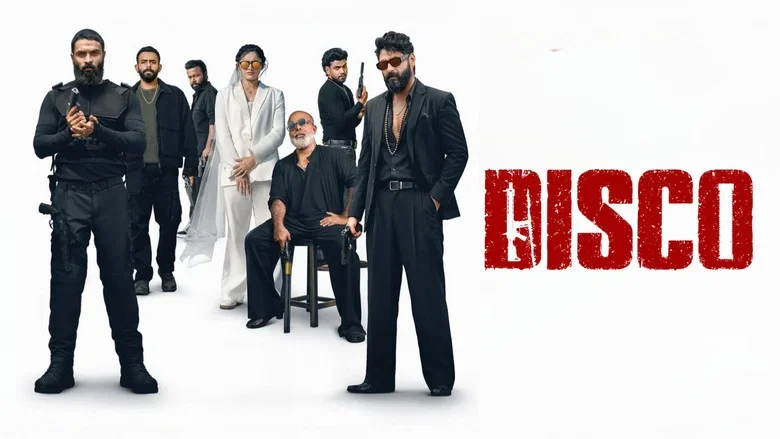
Ullas Chemban’s Disco opens on borrowed swagger: a retro-dressed gang of friends chasing fast money through Kerala’s back lanes. Two hours later, the money is gone, the friends are scattered, and the film is still clearing its throat.
When A Caper Refuses To Spring Its Own Trap
The premise is sturdy enough. Ousu and his crew, hungry for a quick score, throw in with a rival gang for one big operation. The alliance is unstable by design, and the failure of that score is meant to be the hinge on which the entire film swings.
What actually happens is stranger. The heist arrives late, detonates quietly, and leaves behind a revenge plot that never quite commits to a target. Antony Varghese’s Ousu drifts through the wreckage rather than driving it.
The film’s central problem is not a lack of incident. It’s a reluctance to let any single incident land with consequence. Every betrayal is telegraphed; every survival beat is budgeted for a sequel that may never come.
The Ensemble That Never Becomes A Unit
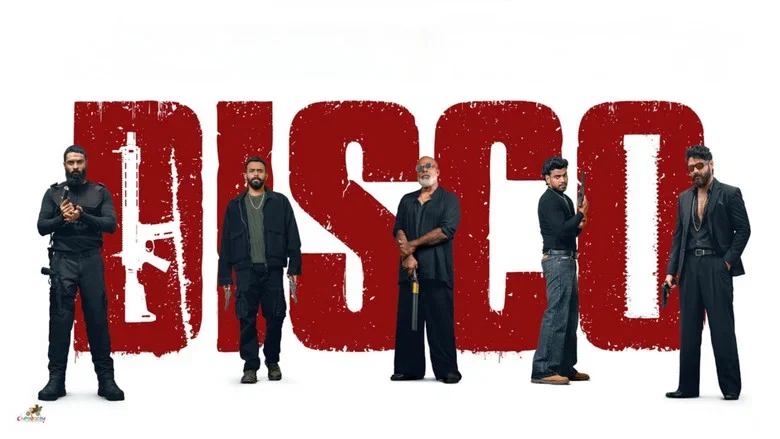
Chemban has assembled a genuinely interesting ensemble. Arjun Ashokan brings a jittery, watchful energy to his scenes, and Lukman Avaran’s physical stillness in the group sequences suggests a man already calculating his exit.
But the screenplay gives them no room to become a unit. They are a group in the synopsis and strangers on screen, sharing frames without sharing stakes.
Compare this to the tighter spatial discipline Chemban’s contemporaries have shown in Scene, where every ensemble member occupied a defined psychological coordinate. Here, the coordinates blur.
Antony Varghese Between Two Registers
Varghese is the film’s most valuable asset and its most underused one. His Ousu is meant to transform from carefree opportunist to underworld survivor, and the actor has the physical vocabulary for that arc.
What he lacks is a scene that forces the transformation. The failed score should be his crucible; instead, it plays like a scheduling conflict, resolved off-screen and reported back to him.
The restrained exhaustion he carries into the final act recalls the psychological weight of his turn in I'm Game, but there the script gave him a wall to push against. Here he pushes against air.
The Retro Backdrop As Aesthetic Alibi
Armo’s cinematography leans hard into the buzzing retro texture, all warm tungsten and cluttered frame edges. It’s handsome work, and it does more narrative labor than the dialogue in several stretches.
But retro styling becomes an alibi. The period detail substitutes for a coherent criminal world, and Manikandan Ayyappa’s score fills the silences the screenplay should have used to build dread.
The genre siblings have done this better. The screenplay of Orijinal at least trusted its own puzzle mechanics; Disco doesn’t trust its own caper.
What Chembosky Is Actually Betting On
Chembosky Motion Pictures is staking real theatrical capital on Varghese’s bankability as a leading man rather than a supporting firebrand. That’s a meaningful wager in a market where the Malayalam action-crime slot is crowded.
The “A” certificate positions this squarely at adult audiences, and the retro gangster frame is designed to travel. Whether it does depends on word-of-mouth surviving that slack middle hour.
The wider contemporary Malayalam thrillers boom has been built on films that commit to their own formal logic. Disco hedges, and hedging is expensive at the box office.
The Uncomfortable Verdict
Disco is a film with a strong first idea and no second one. The heist, the betrayal, the transformation, all are announced, none are earned. Varghese remains the most compelling reason to buy a ticket, and even he is left waiting for a script that shows up.
What lingers is not the score that failed but the film that never quite tried. A caper without a detonation is just a long walk to the getaway car.
Explore Cinema Hubs

Recommended for You
Batwara 1947 (2026): A Message of Harmony Buried Under Overwrought Drama
The first time Sikander Mirza’s refugee family steps into that Lahore haveli, they find an elderly Hindu widow already occupying the space,…
Hushar Pittalu (2026): A Predictable Youth Drama Undone by Its Own Boldness
Ansh Thorat plays Ravi as a Class 10 topper whose studious foundation crumbles the moment romance enters the frame. There is an…
Manithee: the fire bird (2026): MJ Nitharsan’s Ambitious Tamil Fantasy-Thriller Burns Bright But Flickers Out
MJ Nitharsan’s Manithee: The Fire Bird opens with a premise that sounds like two different films wrestling for the same runtime. A…