Chevittorma (2026): Dileesh Pothan Anchors a Deathbed Vigil That Refuses to Expire

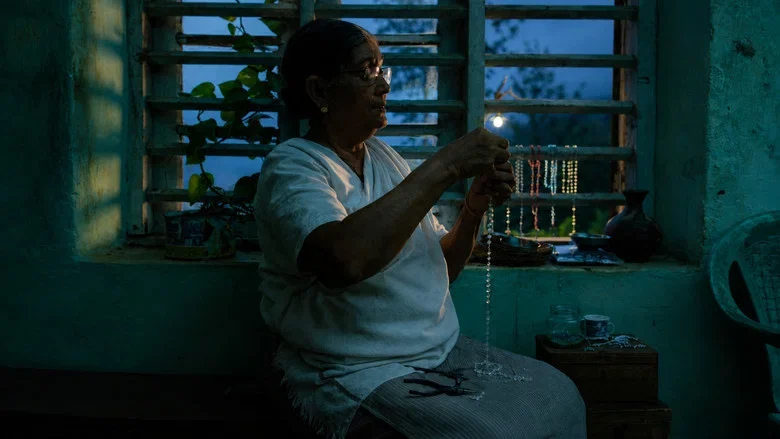
The whisper arrives before the man does. In the opening stretch of Chevittorma, Pauly Valsan’s Theresia leans over a stranger’s bed in the hills of Kerala and murmurs prayers for a soul she has never met, offering release to someone who cannot answer back. It is a startling image to build a film around, and Leo Thaddeus knows it: a woman whose profession is death, deployed into a house where death has gone on strike.
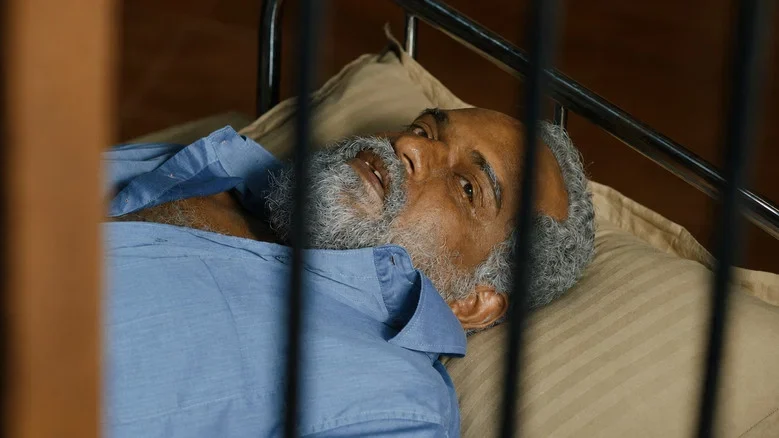
That house belongs to Payyammal Varkichan, a landlord of considerable local weight and a body that has decided to outlast its own obituary. Dileesh Pothan plays him horizontal, propped against pillows, issuing orders with his eyes while his lungs betray him. The film’s engine is simple and merciless: Theresia is summoned to ease his passing, and he refuses to pass.
A Death That Won’t Arrive Is Crueler Than One That Does
Thaddeus builds his entire architecture on a biological clock that refuses to tick. Everyone in the ancestral home is waiting, George, the son who returns after ten years with his wife, waits; the household staff wait; Theresia waits with her folded hands and her recited prayers. The pressure never comes from plot turns. It comes from the fact that nothing happens, hour after hour, and everyone must keep standing in the same room pretending they are not counting.
This is a contained-location chamber drama in the truest sense, and the containment does the work that a conventional screenplay would assign to incident. The family cannot leave. The dying man will not die. The ritual cannot conclude. What could have been a ninety-minute exercise in stasis instead becomes an argument about whether forgiveness is a choice or a biological function.
Where the film earns its keep is in refusing to give Varkichan a redemption arc on schedule. He withholds apology the way other men withhold money, deliberately, as leverage. Theresia’s requests for repentance are not met with tears or revelation but with the flat, irritated silence of a man who has spent his life being obeyed and intends to spend his death the same way.
Pauly Valsan Turns Whispered Prayer Into a Weapon of Pressure
Valsan’s performance is the film’s spine, and it works because she never raises her voice. She sits at the bedside with her hands folded and her spine straight, and the camera holds on her face while she speaks a prayer that is also, unmistakably, an interrogation. There is no theatrical grief here. There is a woman doing a job she believes in, watching it fail, and refusing to abandon the post.
The role sits at an interesting angle to her work in the rural ensemble comedy of Ottam Thullal, where she played warmth and chaos in a household that wanted to be held together. Here she plays the opposite discipline: stillness, ritual, and a moral authority that comes from having sat beside more dying people than anyone in the room has met alive. The register shift is total, and it confirms her as one of the most quietly versatile performers working in Malayalam cinema right now.
Pothan, for his part, is doing something unusual with his body. He is a performer who usually occupies space with a kind of bustling authority, and here he is pinned to a mattress, forced to project control through jaw tension and the angle of his chin. When Theresia presses him on forgiveness, he does not shout. He turns his face toward the wall. It is the smallest possible gesture and it lands like a door slamming.
The Family Around the Bed Is Where the Film Gets Thin
George Kora’s returning son is the film’s most underdeveloped piece of machinery. He arrives after a decade away, and the screenplay treats his presence as sufficient explanation for the resentment in the house. But the film never quite dramatizes what those ten years cost, or what he wants from a father who is visibly running out of time to give it. He stands in doorways. He watches. He is a witness rather than a participant, and the vigil loses some of its voltage whenever he is the only one in frame.
This is where Thaddeus’s decision to keep the buried histories submerged starts to cost him. The film withholds information about the family’s rupture for so long that the eventual confrontation feels less like revelation and more like a bill finally arriving. Compare it to the way a peer release like Avaraachan & Sons lets its family wounds breathe through small domestic friction rather than sustained withholding, and the difference is instructive: warmth and comedy can afford to delay, but a deathbed drama needs the pressure to build, not just persist.
That said, the choice to deny Varkichan a conventional antagonist role is the film’s smartest structural bet. There is no villain here. There is a stubborn old man and a family that has learned to be stubborn back. The conflict is entirely internal to the house, and it means every scene carries the same weight: the question of whether any of these people will say the thing they have been not-saying for a decade.
The Camera Sits Still and Lets the Silence Do the Work
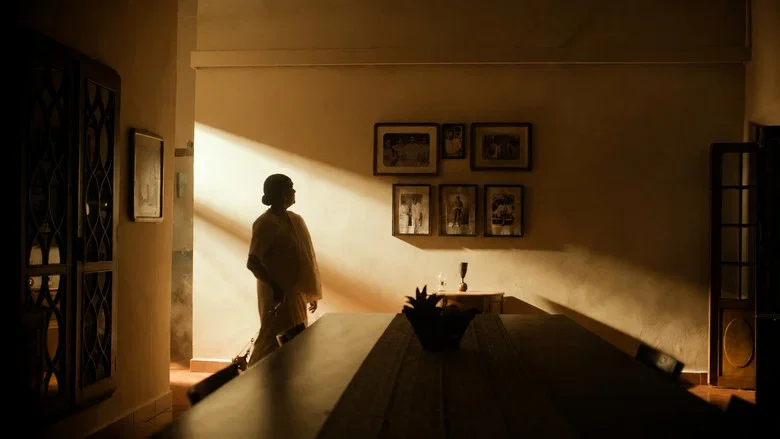
Thaddeus keeps his frames locked and patient. The ancestral home is shot in long, unhurried takes that let the audience feel the geography of the rooms, who can hear whom from which corridor, where the doors are, how far the kitchen is from the deathbed. It is a spatial logic that pays off in the film’s best stretches, when a single figure crosses from one room to another and the camera simply watches the distance close.
The score, when it appears, is sparse enough to be almost invisible, and that restraint is correct. This is a film that trusts its own silences. The problem is that the silences are not always doing different work; by the second hour, the meditative rhythm starts to feel less like a deliberate choice and more like the film running out of ways to escalate. A tighter cut would have sharpened the pressure rather than diluted it.
Where the direction does hold firm is in the refusal to sentimentalize the deathbed. There is no swelling music when Varkichan’s condition worsens, no angelic light through the window. The film treats dying as a logistical problem with a moral dimension, and that unsentimental gaze is what keeps it from collapsing into the festival-drama template. If Toxic demonstrated how a strong opening can carry a film past its weaker back half, Chevittorma makes the opposite gamble, it opens slowly and asks you to trust that the accumulation will be worth it.
A Vigil Worth Sitting Through, With Reservations
The film’s final movement resists the easy catharsis that the premise seems to promise. Whether Varkichan repents, forgives, or simply dies mid-sentence is a question the film answers with the same restraint it has applied throughout, and that restraint is both its integrity and its limitation. The resolution is not withheld out of coyness. It is withheld because Thaddeus genuinely believes that some family arguments do not conclude; they simply stop when one party stops breathing.
That is a defensible artistic position, and for a certain kind of viewer, the one who has sat in a hospital corridor at 3 a.m. and understood that the waiting is the event, it will land with real force. For everyone else, the film’s refusal to accelerate will read as a refusal to engage. Both readings are honest. The film is a chamber piece about the impossibility of forcing forgiveness, and it is willing to be as difficult as its protagonist.
What remains is a performance piece of considerable integrity, anchored by two actors who understand that the most dramatic thing a person can do in a room full of waiting relatives is nothing at all. It belongs to the growing wave of contemporary Malayalam dramas that trust their audience to sit with discomfort rather than resolve it, and it deserves to be seen on a big screen by anyone willing to meet it on its own terms.
Rating: 3 / 5
The whisper arrives before the man does. In the end, it is the only thing in the house that knows when to leave.

Recommended for You
I’m Game (2026): A Nearly Three keeps the film tense but uneven overall
Dulquer Salmaan’s Dan John enters a world of high-stakes crime with the swagger of a man who knows the odds are stacked…
Mollywood Times (2026): Naslen’s Meta-Cinematic Coming-of-Age Gambit
A teenager asks his father for a video camera, then gathers friends to shoot a horror short that will live forever in…

Pyaar Prema Kalyanam (2026): A Fresh Premise That Settles for Familiar Comfort
The premise arrives with a confident swing: a bride named Pavi refuses to leave her family home, and the husband packs his…