Tera Yaar Hoon Main (2026): Paresh Rawal Owns lifts key stretches, not the full runtime


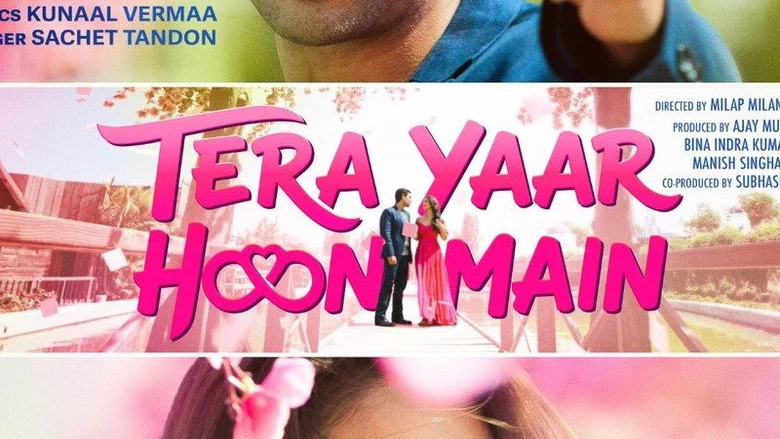
Sanju Deshmukh, a young man full of charm and a hidden agenda, walks into the home of Vishwanath Purohit, the man he has befriended under a false premise. He is there to pursue Annu, Vishwanath’s daughter, but the father sees only a loyal friend, not a potential son-in-law. This setup, with its fragile promise and looming betrayal, should crackle with tension, yet Milap Zaveri’s film immediately feels like a familiar Hindi movie we have already watched a dozen times before. For audiences looking for a strictly mass-market, family-angst entertainer, *Tera Yaar Hoon Main* might fill a slot, but it offers little for those seeking narrative surprise.
Paresh Rawal Owns the Emotional Anchor
Paresh Rawal is the film’s single most reliable engine. His Vishwanath Purohit oscillates between jovial warmth and stern paternal anxiety, and he makes every beat of the friend-father conflict land with lived-in weight. When he discovers Sanju’s true intentions, his silence speaks louder than the script’s exposition. Rawal’s casting signals a clear attempt to ground the melodrama in credible vulnerability, and he succeeds even when the writing lets him down.

Aman Indra Kumar: Debut Energy Meets Limited Range
Aman Indra Kumar plays Sanju with plenty of physical energy but struggles to modulate his emotions beyond a single register. In the lighter, flirtatious moments with Annu, he carries a boyish ease that works. But when the plot demands guilt or anger, his performance stiffens, betraying the inexperience of a debutant. The film rests heavily on his shoulders, and the frame often feels unbalanced as a result.
Romantic Drama Execution: A Safe, Stretched Blueprint
As a romantic drama, the film follows a rigid template: boy meets girl, boy befriends father, secret is exposed, reconciliation follows. The emotional turning points, Sanju’s dinner table confession, the father-daughter confrontation, are written to hit maximum volume rather than genuine complexity. There is little subtext; every feeling is announced rather than lived.
The chemistry between Aman and Akanksha Sharma is serviceable but never electric. Their scenes together lack the rare physical vocabulary that defines memorable Hindi romance. Instead, the film relies on the title track by Sachet Tandon and Payal Dev, which does heavy lifting to manufacture romance where the performances fall short. The song ‘Tum Hi Se Pyaar’ by Jubin Nautiyal is similarly positioned but feels like a contractual obligation rather than a narrative necessity.
The action elements, secondary but present, are staged with minimal ambition. A chase sequence late in the second half is functional but entirely generic, lacking the spatial clarity that even a modest action-drama demands. The film’s 2-hour 26-minute runtime amplifies these weaknesses, as the second half drags considerably after the central conflict is revealed.
Supporting Cast: Johny Lever Feels Stranded, Supriya Pilgaonkar Wasted
Johny Lever appears as a Sardar taxi driver, but his scenes feel isolated from the main plot, reducing him to a comic prop rather than a character. Supriya Pilgaonkar as Nadani has a single emotional scene with Rawal that hints at a richer backstory, but the film never expands it. Neha Khan as Tanisha and Darshan Jariwala as her father are functional placeholders, present only to advance the arranged-marriage conflict. Their casting signals a film more interested in filling roles than writing characters.
Less a Political Firestorm, More an Audience Echo Chamber
No political controversy surrounds *Tera Yaar Hoon Main*, but its audience reception will likely split cleanly along generational lines. Older viewers might embrace Paresh Rawal’s father-figure dramatics, while younger audiences will find the love story predictable and the hero’s arc too safe. The film seems designed for the Sunday family television slot, not the multiplex debate.
If Milap Zaveri’s film intends to revive the ‘friendship vs love’ conflict of 90s Hindi cinema, it largely succeeds in replicating the packaging but fails to update the interior. For fans of that older craft, it will feel like a warm blanket; for everyone else, it will feel threadbare. One specific scene where Rawal refuses to break his promise despite knowing Sanju has deceived him is genuinely affecting, but it is surrounded by scenes that lack that same precision. Those looking for a broader cinematic vocabulary can browse other Hindi drama reviews for films with sharper directorial choices.
You should watch *Tera Yaar Hoon Main* only if Paresh Rawal is your primary reason to buy a ticket, and even then, wait for an OTT release where skipping the second half is easier. The film is a well-intentioned but technically flat attempt at a father-son-bride triangle, and it never trusts its audience to handle ambiguity. For a tighter exploration of fractured loyalties and paternal conflict, the film *Jana Nayagan* shares a similar performance tension with much better narrative grip.
Readers looking for more hindi action reviews can explore them on HDHub4u.
I would not recommend paying full price for this one. Tera Yaar Hoon Main earns a generous 2 out of 5, its heart is in the right place, but its craft refuses to grow up. For an even more uneven but thematically similar ride, check out Sweet Rogue Killer.
Ankit Jaiswal is the Chief Author, covering Indian cinema and OTT releases with honest, no-filler criticism. An SEO strategist by background, he brings a research-driven approach to film writing, cutting through hype to tell you exactly what's worth your time.