Batwara 1947 (2026): A Partition Drama Trapped Between Its Own Walls

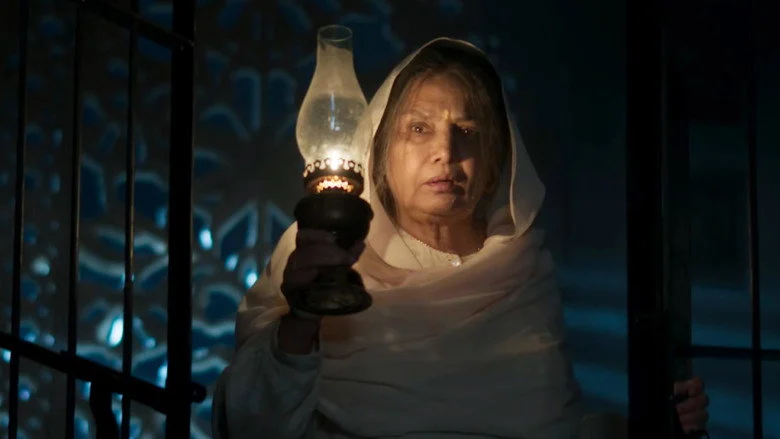
The house in Lahore smells of someone else’s life. When the refugee family steps into the haveli they’ve been allotted, they find an old Hindu woman, Mai, still occupying it, and the camera holds on that moment of mutual trespass long enough to make you feel the weight of every ancestral object in the room. This is the central image of Rajkumar Santoshi’s Batwara 1947, a film that wants to be a chamber piece about Partition but keeps reaching for the scale of an epic.
Sunny Deol’s Defiance Gets a Softer Register
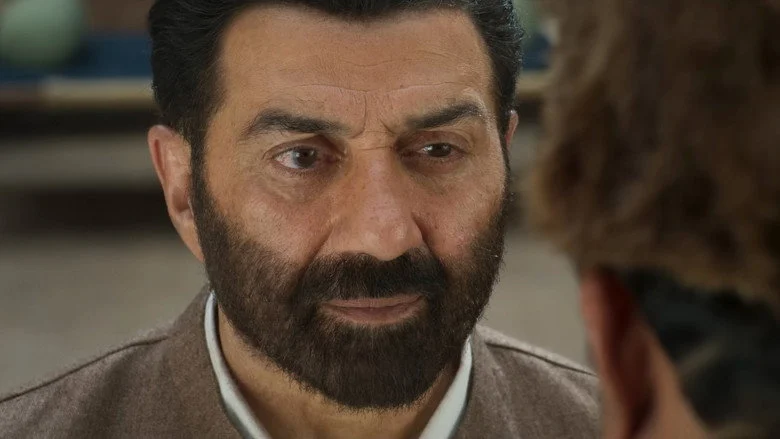
Sunny Deol’s Sikander Mirza is a familiar archetype, the man who protects his family with his body before his words. But the trailer suggests a performance pitched lower than his usual register, one where the famous Deol intensity is redirected into quiet surveillance of the house’s corners.
The casting is the film’s smartest move. Deol’s presence signals physical protection, yet the screenplay seems to want him vulnerable, caught between the refugee family’s desperation and Mai’s rightful claim. Whether that tension holds across 145 minutes remains the question.
Shabana Azmi’s Mai Is the Film’s Moral Center
Shabana Azmi’s Mai functions as the ethical counterweight to the entire enterprise. The trailer’s most praised scene, her confrontation with the occupying family, reveals the film’s true subject: not borders, but the unbearable intimacy of displacement.
Azmi brings a lifetime of craft to a role that could have been a caricature of victimhood. Instead, she anchors the house-bound conflict with a stillness that makes the surrounding chaos feel louder. Preity Zinta’s Hamida, meanwhile, exists as the emotional connective tissue between the family and Mai, though the pre-release material gives her little to do beyond witnessing.
The Genre-Core Execution: Drama First, Action Distant
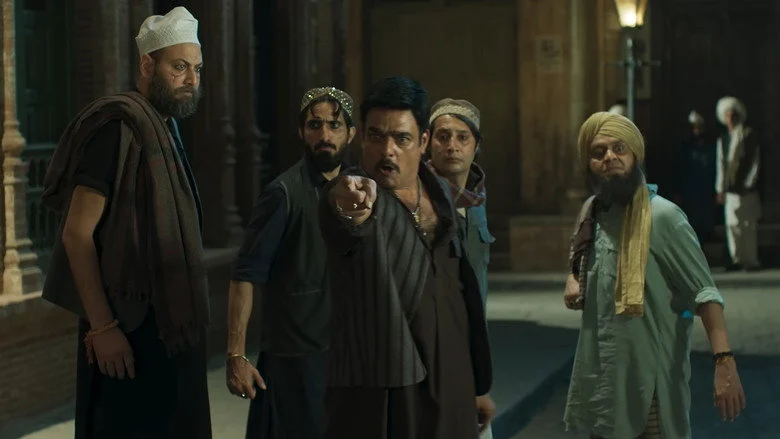
The film’s primary genre is drama, and its craft choices reflect that priority. The Partition backdrop is rendered as atmosphere rather than spectacle, mass displacement and fear are felt through closed doors and whispered conversations. The house-allotment conflict is the engine, not the violence outside.
Ali Fazal’s Habeeb and Karan Deol’s Javed appear to represent the younger generation’s more radical responses to the crisis, but the trailer keeps them in the margins. The A.R. Rahman and Javed Akhtar collaboration promises a music-led treatment, yet no song titles or reception data exist to judge whether the score elevates or overwhelms the dialogue-driven core.
Santoshi’s direction, per the source play by Asghar Wajahat, leans on confrontation as its primary tool. The strength is clear: a tighter chamber-drama structure than typical Partition epics. The risk is equally clear: without the scale of a Gadar or the courtroom structure of Mulk, the film must earn its tension entirely through interpersonal stakes.
For more like this, browse our Hindi Action reviews.
Abhimanyu Singh and the Problem of an Unconventional Villain
Abhimanyu Singh’s Yakub Khan is listed as the antagonist, but the available material suggests the real villain is the Partition itself. Singh’s role appears to be that of a communal pressure point rather than a conventional single-film adversary.
This is either a sophisticated choice or a structural weakness. If the film commits to the idea that systems, not individuals, create violence, it distinguishes itself from the genre’s usual demonization. But audiences conditioned by commercial Hindi cinema may find the lack of a focused villain frustrating.
What the Pre-Release Conversation Reveals
The budget estimate of ₹150 crore, sourced from Wikipedia, signals a major studio bet by Aamir Khan Productions. The film’s A certificate and its source-play foundation suggest a deliberate appeal to class audiences rather than mass-market sentiment.
The absence of completed-film reviews means any assessment of pacing, editing, or performance is provisional. What the trailer establishes is a film that understands its central metaphor, a home divided from within, even if it hasn’t yet proven it can sustain that metaphor for nearly two and a half hours.
Batwara 1947 is a watch for those who want their historical drama intimate and morally complex, best experienced on a large screen where Santosh Sivan’s period photography can breathe. For viewers seeking light entertainment or fast-paced action, this is an easy skip.
The film’s ambition is admirable, but its execution remains unverified, a 3/5 proposition built on promise rather than proof, waiting for the release date to justify its own confidence.
For a deeper look at how another film handles its moral conflicts, see our take on Picture review.
And if you’re tracing how directors build tension through atmosphere, our Photographer verdict review explores a similar craft challenge.

Recommended for You

Spider-Man: Brand New Day (2026): A Lonely Hero’s Evolution Teases Marvel’s Boldest Reset
The trailer opens on an empty apartment. Peter Parker pours cereal alone, the silence louder than any explosion. This is the most…
Hum Angrezon Ke Zamane Ke Jailor Hai (2026): Asrani’s Nostalgia Play Stumbles on Narrative Clarity
A murder mystery unfolds within the confines of family dispute and criminal escalation, with investigators Dev and Rana tasked to unravel layers…
Main Vaapas Aaunga (2026): Imtiaz Ali’s Partition Romance Weaves Memory and Melancholy
A 95-year-old man on a deathbed in Chandigarh fixes his gaze on a map of Sargodha and whispers, “Main vaapas aaunga.” The…