Pratap (2026): Amit Sadh Anchors a Brutal Study of Power Stripped Bare

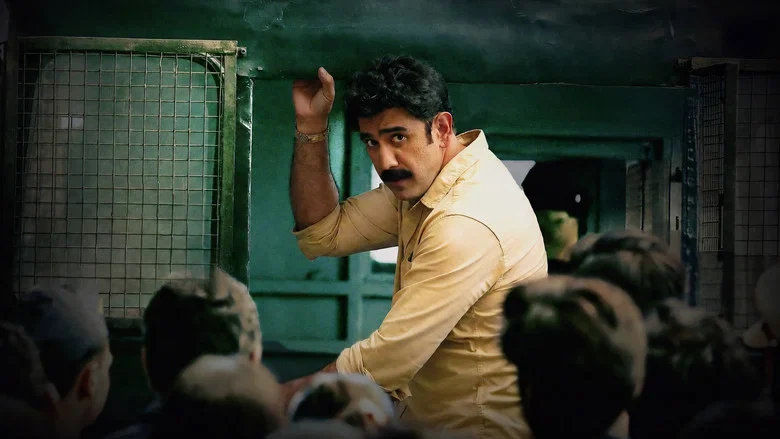
Amit Sadh opens the film with his shoulders squared, a man accustomed to ending conversations with a single nod. By the second act, those same shoulders are pressed against a concrete prison wall, learning the geometry of institutional obedience.
A Viral Death That Reopens Twenty-Six Ghosts
The first thirty minutes move with the clipped efficiency of a procedural, tracking Pratap Ranade through a parking-lot apprehension that ends with a suspect dead of an apparent heart attack. A bystander’s phone captures the aftermath, and the footage metastasizes across social media before the body has cooled.
Sachin Saraf refuses to linger on the spectacle of the arrest itself, training his lens instead on the public’s ravenous consumption of the clip. That decision establishes the film’s central thesis without a syllable of exposition: in the age of the viral video, a man’s entire career becomes a single looped frame.
The controversy widens with ruthless logic, pulling twenty-six previous encounters into the investigative crosshairs. What could have been a standard-issue “cop vs. system” thriller instead becomes a forensic audit of a man’s professional history, each prior death now reframed as potential evidence.
When the Enforcer Becomes the Inmate
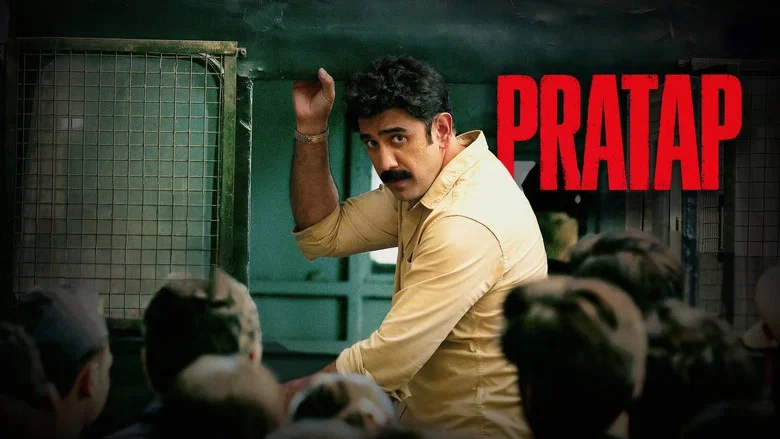
The film’s structural intelligence is most visible in the transfer to Mumbai Central Prison, where Pratap’s former authority evaporates with the clang of a cell door. Saraf strips away the trappings of the encounter specialist, the swagger, the deference, the tactical command, and leaves only a man learning to queue for meals.
This status reversal is the engine that drives the middle section, and it’s a more interesting mechanism than any conspiracy reveal. The screenplay understands that humiliation is a slower, more corrosive threat than a bullet, and it lets that corrosion do the dramatic work.
Seema Biswas, as jailer Meera Sen, embodies the institutional counterweight with an unnerving economy of gesture. She never raises her voice; she simply reads the rulebook aloud to a man who once wrote his own, and the power dynamic shifts with each recitation.
The Stillness That Manufactures Pressure
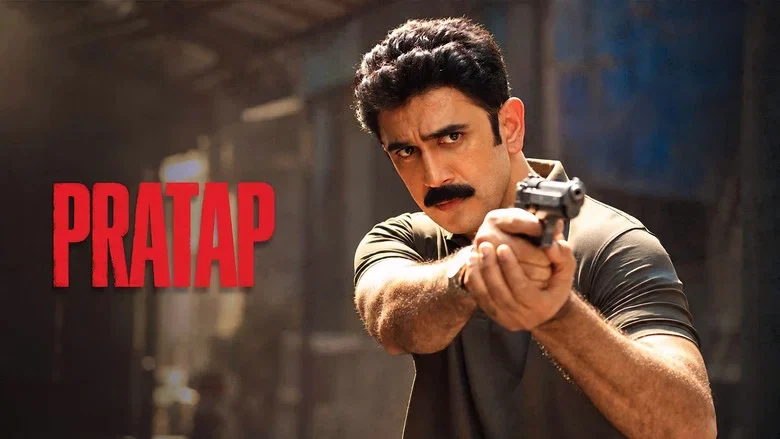
Sadh’s performance is built on the slow dismantling of physical certainty, and the camera stays close enough to register the micro-adjustments: the jaw that clenches when an order is repeated, the eyes that drop before a guard’s stare, the hands that learn to hang uselessly at his sides.
It’s a role that requires him to play authority and its absence in the same body, and he calibrates the transition with a precision that recalls the psychological weight of his work in Hum Angrezon Ke Zamane, where he similarly navigated the collapse of a carefully constructed persona.
Biswas, meanwhile, refuses to play the jailer as a villain, offering instead a portrait of bureaucratic discipline that is almost maternal in its coldness. The prison confrontation plays like a chess match where only one player knows the rules, and she holds the board with quiet, devastating control.
A Conspiracy That Breathes Through Concrete
Anil Akki’s cinematography finds its most potent contrast between the parking lot’s harsh, public fluorescence and the prison’s low, amber wash, where shadows pool in corners and faces are half-lit. The visual shift mirrors Pratap’s internal descent from visibility to anonymity.
Saraf’s direction is most confident in the spaces between dialogue, allowing silence to carry the weight of Pratap’s isolation. A scene of him eating alone in the prison mess, surrounded by men he once would have arrested, communicates more about institutional violence than any monologue could.
The conspiracy thread, when it surfaces, feels almost secondary to the psychological drama, and that’s to the film’s credit. The screenplay resists the kinetic sensationalism that overtook Dhood (Sandstorm), opting instead for a deliberate, suffocating dread that prioritizes character over plot mechanics.
The Escape That Doesn’t Quite Earn Its Freedom
The final act pivots on Pratap’s flight to expose the state-linked conspiracy, and this is where the film’s grip loosens. The transition from prison drama to investigative thriller feels abrupt, as if the screenplay realized it needed an action beat and reached for the nearest available exit.
The climax is described as unexpected, and it is, but not always in ways that serve the character’s arc. The conspiracy reveal raises questions the film doesn’t have time to answer, and the resolution leaves a residue of ambiguity that feels less like deliberate open-endedness and more like narrative exhaustion.
Yet the film’s strongest moments, Pratap’s internal battle, the shifting dynamics behind prison walls, the unexpected climax, remain intact, and they linger longer than the plotting missteps. Saraf understands that the real thriller here is a man’s reckoning with his own record, and he stages that reckoning with genuine conviction.
A Studio Bet on the Mid-Budget Crime Drama
Pradeep Rangwani’s production represents a calculated wager on the appetite for morally complex police narratives, a genre that has found renewed life in the current theatrical landscape. The film’s UA16+ classification signals an adult-oriented release, targeting the same demographic that turned out for similarly serious-minded crime dramas.
For Amit Sadh, this is a bid to anchor a theatrical property after years of streaming-heavy output, and his performance is calibrated to remind audiences of his capacity for interiority.
Whether that translates to box-office leverage remains unproven, but the film positions him as a leading man willing to cede the spotlight to character rather than charisma.
The commercial viability of mid-budget Hindi thrillers without a marquee villain or a franchise hook is the real question here, and Pratap offers a test case for whether audiences will show up for a film that prioritizes psychological pressure over set-piece spectacle. The answer will depend on word-of-mouth, not marketing.
The Verdict: A Man Unmade by the System He Served
What lingers after the credits is not the conspiracy’s resolution but the image of Pratap standing in a prison queue, his identity reduced to a number and a uniform. The film’s final implication, that the state’s machinery is indifferent to the men it once celebrated, lands with quiet, unsettling force.
Saraf has made a thriller that understands the terror of institutional erasure, and Sadh gives it a body to inhabit. The film is not flawless, but it is serious, and it treats its central question, whether a man can be both a weapon and a victim, with the gravity it deserves.
This patient character study signals a welcome tonal maturity across contemporary Hindi thrillers, proving that tension thrives without manufactured plot theatrics. Pratap may not be the year’s most polished crime drama, but it is one of its most honest about the cost of wearing a badge.
Explore Cinema Hubs

Recommended for You

Kidney (2026): Aakarsh and Agrim Sansanwal’s Festival Darling Risks Too Much on Silence
The opening night crowd at the Tallinn Black Nights Critics’ Picks screening settled in expecting a rural Hindi black comedy about an…

Max, Min and Meowzaki (2026): Vil Huss and stands out while the narrative loses grip
Two people sit opposite each other, their shared life laid out on a table, and the argument spirals into who gets the…
Ananya’s Call (2026): A 33-Minute Tamil Thriller That Trusts Its Premise
The phone rings inside a quiet home, and Ananya Iris answers into a nightmare, an impossible event that demands she move before…