Lakshmikanthan Kolai Vazhakku (2026): Arivumathi s Burden lifts key stretches, not the full runtime

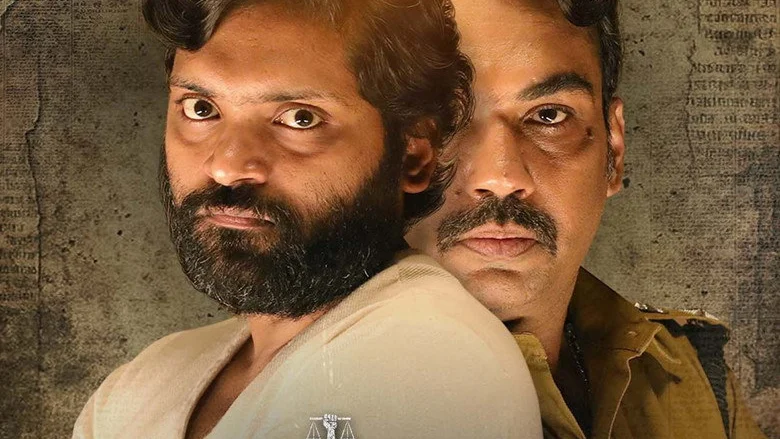
The courtroom is a battleground of words in Dayal Padmanabhan’s Lakshmikanthan Kolai Vazhakku, where a late twist involving Brigida Saga’s Mallika suddenly binds the personal to the political. This is a film that wants to argue with you, not thrill you, and that is both its strength and its undoing.
For a Tamil crime drama rooted in a historic murder case, the film’s compact 1h 47m runtime suggests efficiency, but the actual experience is weighed down by relentless exposition. It is a watch for those who prefer their justice served with a side of political theory, not for anyone seeking a pulse-pounding procedural.
Arivumathi’s Burden: Vetri Sudley Anchors a Talky Script
Vetri Sudley’s Arivumathi carries the investigation-and-drama portions with a performance that leans heavily on dialogue delivery rather than physicality. He is most effective in confrontational scenes where the script centers his perspective, making him a serviceable but not magnetic lead.
The actor works best when the screenplay gives him a sparring partner; alone, his character’s emotional range feels constrained by the very words he is asked to deliver.
Sivanandham and the Political Chessboard
Rangaraj Pandey’s Sivanandham functions as a major dramatic presence rather than a conventional antagonist. His role is tied directly to the film’s political and legal tension, making him less a villain and more a counterweight to Arivumathi’s arguments.
This dynamic positions the film as a battle of ideologies rather than a clash of personalities, which fits the director’s intent but limits the visceral engagement a crime drama typically requires.
Genre Execution: A Crime Drama That Prefers Debates Over Dread
Padmanabhan’s film emphasizes dialogue and argument over action, using the case structure to build social commentary. The courtroom-and-argument heavy stretches are the film’s main dramatic mode, and they are relentless. There is no chase sequence, no shadowy conspiracy, just people talking at each other about justice, and the audience is expected to keep up.
The late twist involving Mallika is the single most effective craft decision, sharpening the conflict just when the lecture-heavy pacing begins to numb the senses. It injects personal stakes into what had become a purely ideological exercise. This reveal is the moment the film stops being a history lesson and starts being a story about someone.
The compact runtime suits the procedural format, but the editing fails to disguise the uneven pacing. The first half is setup-heavy, and while the second half benefits from the twist, it still draws criticism for its didactic tone. The film’s best format is regular theatre, where its argumentative nature can be absorbed without distraction.
For more on how the Tamil film industry handles such weighty subjects, browse our Tamil Drama reviews.
Mallika’s Late Arrival and the Ensemble’s Weight
Brigida Saga’s Mallika is central to the late twist, and her role deepens the personal angle of the case considerably. She appears to be the emotional anchor the film desperately needs in its second half, though her screen time feels limited by the procedural scaffolding around her.
Lollu Sabha Maaran as Murthi and Saravanan as Sargunam provide supporting texture in the case-driven sections, working within the ensemble-heavy debate sequences. Lizzie Antony’s Soodamani and Kanya Bharathi’s Annam ground the social-drama side in human terms, even if their characters are mostly reactive to the male-led arguments.
A Socially Conscious Film That Overstates Its Case
The film handles a socially conscious subject with clear intent, and its historical and political relevance is undeniable. Dinamalar’s average critic rating of 2 reflects the divide between intent and execution, the message is noble, but the delivery is a sermon.
Audience reviews are more generous, with many praising the story as well made and the performances as effective. Yet the same viewers complain about the speech-driven nature and the slow pacing, suggesting a film that earns respect but not affection.
I found myself agreeing with the film’s politics while checking my watch during its arguments, a strange position for a crime drama.
The lack of box office reporting makes it hard to gauge commercial reception, but the film’s limited emotional scope and lecture-like stretches suggest it will find its audience only among dedicated crime-drama enthusiasts. The direction keeps the subject matter politically pointed, but the screenplay’s reliance on exposition is a specific flaw that no amount of good intent can fully mask.
If you are a fan of courtroom arguments and political intrigue, this is worth a patient watch. But if you came for a thriller, you will leave disappointed. Lakshmikanthan Kolai Vazhakku is a film that talks a good game but forgets to play one, a 2 out of 5 for its inability to translate its worthy subject into compelling cinema.
For a more controlled take on crime and justice, Second Marriage review offers a different kind of tension.
If you prefer your social commentary with tighter pacing, I Nobody verdict handles its thriller elements with more restraint.

Recommended for You
Main Vaapas Aaunga (2026): Imtiaz Ali’s Partition Romance Weaves Memory and Melancholy
A 95-year-old man on a deathbed in Chandigarh fixes his gaze on a map of Sargodha and whispers, “Main vaapas aaunga.” The…
Mollywood Times (2026): Naslen’s Meta-Cinematic Coming-of-Age Gambit
A teenager asks his father for a video camera, then gathers friends to shoot a horror short that will live forever in…

Pyaar Prema Kalyanam (2026): A Fresh Premise That Settles for Familiar Comfort
The premise arrives with a confident swing: a bride named Pavi refuses to leave her family home, and the husband packs his…