I, Nobody (2026): Prithviraj’s Controlled Thriller Loses Its Grip in the Final Reel

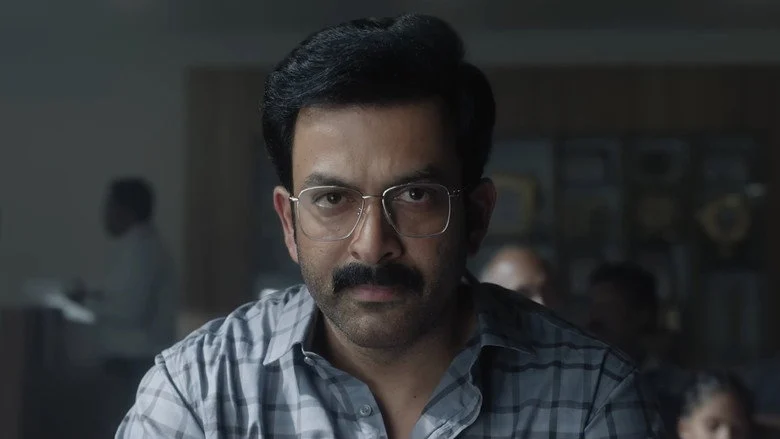
Rajeevan is just another government employee when he witnesses something he shouldn’t have. The bank robbery aftermath that follows turns his routine existence into a public spectacle of suspicion.
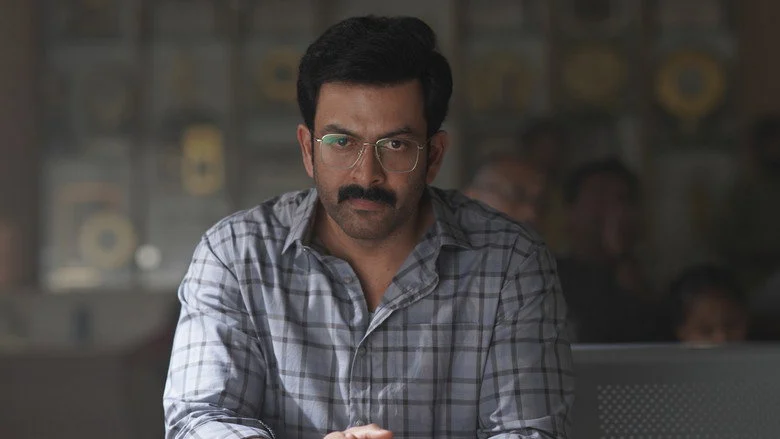
Prithviraj Sukumaran anchors this premise with a performance that refuses theatrical shortcuts. His shift from domestic calm to institutional pressure feels earned, particularly in the late-film confrontation sequences that several reviews singled out as his strongest material here.
Nissam Basheer’s Direction Builds Paranoia, Then Loses the Thread
Basheer and writer Sameer Abdul construct a social-thriller frame that prioritizes suspicion over spectacle. The first half thrives on the quiet disruption of Rajeevan’s ordinary life, and the tension devices, public judgment, police pressure, the missing money, land with unsettling precision.
But the screenplay’s structural balance falters after the midpoint. The final-act handling of the thriller reveal was widely criticized for weakening the payoff, and the pacing drags where it should tighten.
The Genre Mechanics: A Thriller That Fumbles Its Own Setup
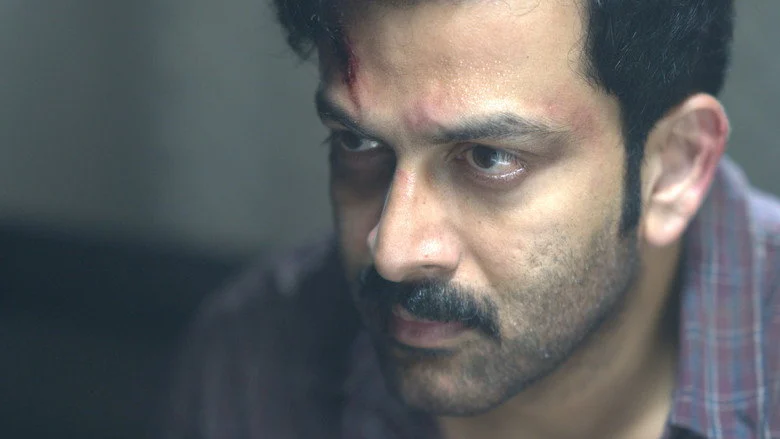
The film’s core craft leans on procedural and emotional conflict rather than action choreography. The bank robbery aftermath and the missing-money suspicion sequence establish a grounded visual approach from cinematographer Dinesh Purushothaman, suited to the crime-thriller setting. The ordinary civilian caught inside a criminal event is a distinct premise, and the family-protection arc raises the stakes without resorting to melodrama.
Yet the thriller mechanics betray the promise. The reveal structure and resolution were described as less effective than the setup, one publication called it “an unconventional thriller that fumbles in the final act, ” while another noted it’s “a sharp social thriller that doesn’t quite stick the landing.” The second half’s editing loses the tightness that made the opening portions compelling.
What remains is a film that understands its genre’s social commentary but struggles with its narrative obligations. The system that crushes Rajeevan is rendered convincingly; the story that should free him from that system is not.
Parvathy Thiruvothu and the Supporting Ensemble Hold the Domestic Front
Parvathy Thiruvothu functions as Rajeevan’s family anchor, grounding the emotional stakes in a way that makes the institutional pressure feel personal. Her presence ensures the domestic thread carries weight even when the thriller mechanics wobble.
Vijayaraghavan and Hakim Shahjahan appear in supporting roles that add ensemble weight, though scene-level details remain thin. Ashokan’s inclusion signals a deliberate casting choice toward seasoned character actors, reinforcing the film’s class-oriented, social-thriller ambitions rather than mass-action spectacle.
Audience Reception: A Premise Applauded, A Resolution Questioned
Audience sentiment mirrors critical response, praise for Prithviraj’s controlled performance and the central premise, complaints about second-half pacing and the weak resolution. The film’s 168-minute runtime tests patience, especially when the narrative loses momentum.
There’s no verified controversy or political backlash attached to this release, which is notable for a film that critiques systems of suspicion. The conversation around I, Nobody remains focused on its craft and its flaws, not its provocations. For viewers who prefer crime-thrillers with social commentary, this delivers in stretches; for those expecting a neatly resolved thriller, it will frustrate.
If you’re drawn to the premise of an ordinary man crushed by public judgment, you’ll find plenty to admire in the setup. Browse more Malayalam Thriller reviews to see how this compares with the genre’s recent output.
I, Nobody is best watched on OTT or in a regular theatrical setting, where its grounded visuals and Prithviraj’s performance can breathe. Go for the lead actor’s controlled work and the social-thriller framing; temper expectations for the finale. This is a film that earns its setup and then spends its closing stretch trying, and failing, to match it. I, Nobody gets a 2.5 out of 5 from me: a sharp premise undone by an uneven screenplay that doesn’t trust its own strengths.
For another take on flawed thrillers, check out Ontari E review.
Prithviraj’s everyman turn also resonates in Qaid verdict, where a similar performance register battles patchy writing.

Recommended for You

Tera Yaar Hoon Main (2026): Paresh Rawal Owns lifts key stretches, not the full runtime
Sanju Deshmukh, a young man full of charm and a hidden agenda, walks into the home of Vishwanath Purohit, the man he…
Drishyam 3 (2026): Ajay Devgn Returns to Finish What Deception Built
Vijay Salgaonkar sits in the shadows of his own life, waiting for the past to resurface, and it does, with new evidence…
I’m Game (2026): A Nearly Three keeps the film tense but uneven overall
Dulquer Salmaan’s Dan John enters a world of high-stakes crime with the swagger of a man who knows the odds are stacked…