Baby Do Die Do (2026): The First Kill keeps the film tense but uneven overall

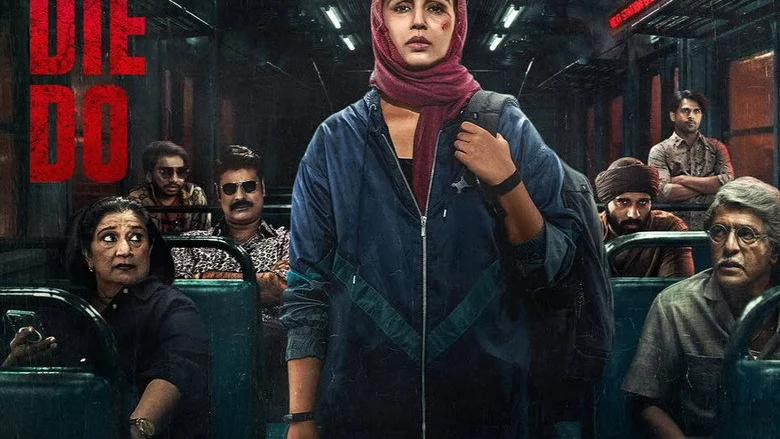
The first murder arrives in near-silence. Baby KarMarKar, a deaf-mute woman played by Huma Qureshi, hears her dead sister’s voice for the first time in a grimy Mumbai flat. Her eyes shift, her hands rise, and she commits an act that is less violence than possession. It is the movie’s single best scene, economical, unnerving, and entirely wordless. For a few minutes, Baby Do Die Do promises something genuinely new inside Hindi genre cinema.
Huma Qureshi: A Body Becomes A Weapon
Qureshi carries the entire film on spinal tension and micro-expressions. In the street-chase sequence, she navigates a crowded Mumbai market without hearing a single horn, her flinch arrives a beat late, her survival instinct a silent algorithm. The first murder scene demands she sell both demonic possession and personal trauma, and she does so through clenched jaw and wet eyes alone. This is her most physically demanding role to date, and she never breaks character.
That said, the script does not always earn her commitment. Her transformation from traumatised sister to desi hitwoman feels plotted, not lived. The dialogue “I can only hear her voice now. She tells me what to do” lands with a thud because the film has already told us what she hears, rather than showing us why she obeys.
Nachiket Samant: Atmosphere Over Architecture
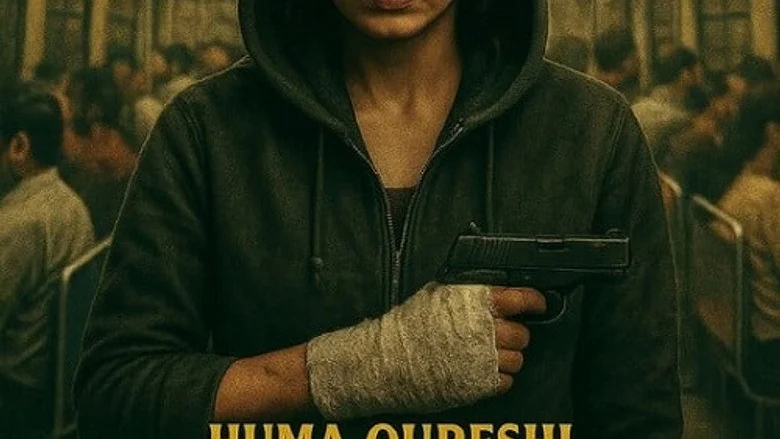
Director Nachiket Samant builds Mumbai like a character, wet alleys, neon-bathed interiors, shadows that curl around silence. The cinematography leans hard into noir lighting, and the background score knows exactly when to pull back and let the absence of sound do the work. These choices give the first hour a hypnotic, suffocating grip.
The screenplay, however, unravels in the second half. The nonlinear structure introduces plot holes around Baby’s backstory that feel like dropped stitches rather than intentional gaps. Samant seems more interested in mood than motivation, and by the time we reach the climax, the emotional architecture has no foundation to stand on.
Genre-Core Execution: When the Killer Cannot Hear
The primary genre here is thriller, and Baby Do Die Do earns its stripes in isolated setpieces rather than sustained dread. Baby’s deaf-mute condition is not a gimmick, it is a source of genuine tension because the audience shares her auditory vulnerability. In the first murder, the sound mix lets us hear only what she hears: a woman’s whisper, muffled street noise, the drip of a tap. This is smart genre work.
The neo-noir elements land best in the visual language. Mumbai’s underbelly is shot with grain and green-grey colour grading, evoking the moral corrosion typical of the genre. Chunky Pandey’s character feels lifted from a 90s noir, and the contrast with Baby’s silent ferocity creates an interesting tonal friction.
But the film overplays its hand with dark humour. A joke about a corpse’s phone ringtone breaks the tension in a scene that should be suffocating. The thriller tone is never fully stable, and the climax, a rushed confrontation with the mastermind, lacks the fatalistic poetry that neo-noir demands. It ends with a reveal, not a reckoning.
Supporting Cast: Names Without Faces
Sikandar Kher provides a grizzled presence that grounds the film’s criminal network, though his character remains a sketch. Chunky Pandey brings vintage menace in his cameo, one glare in a nightclub scene conveys more than his lines do. Seema Pahwa is wasted in a role that feels pasted in; her single scene hints at a matriarchal power that the film never explores. Saqib Saleem, also a producer, plays a function rather than a person. The supporting cast signals depth, but the screenplay treats them as narrative furniture. If the film intends to be India’s answer to La Femme Nikita, it needed these characters to be obstacles, not ornaments.
If Qureshi’s Baby sends chills through silence, you might also enjoy browsing our Hindi Thriller reviews for more genre experiments and audacious performances.
Audience Reception: Praise for the Concept, Patience for the Craft
Early word-of-mouth settles on a familiar split: audiences love Qureshi’s commitment and the novelty of a deaf-mute hitwoman, but they also flag the rushed climax and plot holes that make the second viewing feel like damage control. The “India’s first desi hitwoman” line, delivered by the mastermind, has drawn both cheers and groans. It is a proud mic-drop that the script never earned.
The film’s strongest defence is its ambition. For every awkward tonal shift, there is a sequence, like Baby walking through a market as hunters close in, that proves the premise could have been extraordinary if the writing had matched Qureshi’s level. It is a debut worth watching for the craft in the margins.
Should You Watch Baby Do Die Do?
Go for Huma Qureshi’s performance and the first murder scene, which ranks among the best openings in recent Hindi thrillers. Skip if you need airtight plotting or abhor dark humour that fights the tone. See it on a big screen where the sound design and silence can fully work on you. The film tries to carve a new silhouette for the Indian assassin, and even in failure, that attempt deserves your attention.
Baby Do Die Do is a flawed, furious debut with a lead who refuses to let it drown, I’d call it a solid 2.5/5, and worth the argument it will start.
For a tighter take on trauma transformed into violence, read our review of Alpha review.
For another story where the physical body becomes the only weapon, check out Alpha verdict.

Recommended for You
Bhaskara Bharanam (2026): Roopesh Peethambaran Doubles lifts key stretches, not the full runtime
The forced cohabitation premise lands with an almost theatrical bluntness: a father and son who can barely stand each other, now locked…
Vishwanath & Sons (2026): Suriya’s Tender Drama of Duty, Love, and Fatherhood
Sanjay Vishwanath is an international shooter whose world is measured in precise distances and controlled breathing, yet the film finds him helpless…
Monkey In A Cage (2026): Kashyap Pins Celebrity Crisis on Bobby Deol’s Controlled Descent
A fading television star blocks his ex-girlfriend’s attempts to reconnect, but her escalating response, a rape accusation, traps him in a corrupt…