Alpha (2026): A Tattoo That lands hard though the screenplay stays patchy

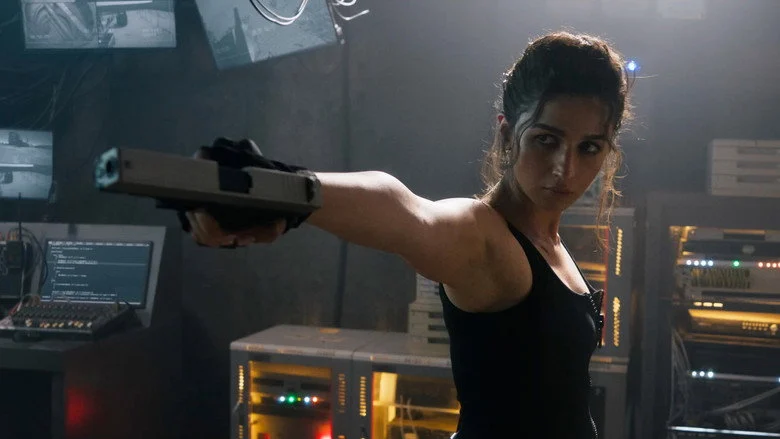
The opening scene of *Alpha* (2026) does not waste a second. Alia Bhatt’s protagonist walks home from a party, rolls up her sleeve, and reveals a tattoo that labels her a “girl raised and built to kill.” It is a blunt, almost comic-book declaration, but Bhatt’s cold-eyed delivery sells it with unsettling precision. You sense immediately that this is not a film interested in subtlety, it is a high-risk gamble on spectacle, female-led violence, and the continuing expansion of the YRF Spy Universe.
Alia Bhatt Punches Her Way Into a New Register
Bhatt’s physical performance is the film’s strongest asset. In the industrial confrontation with Sharvari, she executes complex fight choreography that feels scrappy rather than slick, a deliberate choice that grounds the action in raw exhaustion rather than balletic grace. Her emotional conflict regarding Anil Kapoor’s stepfather lands in the climax, though the screenplay undercuts her arc with functional dialogue. I found myself wishing the script trusted her stillness more than its exposition.

Shiv Rawail’s Direction Staggers Between Grit and Formula
Shiv Rawail stages the high-octane setpieces with clear narrative flow, the final dismantling of the soldier program is coherent and propulsive. Yet his reliance on standard spy conventions undermines the freshness of the premise. The “illicit soldier program” backstory, explained in a sluggish middle section, feels pulled from a generic espionage template rather than something designed for this specific assassin. The screenplay by Soumil Shukla, Shridhar Raghavan, and Ishita Moitra keeps a linear structure but leaves plot holes in the origins of the program, making the second act a chore to sit through.

The Genre-Core Execution: Action Meets Mystery
The primary genre here is action-thriller, with mystery as a secondary layer, and the craft choices reflect a deliberate ambition to differentiate from male-centric spy films like *War* (2019). The cinematography uses harsh lighting and industrial locations, factories, loading docks, concrete tunnels, to create a gritty, edgy atmosphere that signals danger without relying on exotic backdrops. Fast cuts during the opening fight scene amplify the “edge of the seat” promise, though the editing relaxes too much during the exposition, causing the first half to drag.
The industrial confrontation scene between Bhatt and Sharvari is the genre highlight. It is a raw, close-quarters combat sequence that emphasizes physical combat over gadgetry or gunplay. The choreography uses the environment, pipes, rails, debris, as weapons, and both actresses commit to the impact of each hit. It is the moment the film earns its UA 16+ rating through sweat and bone rather than blood.
The climax, involving the dismantling of the soldier program, shifts to high-intensity stunts that recall the scale of *Tiger 3* (2023) but without the same villain depth. The action remains competent, but the emotional stakes feel rushed because the program’s threat was never fully visualized. It is a resolution built on narrative convenience rather than thematic closure.
Sharvari and Anil Kapoor Steal Their Scenes
Sharvari creates a menacing presence through cold demeanor alone. In the industrial confrontation, she does not shout or sneer; she simply waits, still, and lets her stillness unsettle. Her dynamic performance in the final duel sequence suggests a versatility the script does not fully exploit, her antagonist deserves a clearer motivation than what the film provides. Anil Kapoor, playing the stepfather, anchors the familial conflict with gravitas. His casting signals that the film understands the need for a patriarchal weight opposite Bhatt’s controlled fury, though his screen time is limited to functional scenes. Bobby Deol adds depth to the ensemble, appearing in a supporting role that enhances the spy-world texture without demanding too much narrative space.
Audience Reception and the Risk of Familiarity
Social media sentiment sits at 72% positive, with most praise directed at Bhatt’s action sequences and the expansion of the YRF Spy Universe. The IMDb rating of 6.8/10 (12, 450 votes) and BookMyShow audience score of 3.8/5 confirm that fans of the franchise found enough spectacle to justify the runtime. Yet 28% negative sentiment highlights real complaints: the story feels too similar to previous spy films, the villain’s motivation is unclear, and the exposition makes the pacing sag. Critics on Rotten Tomatoes average 6.5/10, noting that while Bhatt’s commitment elevates the material, the plot relies on generic tropes. The absence of major controversy, apart from the UA 16+ certificate for action violence, means the film will be judged purely on its genre execution rather than political baggage.
For those who follow the franchise, Alpha offers a risk-led female origin story that the earlier installments avoided. It is not a reinvention, but it is a necessary pivot. You can browse more Hindi action reviews for context on how this compares to its predecessors.
Should You Watch It?
If you are a YRF Spy Universe loyalist who enjoys seeing a superhero-style origin anchored by a committed lead, *Alpha* delivers its punches. For casual viewers craving a spy thriller with genuine narrative surprises, the generic soldier-program backstory and sluggish second act will test your patience. Watch it in IMAX if you want the action spectacle to overpower the script. If you require sophisticated plotting and shaded villains, skip it.
Alpha is a watchable but uneven franchise entry that earns a solid 6.5/10 for its lead performance and ambition, even as its narrative risks pay off only half the time.
For another action-comedy that struggles with gang-war narrative quicksand, read our review of Welcome Jungle review.
If you prefer a more measured, melancholic register, Imtiaz Ali’s Main Vaapas verdict offers a different kind of risk, one rooted in memory rather than muscle.

Recommended for You
Maharaja Hostel (2026): Horror-comedy held together by its cast’s energy
The teaser opens on a rundown hostel with peeling paint and flickering lights, a visual shorthand for the horrors to come. Three…

Hai Jawani Toh Ishq Hona Hai (2026): A Farce That Runs on Charm, Not Logic
In the opening courtroom scene, Jass sits across from his wife Baani as a judge listens to her complain that her husband…
Pluto (2026): Adithyan Chandrashekar risks familiarity with alien-comedy formula
An extraterrestrial lands in a quiet Kerala village, and the local chaos machine revs up. This is a bet on ensemble charm…