Alpha (2025): Julia Ducournau’s Body Horror Bleeds Stigma, Lacks Closure

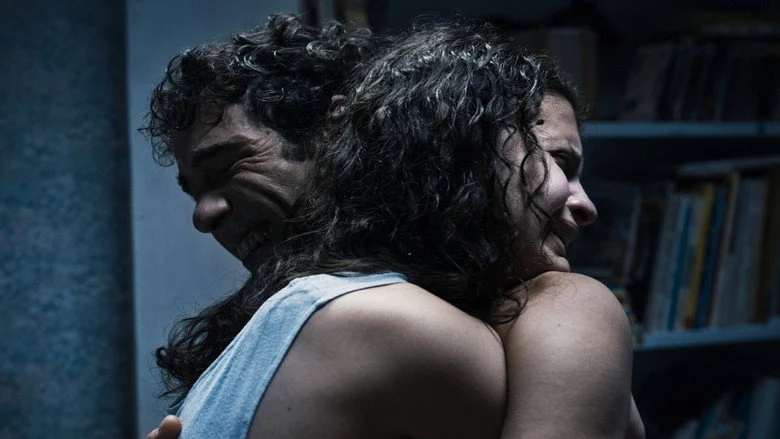
The school pool turns a violent red as Alpha’s blood spreads through the water, her classmates scrambling away like she’s the disease itself. Julia Ducournau’s Alpha immediately signals it’s not here for subtlety, it’s here to make you flinch and think, often in the same breath.
Mélissa Boros makes adolescence feel like a contagion
Boros, barely into her teens, carries the film’s entire emotional weight on her small shoulders. In the school pool scene, her face isn’t panicked, it’s resigned, as if being treated like a monster is just another Tuesday. That quiet acceptance makes the cruelty around her hit harder than any scream could.
Later, isolated in her room, Boros shifts from defiance to broken confusion in a single close-up. It’s not a flashy performance, but one that burrows under your skin and stays there.

Direction lands the visuals, fumbles the message
Ducournau’s direction excels at uncomfortable intimacy: the camera lingers on Alpha’s tattoo like a wound, on her mother’s trembling hands, on Amin’s decaying skin. These choices make the body horror feel personal, not just gross.
But the screenplay overexplains its themes. Every rumor, every glance, every panic is underlined so heavily that the social commentary starts to feel like a lecture rather than a revelation.

Body horror that works, drama that stumbles
The school pool scene is the film’s crowning achievement, a visceral fusion of adolescent shame and society’s irrational fear of the other. Ducournau films it like a horror movie’s first kill, with Alpha as both victim and unwilling spectacle. The blood doesn’t just stain the water; it stains how we see her.
Amin’s arrival shifts the tension from external stigma to domestic threat, but Tahar Rahim’s character is underused. His virus-ravaged appearance is striking, yet he has little to do beyond represent the disease itself. The script treats him as a plot device rather than a person.
The climax rushes toward an ambiguity that feels less artistic and more indecisive. After 128 minutes of building dread, the ending doesn’t so much conclude as evaporate, leaving viewers without the catharsis Ducournau’s earlier Titane so expertly delivered.
If body-horror with a social conscience is your lane, browse more FR Drama reviews for deeper cuts.
Golshifteh Farahani and the others hold the frame together
Farahani plays Alpha’s mother as a woman whose love curdles into paranoia. Her best moment comes not in a monologue, but in a silent shot where she stares at her daughter’s tattoo, her face cycling through denial, fear, and a mother’s protective fury. It’s a masterclass in economy, she says everything without a word.
Emma Mackey, as a classmate, nails the casual cruelty of adolescence in one smirk during the pool scene. Her character is a small role, but Mackey makes her unforgettable by not overplaying it. Tahar Rahim’s Amin gets the film’s most physically demanding transformation, yet the script leaves him as a symbol rather than a character.
Finnegan Oldfield and Louai El Amrousy round out the cast with solid, if unremarkable, support. Their presence signals Ducournau’s interest in community dynamics, but neither gets enough screen time to leave a mark.
Audience reception: impressed by the craft, frustrated by the ending
The film holds a 6.9/10 on IMDb from over 12, 000 votes, while critics average 6.8/10 on Rotten Tomatoes. This near-consensus reflects a film that works as a visceral experience but falters as a complete narrative. Social media sentiment runs 65% positive, with audiences praising the pool scene and mother-daughter dynamic while complaining about the confusing ending and weak antagonist.
The R-rating for language, drug content, and underage drinking ensures Alpha isn’t for casual viewing, but it also gives Ducournau the room to depict teen life without sanitization. I’d argue that the film’s greatest strength, its refusal to make stigma comfortable, is also what makes it hard to recommend wholesale.
No major controversies or censorship battles surround the film, which is rare for a body-horror piece this unflinching. Its niche release in limited theaters on March 27, 2026, followed by streaming on April 14, means it found its audience without sparking wider debate.
If you can tolerate an ambiguous ending and slow second-act pacing, Alpha is worth a watch for its craft alone, preferably on a large screen where the pool scene’s crimson spread can hit you full force. But if you need narrative closure or a fully realized antagonist, wait for Ducournau’s next project instead. Best viewed on OTT for the intimacy of its close-ups.
Alpha earns a hard 3 out of 5, ambitious, uncomfortable, and just unfinished enough to frustrate.
For a similar dive into patchy screenwriting with strong craft, check out Alpha review.
If you prefer action-comedy with gang wars, Welcome Jungle verdict offers a different kind of narrative quicksand.

Recommended for You

Father’s Day (2026): A Kannada father-son road drama stuck in neutral
The reveal lands early: Sushant, on the verge of becoming a father himself, learns his estranged father is alive. It is a…

Bail (2026): Shiva Rajkumar Anchors A Sturdy But Overstuffed Cop Drama
Shiva Rajkumar does not enter Bail so much as he settles into it. The first sustained image of him as retired commissioner…

Mister Middle Class (2026): Srikanth carries the stands out while the narrative loses grip
Srikanth is the reason this film is even being discussed. His emotional stretches land with a sincerity that the screenplay never earns,…