HALF (2026): and the Missing Pieces


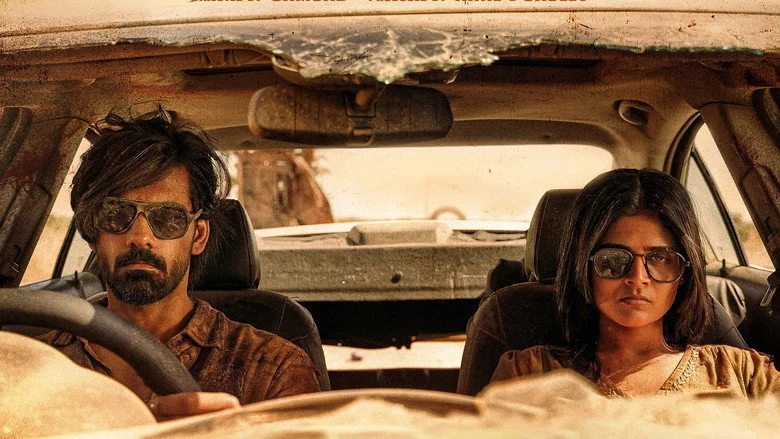
Half opens on snow, not fangs. Somewhere in Europe, a vampire named Victor falls for a human woman, Sofia, and the hunters come calling. She flees to India, dies, and leaves behind twins who grow up with an appetite they can’t name. Then the film cuts to a desert highway in Rajasthan, where Ethan and Ivy are ambushed by bandits, and the bloodlust they’ve been suppressing for two decades finally gets a reason to come out and play.
It’s a strange, hybrid creature of a movie: part vampire lore, part road thriller, part revenge saga. And for 96 minutes, director Samjad (working from a script he co-wrote with Praveen Viswanath) keeps the pedal down, refusing the slow-motion crutch that defines most Indian action cinema. This is a film that respects its audience’s intelligence enough to let the violence happen in real time, and respects its own mythology enough to let the emotional stakes breathe between the punches.
The Brutal Poetry of Real-Time Combat
The film’s most discussed sequence is the bandit attack on the Rajasthan highway. It’s a masterclass in spatial choreography: no speed-ramping, no wire-work fakery, just bodies in motion. Ranjith Sajeev (Ethan) and Aiswarya Raj (Ivy) trained for months in Pencak Silat under choreographer Very Tri Yulisman, the man behind The Raid 2, and it shows. Every strike lands with a thud, every grapple has weight, and the camera stays wide enough to let you see the geography of the fight. When Ivy snaps a bandit’s arm, the sound design does the heavy lifting: a wet crack, a gasp, then silence. It’s the kind of scene that reminds you how rare competent action staging has become in mainstream Indian cinema.
But here’s the problem: the film’s best scene arrives too early. After that highway ambush, Half shifts into revenge mode, and the momentum sags. The middle act, which should be the meat of the story, gets bogged down in flashbacks to Sofia’s European backstory, killing the tension that the opening act so carefully built. It’s a structural misstep that not even the committed performances can fully paper over. For a different take on how genre films handle structural imbalance, see our review of Enna Vilai review, which grapples with similar pacing issues in its second half.
Vampire Lore, Road Movie, and the Weight of Inheritance
What works best about Half is its refusal to treat vampirism as mere monster-movie window dressing. The twins’ bloodlust is framed as an inheritance, a curse passed down from a father they never knew, a mother who died protecting them. When Ethan first tastes blood in that desert fight, the film doesn’t celebrate it. It lingers on his face: confusion, then horror, then a grim acceptance. It’s a quiet moment in a loud movie, and it’s the film’s emotional anchor.
Amala Paul’s Sofia, seen only in flashback, does a lot with limited screen time. Her scenes in snowy Kazakhstan have a tragic inevitability, she knows she can’t outrun Victor’s world, but she tries anyway. The film’s cross-cutting between snow and sand, Europe and India, past and present, creates a visual rhythm that’s more sophisticated than the script deserves. Cinematographer [uncredited in available materials] finds poetry in the contrast: the white emptiness of Kazakhstan mirroring Sofia’s isolation, the ochre heat of Rajasthan reflecting her children’s rage.
The supporting cast is serviceable but underdeveloped. Abbas as Selli and Srikant Murali as Simon feel like archetypes rather than characters, obstacles for the twins to overcome rather than people with their own agendas. It’s a waste of talented actors, and it leaves the film feeling thinner than it should. For another perspective on how ensemble casts can elevate genre material, see our analysis of Epic First verdict.
Where the Film Stumbles
The screenplay’s biggest flaw is its reliance on exposition. The first act spends too much time explaining vampire rules, who can be turned, how they die, why the twins are different, when it should be showing us. A scene where Sofia explains her children’s nature to a confidante feels like a Wikipedia entry read aloud. It’s the kind of clumsy world-building that stops a movie dead.
Then there’s the ending. Without spoiling anything, the climax tries to have it both ways: a brutal revenge sequence that suddenly pivots to a moral about the cost of violence. The tonal shift is jarring, and it undermines the film’s earlier commitment to its own darkness. It’s as if the filmmakers got cold feet about their own premise. The result is a finale that feels less like a culmination and more like a compromise.
The Verdict on Half
Half is a fascinating misfire, a film with a genuinely original premise, stellar action choreography, and committed performances, undone by a script that can’t decide what it wants to be. When it works, it’s thrilling: the desert fights, the snowbound flashbacks, the quiet moments of horror on Ranjith Sajeev’s face. When it doesn’t, it’s frustrating: the exposition dumps, the undercooked supporting characters, the ending that pulls its punches.
If you’re an action fan tired of slow-motion heroics, this is worth your time. If you’re looking for a vampire film with real teeth, you’ll leave hungry. It’s a promising step for Samjad and his team, but Half is exactly that: half a great movie, waiting for the other half to catch up.
Rating: 3/5
Half releases in Malayalam, Tamil, Telugu, Hindi, and Kannada. Check your local listings for showtimes.
Ankit Jaiswal is the Chief Author, covering Indian cinema and OTT releases with honest, no-filler criticism. An SEO strategist by background, he brings a research-driven approach to film writing, cutting through hype to tell you exactly what's worth your time.