Udumbanchola Vision (2026): Mathew Thomas and the Newsroom That Eats Its Own

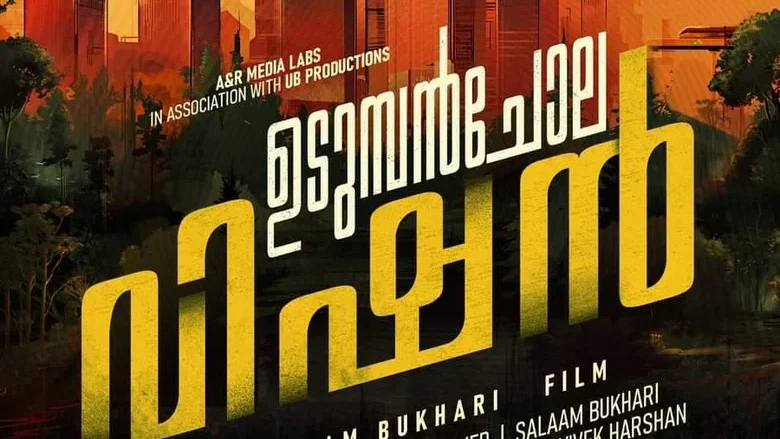
The first image that lands is a dead channel: a local newsroom with its lights half-off, monitors showing nothing but static and yesterday’s shame. Salaam Bukhari opens his directorial debut on that silence, and it’s the most honest thing the film ever does.
A Channel as a Loaded Weapon, Not a Backdrop
What Bukhari and writer Alan Rodney attempt here is genuinely risky: they build an action drama around the machinery of local television rather than treating journalism as wallpaper. The takeover of Udumbanchola Vision is staged as a hostile inheritance, and the film refuses to let the newsroom feel decorative.
That structural gamble separates it from the more conventional posturing of THE BRANDOS, where the ensemble’s swagger does most of the dramatic work. Here the swagger has to be earned through ratings, secrets and the moral cost of a headline.

When Ambition Curdles, the Film Finds Its Pulse
Mathew Thomas carries the film on a trajectory that moves from scrappy entrepreneur to something considerably colder. His early scenes have a boyish, improvisational energy, shoulders loose, eyes darting around the control room like a kid who’s just been handed the keys to a car.
By the second hour, the posture changes. He sits stiller. He listens less. The film’s smartest choice is letting his greed arrive quietly, through the way he stops asking questions and starts assigning them.
That restraint echoes the moral trap the actor navigated in Pradhama Dhrishtya Kuttakkar, where the performance thrived on the gap between what the character says and what he’s willing to do. Udumbanchola Vision stretches that same tension across a much larger canvas.
The Ensemble Fills the Room, Not the Frame
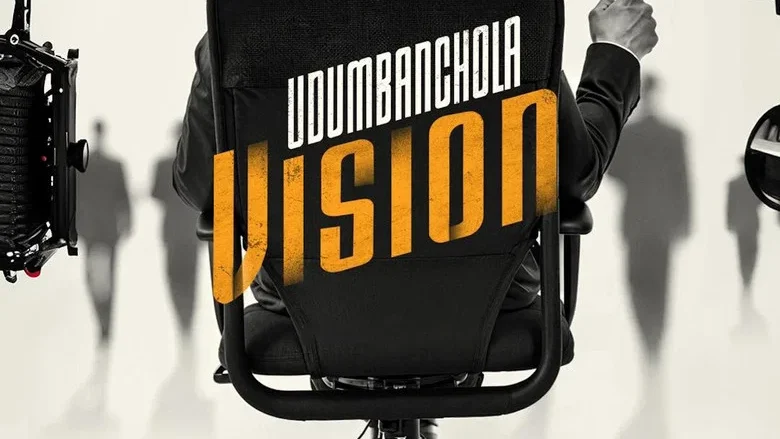
Sreenath Bhasi brings a wired, unpredictable energy to the channel’s inner circle, and in the film’s strongest mid-section sequence, a tense editorial meeting where three people argue about what to air, his physical restlessness plays directly against Mathew’s mounting stillness. That contrast does more dramatic work than any dialogue in the scene.
Milind Soman’s Malayalam debut is the film’s most curious gamble. He’s deployed with deliberate opacity, standing at the edge of rooms, saying very little, and the film uses his stillness as a threat rather than a performance. It works, mostly.
The rest of the ensemble, the rival operators, the institutional elders, the channel’s nervous staff, function as a chorus of institutional pressure rather than as individuated characters, and the film is content to let them stay that way.
Bukhari’s Rhythm Problem Is a Rhythm Problem
Vishnu Thandassery’s camera does something specific and effective in the first half: it shoots the newsroom in long, flat lateral compositions, so that the characters look like they’re trapped inside a broadcast frame. The lighting stays fluorescent and unflattering. It’s a deliberate refusal of glamour.
Then the international threat arrives, and the visual language shifts, wider lenses, cooler palettes, more aggressive camera movement. The problem is that this shift doesn’t feel earned. It feels like a different film has been grafted onto the first one.
Vivek Harshan’s editing keeps the first half tight and procedural, but the second half starts to sag under the weight of the expansion. Gopi Sundar’s score does a lot of heavy lifting in the final act, pushing tension the screenplay hasn’t fully built.
The film’s kinship with Khalifa Part 1 is instructive here: both films want to escalate from local power games into something mythic, but only one of them has the patience to let that escalation feel organic.
The Uncomfortable Question the Ending Refuses to Answer
Without spoiling the resolution, the film’s final act makes a choice that will divide audiences: it refuses to let the protagonist’s moral compromise become a clean moral lesson. The consequences arrive, but the clarity doesn’t.
That ambiguity is either the film’s most mature instinct or its most frustrating evasion, depending on how much you’re willing to forgive a first-time director for leaving the room before the argument is finished.
The Balance Sheet: A&R Media Labs Bets on a Debut
For A&R Media Labs and UB Productions, Udumbanchola Vision represents a calculated wager on a first-time director and a young lead with rising commercial heat. The ensemble casting, stacking established Malayalam performers around Mathew Thomas, is a familiar risk-mitigation strategy in the current market.
The film’s long production-to-release cycle signals a project that has been repositioned more than once, and that history shows in the tonal seams. Whether the theatrical window rewards that patience depends entirely on whether audiences follow Mathew Thomas into a film that isn’t quite the mass action vehicle the marketing implies.
The broader landscape of contemporary Malayalam actions has been moving toward more grounded, character-driven escalation, and this film wants to be part of that conversation. It’s just not fully fluent in it yet.
A Debut With a Pulse, Not Yet a Voice
Udumbanchola Vision is a film that knows exactly what it wants to be about, the corruption of ambition through the machinery of information, and only intermittently knows how to be about it.
The first half is the work of a director with real instincts. The second is the work of a director still learning to trust them.
What lingers, oddly, is not the international threat or the climactic confrontation, but the image of Mathew Thomas alone in an empty studio after hours, the monitors still glowing, the headlines still scrolling. He’s won the room. The film never quite decides whether that’s a victory or a diagnosis.

Recommended for You
Bharat Bhhagya Viddhaata (2026): Kangana Ranaut Commands stands out while the narrative loses grip
Inside Cama Hospital on the night of the 26/11 attacks, nurses, ward boys, cleaners, and security staff move through corridors where terror…
Nayyi Navelli (2026): Yami Gautam’s Daayan Bride Comedy Sags Under Its Own Folklore
The most unsettling image in Balaji Mohan’s Meerut-set fantasy comedy isn’t a reversed footprint or a flickering tube light. It’s the sight…
Crazy Kalyanam (2026): Anupama Parameswaran Anchors A Sincere But Uneven Rural Drama
Anupama Parameswaran plays Keerthi, a young woman in rural Telangana who wants to finish her education before anyone finishes arranging her life.…