Crazy Kalyanam (2026): Anupama Parameswaran Anchors A Sincere But Uneven Rural Drama

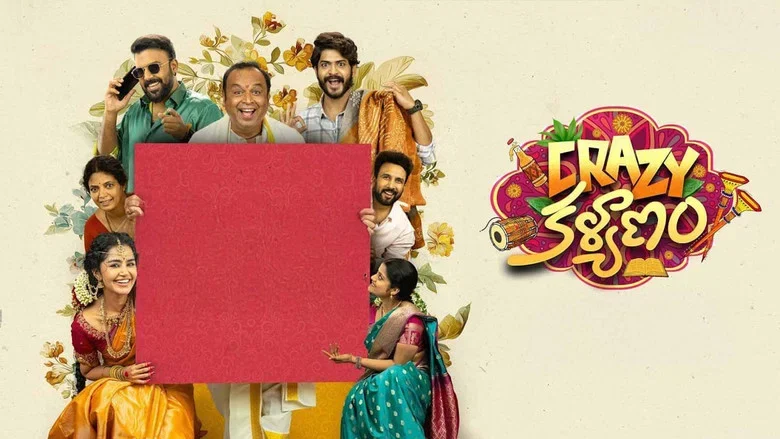
Anupama Parameswaran plays Keerthi, a young woman in rural Telangana who wants to finish her education before anyone finishes arranging her life. Her father Parvathalu (V. K. Naresh) believes a prestigious alliance is the only respectable security a daughter can have.
That collision is the engine of Crazy Kalyanam, and it’s a collision worth taking seriously. The trouble is that the film takes its time, a great deal of it, before either party actually collides.
A Slow Morning In The Village Before The Marriage Plot Wakes Up
The opening half hour is patient to a fault. We meet the household, the extended relatives, the village rhythms, and Balraju, the son-in-law who returns home drunk and turns every dinner table into a small public scandal.
Tharun Bhascker plays Balraju with a loose, physical shamelessness, slumped shoulders, a grin that arrives a beat before the insult, hands that keep reaching for things he shouldn’t touch. He’s the film’s comic battery, and for a while he’s also its only live wire.
But a battery can’t run a whole household. The screenplay keeps circling the same domestic arguments, and the romance between Keerthi and Uday (Akhil Raj Uddemari) settles into the soft-focus familiarity of a thousand Telugu love tracks.
Nothing here is badly staged. It’s simply unstirred, and the film mistakes the accumulation of warm village texture for the building of dramatic pressure.
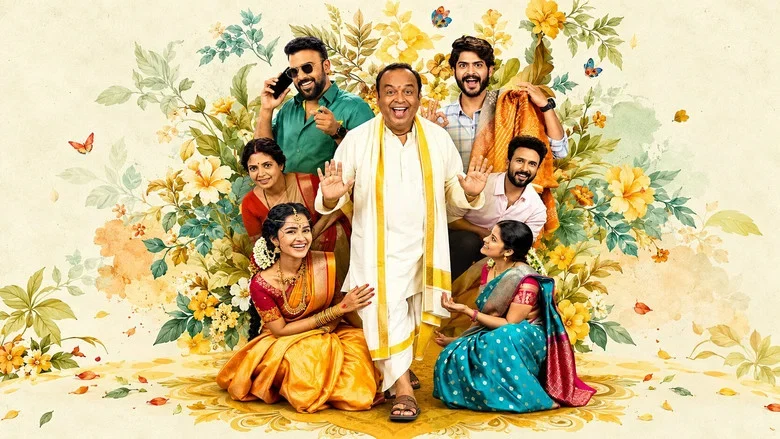
The Diverted Proposal Is Where The Film Finally Bites
Then Parvathalu does something genuinely interesting. He intercepts a marriage proposal meant for his elder brother’s daughter and redirects it into his own home, treating the alliance like a piece of property that can be rerouted by whoever holds the deed.
That single act of quiet greed does more character work than the previous forty minutes combined. It reveals a man who will bend family lines, not out of malice, but out of an unexamined conviction that reputation is a currency he is entitled to spend.
From there the film sharpens. Keerthi’s resistance hardens, the love story stops being decorative, and the question of whether a wedding is a rescue or a transaction finally takes center stage.
Naresh And Parameswaran In The Rooms Where It Counts
Naresh is the reason the middle section holds. He plays Parvathalu not as a tyrant but as a man perpetually aware of who might be watching, shoulders squared in public, voice dropping into a wounded register the moment he feels contradicted at home.
His long confrontation with Keerthi is the film’s best-staged sequence, and Naresh carries it with a stillness that makes his eventual outburst feel earned rather than performed. It’s the kind of scene that reminds you how much a good actor can do with a chair, a doorway, and a refusal to blink.
Parameswaran meets him with something quieter. Keerthi doesn’t shout; she stiffens, looks away, and answers in a voice that has decided not to break. The restraint is deliberate, and it works, though the screenplay gives her less to push against than her talent deserves.
Her scenes here carry the same stubborn dignity that anchored her work in Srinivasa Mangapuram, where the material also asked her to hold a family’s contradictions in her face rather than her dialogue.
A Climax That Argues Its Thesis Instead Of Dramatizing It
The final act arrives at the right idea: a daughter’s education is a better investment than a wedding’s spectacle. That’s a worthy argument, and the film states it with conviction.
But stating an argument isn’t the same as dramatizing one. Parvathalu’s turnaround lands abruptly, as if the screenplay realized it had run out of scenes and needed to hand him a new worldview before the credits.
The film’s tonal register also wobbles here, comedy drains out, the score swells, and the village that felt so specific in the first hour starts to feel like a backdrop for a message.
It’s the same structural trap that snagged Thella Kaagitham, another recent Telugu drama that built a warm world and then trusted its thesis more than its people.
The Village Is A Character, The Camera Is A Tourist
Shyam Dupati’s framing does its job without distinction. The light is warm, the fields are golden, the doorways are wide enough for two generations to argue in. It’s competent, and it’s rarely more than that.
Badrappa Gajula directs the domestic scenes with an ear for household rhythm, the way arguments restart after a silence, the way a mother’s silence lands harder than a father’s shout. Those small observations are the film’s real texture.
What’s missing is a visual idea. There’s no shot here that tells you something the dialogue hasn’t already said, and no sequence where the camera’s placement alone makes you feel the weight of a decision.
Compared to the formal restlessness of Drones, this is a film content to sit still, and sometimes that stillness serves the drama, and sometimes it just feels like waiting.
A Small Film In A Crowded Market With Everything To Prove
Produced by Boosam Jagan Mohan Reddy on a modest budget, Crazy Kalyanam arrives in a theatrical corridor already occupied by far bigger titles, and that positioning matters more than any single scene.
This is the kind of mid-budget rural family drama that once defined the Telugu exhibition calendar and now fights for screens against franchise spectacle. Its commercial fate will likely hinge on word-of-mouth among family audiences rather than opening-weekend muscle.
That’s a real test for contemporary Telugu dramas, which increasingly have to justify a theatrical ticket with either spectacle or a genuinely distinctive voice. This film has neither, and it has a sincere heart, which may or may not be enough.
The Verdict: A Decent Argument, An Uncertain Film
Crazy Kalyanam means well, and it means it loudly. It wants to say something true about how families spend their love, sometimes on gold, sometimes on tuition, and it says it with a father who learns too late and a daughter who knew all along.
What it never quite does is make that lesson feel discovered rather than announced. The film’s best moments belong to Naresh and Parameswaran, two actors who understand that a family argument is never really about the wedding.
It’s about who gets to decide what a daughter is worth. Crazy Kalyanam asks the question with sincerity and answers it with a slogan, and that gap is the whole story of the film.

Recommended for You
HALF (2026): and the Missing Pieces
Half opens on snow, not fangs. Somewhere in Europe, a vampire named Victor falls for a human woman, Sofia, and the hunters…
Last Man in Tower (2026): Bajpayee Holds the Line, Dutta Steals the Room
Masterji sits with a child’s arithmetic book, correcting sums while, somewhere in the same building, neighbours weigh a builder’s offer against decades…

Sardar 2 (2026): Karthi’s Dual-Role Spy Thriller Doubles Down on Espionage Chaos
Karthi’s Agent Sardar Chandra Bose locks eyes with his own reflection, and the mirror cracks between two identities. That fracture is the…