Pyre (2026): Padam Singh Kapri Anchors a Quiet, Devastating Mountain Elegy

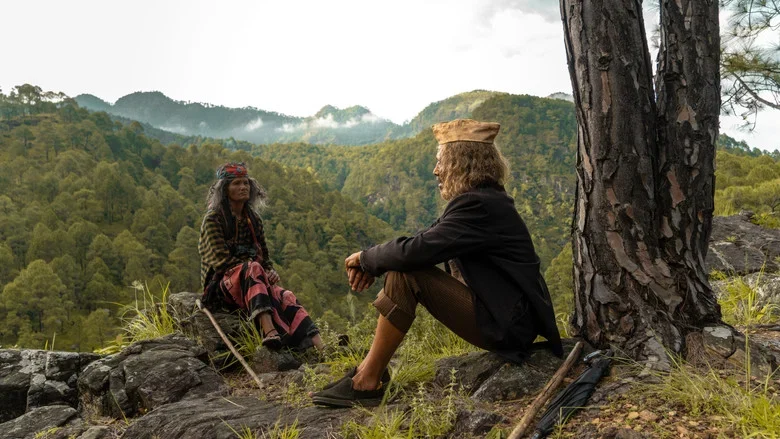
Vinod Kapri opens on a precipice, not a plot. An old man leads his ailing wife toward the edge of a Kumaon ridge and proposes they jump together.
When Death Looks Like a Practical Conclusion
Padam, a retired soldier turned goat herder, has done the arithmetic of his own life. His wife Tulsi is failing, the hospital is downhill and unreachable without money, and the village has emptied of everyone young enough to carry a stretcher.
He does not deliver this plan as a breakdown. He delivers it as logistics, which is the film’s most unnerving choice. Tulsi refuses him outright, and her refusal becomes the engine of everything that follows.
There is no villain here, only terrain. Kapri treats the mountain as a creditor that collects on every errand, and the couple’s love survives by negotiating with it daily.
The Goats, the Letter, and the Economy of Waiting
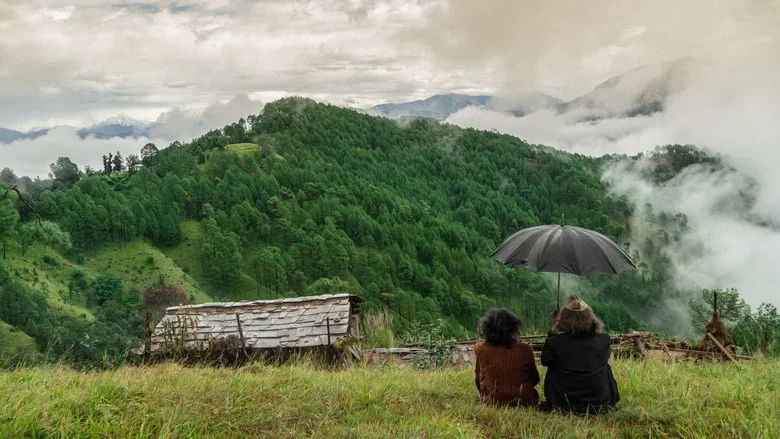
When Tulsi’s health slides, Padam sells goats to finance her treatment. The transaction is filmed without sentiment, yet it lands harder than any speech, because those animals were his last convertible asset.
Then a postman climbs up with a letter. The son who left for Mumbai nearly three decades ago says he is coming home, and the household’s entire rhythm changes.
Hope arrives as paper, not spectacle, and the screenplay trusts that object to carry the second act. It is a structurally elegant pivot, though the film takes its time arriving there.
Kapri’s observational patience recalls the disciplined emptiness of #Cult, another recent release that mistakes duration for depth in stretches. Both films understand silence; neither always knows when to break it.
Two Untrained Faces Doing the Work of Ten Scripts
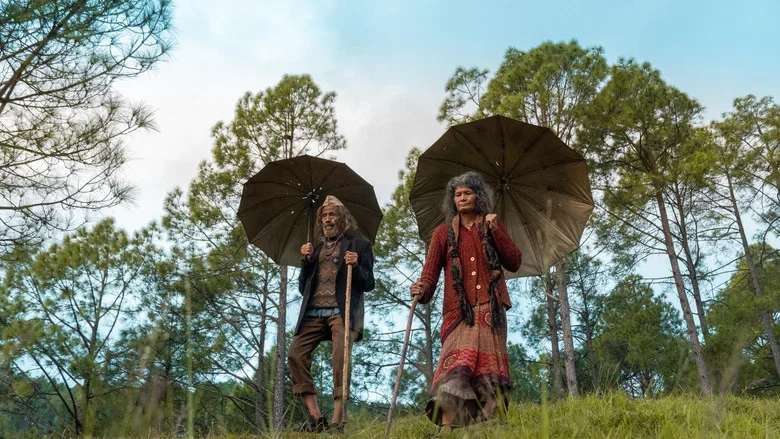
Padam Singh Kapri performs fatigue through posture and breath, hauling himself uphill with a visible tax on his knees. When he argues for a shared death, his voice stays flat, and the flatness is the horror.
Hira Devi gives Tulsi resistance rather than saintly suffering. She counters her husband’s despair with a household practicality that reads as stubborn love, and her declining body turns every short walk into a countdown.
The supporting faces drift through as neighbours, postmen, and helpers rather than characters with arcs. That thinness is partly the point of a depopulated village, but it also leaves the middle stretch circling.
Where a film like Enemy Of The Smuggler buries its drama beneath genre machinery, this one risks the opposite failure: too little pressure from outside the frame.
The Editing Betrays the Stillness
Cinematography is the film’s cleanest achievement. Wide frames place two small figures against exposed Himalayan rock, making the distance to medical care visible rather than merely stated.
The music is soulful and largely unobtrusive, though it occasionally arrives to reassure us where the images already said enough.
The real problem is the cut. Scenes of routine repeat without escalation, and the film’s meditative register starts to feel like a refusal to shape the material.
That unevenness echoes the unresolved grief at the center of Meethe Mein Kya Hai, which also lets sorrow sit rather than resolve, but with a tighter grip on its own rhythm.
What the Pyre Actually Means for the Box Office
This is a small, non-star release arriving into a market that rewards scale. Its commercial ceiling is modest, and the producers behind it are betting on word of mouth among older, urban, festival-minded audiences.
The film’s theatrical leverage rests entirely on Kapri’s festival reputation rather than star draw. In an exhibition landscape dominated by franchise sequels, a two-hour elegy about dying alone must earn every ticket.
Still, this kind of patient, regionally rooted storytelling signals a maturing appetite across contemporary hindi dramas, even when the numbers stay small.
The Verdict: A Funeral Nobody Attends
The title’s pyre is not literal spectacle but a fear made concrete: dying without anyone left to light it. The son’s promised return cannot undo thirty years, and the film knows it.
What remains is Tulsi’s refusal, the small daily insistence on living, and a husband who loves her enough to keep asking. Pyre is a difficult, uneven, occasionally transcendent film about the arithmetic of being left behind.
It will not fill multiplexes. It should still find the people who need it, and they will recognize their own parents in that climb uphill.
Explore Cinema Hubs

Recommended for You

Pluto (2026): Adithyan Chandrashekar risks familiarity with alien-comedy formula
An extraterrestrial lands in a quiet Kerala village, and the local chaos machine revs up. This is a bet on ensemble charm…
Karuppu (2026): Suriya’s Courtroom Divinity Shines, Fantasy Falters
A lawyer with divine origins descends into a corrupt courtroom to defend a powerless father and his ailing daughter, armed with immortal…

The Mandalorian and Grogu (2026): Pascal Gambles on Theatrical Continuity Over Fresh Storytelling
Din Djarin descends through neon-lit Tatooine streets, his beskar armor catching the glow of criminal underworld dealings, a familiar silhouette stepping into…