Bhai Tera Star Hai (2026): A Familiar Bollywood Fantasy for Raghav Juyal’s Fans

Raghav Juyal stands in a London casting room, claiming he has landed a role in a star-franchise parody called “Kisi Ka Bhai, Kisi Ki Behen.” The joke lands, but the question lingers: is the film laughing with its protagonist or at him? This single moment captures everything Bhai Tera Star Hai wants to be, a satire on fame-chasing wrapped in farcical comedy, but the audience needs to decide if they want to laugh along with a delusional dreamer for two hours.
Raghav Juyal’s Comedy-Crisis Balancing Act
Juyal’s Ajay Singh lives entirely in the gap between his own hype and the world’s indifference. The actor’s signature physical timing works best during rapid reaction shots, especially when his lies collapse around him mid-sentence. But the role demands he maintain the character’s self-belief even as the situation turns absurd, and Juyal holds that tension awkwardly, exactly as the part requires.
The audition sequence remains the most clearly praised comic beat. When Ajay describes getting a part as “Bhaijaan ke bhai ka role, ” Juyal sells the earnest stupidity without tipping into parody of himself. It is the one moment where the satire and the comedy align cleanly.
One Night, Too Many Misunderstandings
The screenplay compresses its entire conflict into a single frantic London night. This structure can intensify comic timing, forcing every lie and confusion to escalate without a pause. The setup is efficient: Ajay chases film producers while his girlfriend, her brother, his friends, and local law enforcement all converge on his mess. The one-night premise supports fast interruptions and repeated public embarrassments.
But the comic mechanism relies almost entirely on misunderstandings, and not all of them land. The most criticised scene, an abortion-and-money confusion involving Ajay’s girlfriend and her brother, shows the tonal problem. It aims for farce built on emotional manipulation but lands closer to crass than clever. The dialogue from that scene, “abortion ke liye paise jugaad rahe hain, ” reveals a joke that is more uncomfortable than funny.
The satire targets viral aspiration and Bollywood’s image-making, but the film never decides whether it wants to mock or endorse Ajay’s delusion. This ambivalence creates a genre-core wobble: it is too silly for social commentary and too self-aware for straightforward comedy. The film works best when it stays in pure farce mode, letting the one-night premise drive the chaos without forcing theme.
Sanjay Kapoor, Niharika NM, and the Ensemble Friction
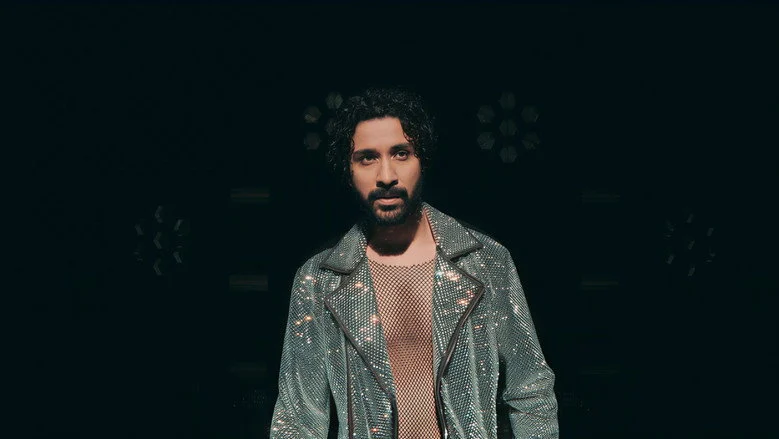
Sanjay Kapoor plays Fatty, a character designed to add another layer to Ajay’s crises. His casting signals a shift from Kapoor’s usual roles toward broad comic support, and his scenes generate the kind of irritable energy that the film needs. Niharika NM and Barkha Singh bring youthful presence to the narrative, each functions less as a character and more as a narrative obstacle or enabler for Ajay’s scheming. The ensemble, including Chandan Roy Sanyal as Officer Ham and Tina Desai as Chandani, creates multiple friction points around the lead, but no single supporting turn rises above functional. That is partly the point: the film is about a man who believes he is the star of a movie no one else is watching.
I suspect this film may work best for viewers who already enjoy Raghav Juyal’s comic persona, because the craft is built around him rather than through him.
The Taste Question and the Audience Gap
No verified critic scores or published assessments were available at the time of assessment, which itself signals a muted industry reception. The film’s U/A certificate and its handling of awkward sexual framing suggest a comedy that tests boundaries without knowing when to pull back. Viewers drawn to satire about celebrity culture may find the mockery of fame-chasing accessible, but audiences sensitive to crass joke framing should approach with caution. The film wants to be a youth comedy-drama about delusion, but its reliance on tonal wobbles means it will divide viewers more sharply than most ensemble farces.
For those curious about how other Hindi comedies handle the same aspirations differently, browse our Hindi Comedy reviews.
Bhai Tera Star Hai is a film for Raghav Juyal’s existing fans and viewers who tolerate farce built on uneven taste. Watch it if you enjoy watching a delusional character crash through one bad decision after another, but do not expect the satire to cut deep or the comedy to land consistently. The director’s compressed one-night structure has potential, but the execution leans on the same misunderstanding joke too many times. Stream it on a platform where you can pause when the tonal wobbles get uncomfortable.
This is a watch for Juyal completists, a skip for anyone seeking sharper satire or cleaner comedy, Bhai Tera Star Hai earns a generous 2.5 out of 5 for ambition alone.
For a film that trusts its actors to carry farce more confidently, read our take on Pluto review.
If you prefer comedy that lets its leads carry emotional weight, Itlu Kanmani verdict is a better bet.

Ankit Jaiswal is the Chief Author, covering Indian cinema and OTT releases with honest, no-filler criticism. An SEO strategist by background, he brings a research-driven approach to film writing, cutting through hype to tell you exactly what's worth your time.

Recommended for You
Varavu (2026): Joju George s stands out while the narrative loses grip
Joju George enters a hillside town where power has long crushed whispers. As “Poly” Polachan, he carries the weight of a family…

Mirzapur: The Movie (2026): Big-Screen Return Lacks Series’ Ruthless Precision
The gaddi is silent, the air thick with the promise of retaliation, as Akhandanand Tripathi walks back into frame. This isn’t the…
Jana Nayagan (2026): Vijay s Vetri stands out while the narrative loses grip
C. Joseph Vijay, credited here as Thalapathy, delivers a performance that holds a sprawling 183-minute runtime together. He plays Vetri Kondan, an…