Aakasamlo Oka Tara (2026): Dulquer Salmaan Anchors a Sincere, Slightly Safe Ascent


The wedding night arrives before the wedding has even finished being a wedding. Krishna, a middle-class driver, sits across from a bride who is sixteen years old and quietly informs him she intends to become an astronaut.
That single image, a child bride with a cosmic ambition and a husband who has just been handed an ethical crisis instead of a honeymoon, is the engine Pavan Sadineni builds Aakasamlo Oka Tara around.
It is a good engine. Whether the film has the gears to sustain it for two hours and thirty-nine minutes is another question.
The Premise Is A Moral Crisis, Not A Romance
What Sadineni and co-writer Vasanth Jurru get right early is refusing to treat Krishna as a romantic lead in the conventional sense. He is not a suitor. He is a man who has been made an unwitting participant in a coercive arrangement.
The screenplay’s smartest structural move is that Krishna’s arc is not a redemption from villainy but a slow, awkward moral education. He does not sweep in. He stumbles into awareness.
That distinction matters. The film understands, at least in its first hour, that the real antagonist is not a person but a system, an abusive father, a hapless mother, a village that treats a girl’s education as a luxury to be negotiated away.
Satvika Veeravalli Carries The Film On Her Shoulders
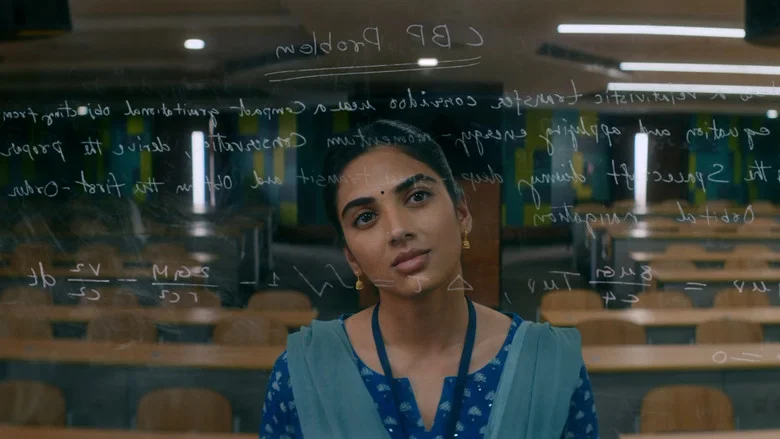
The debutant lead is the reason this works as well as it does. Veeravalli plays Kalpana, Ammu to those who know her, with a stillness that is genuinely unusual for a newcomer in this register.
She does not perform precocity. She performs a kind of quiet, almost stubborn interiority, as if the astronaut dream is not a fantasy but a fact she has already accepted and is simply waiting for the world to catch up with.
The district-topper result scene is where this pays off. Veeravalli does not celebrate. She absorbs. The victory is not a triumph but a confirmation, and her face registers it as such.
That restraint is what makes the film’s central relationship legible. Without it, Krishna’s transformation would feel like a plot convenience rather than a response to a person.
Dulquer Salmaan Plays Support As Labour, Not Speeches
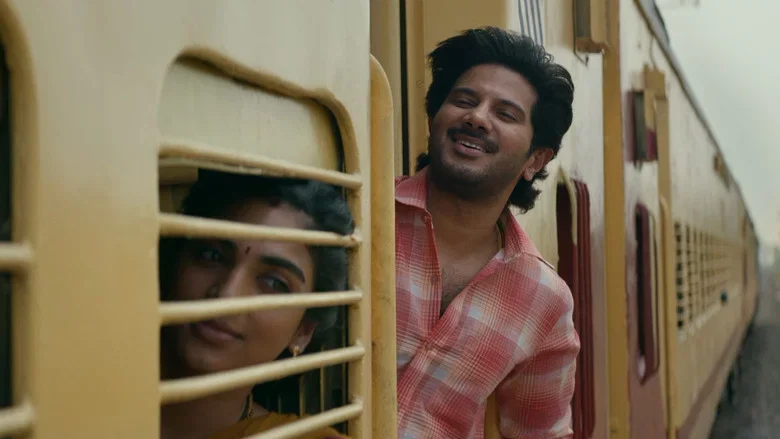
Salmaan’s Krishna is the film’s emotional bridge, and the actor wisely underplays him. There is no grand monologue about empowerment. There is overtime driving, there is financial strain, there is the quiet decision to leave a toxic household.
That choice, to dramatise support through work rather than words, is the screenplay’s most mature instinct. It recalls the kind of grounded, behaviour-first performance Salmaan brought to I'm Game, where the tension lived in what the character did rather than what he announced.
The transition from confused husband to committed ally is not a single scene but a slow accumulation. Salmaan plays it as a man who keeps choosing, again and again, to prioritise a dream that is not his own.
It is a warm performance. It is also, in places, a slightly too easy one, the film never really tests Krishna’s resolve with a genuine betrayal or a moment where walking away would be the reasonable choice.
The Film’s Real Weakness Is Its Generosity
Here is where Aakasamlo Oka Tara loses its grip. The first act establishes a household of genuine cruelty, a father who uses marriage as a tool of control, a mother who cannot protect her daughter.
By the final stretch, that same father is apologising. The hostile sister-in-law is reconciling. The village that treated Kalpana’s ambition as a threat is now treating her as a source of pride.
None of these reversals are earned by anything other than her success. The film treats achievement as a solvent for entrenched social hostility, which is a comforting idea and a dramatically dishonest one.
The reconciliation is too clean, too fast, too willing to let the people who enabled the abuse off the hook. It is the same impulse that softens the edges of #Cult, where thematic ambition is undercut by a reluctance to sit in discomfort.
Sadineni Directs For Clarity, Not Complexity
The direction is clean and legible. The astrovan that first sparks Kalpana’s dream is a concrete visual anchor, and Sadineni uses the contrast between rural confinement and open sky with a restraint that mostly works.
But the film is not interested in the texture of astronaut training or the institutional machinery of selection. The space dream is a metaphor, not a procedure, and the final act resolves it as such.
That is a legitimate choice. It is also a choice that leaves the climax feeling more like an inspirational poster than a lived achievement. The camera frames Kalpana’s ascent, but it rarely interrogates what it cost her.
The supporting ensemble, including a significant but underwritten presence from Shruti Haasan, mostly functions as emotional furniture. They react to Kalpana’s journey rather than complicate it.
The Commercial Math Of A Sincere Family Drama
Produced under the Geetha Arts, Swapna Cinema and Lightbox Media banners, Aakasamlo Oka Tara is positioned squarely at the family-audience segment that has sustained Telugu cinema’s theatrical middle ground.
The film’s commercial viability rests on Salmaan’s draw in the dubbed Malayalam and Tamil markets and on the aspirational-drama appetite that has kept similar releases afloat. It is not a spectacle play. It is a word-of-mouth play.
Whether that word of mouth holds depends on how forgiving audiences are of the film’s tidy resolutions. The early critical response, a pair of three-out-of-five ratings, suggests a ceiling rather than a breakout.
This is the kind of patient, performance-led family drama that has become a steady presence across contemporary Telugu dramas, and its fate will likely be determined by how much the audience wants to believe that success alone can heal a family.
The Ascent Is Real, But The Sky Is Too Clear
What lingers after Aakasamlo Oka Tara is not the launch. It is the wedding night. A girl telling a stranger she wants to go to space, and a man realising he has been made complicit in something he did not choose.
That scene has teeth. The rest of the film, for all its sincerity, spends its energy sanding those teeth down. The father apologises. The village applauds. The sky opens.
It is a film that believes in the possibility of change, and there is something admirable in that belief. But belief is not the same as drama, and Aakasamlo Oka Tara mistakes a happy ending for a hard-won one.
Veeravalli and Salmaan give it a pulse. The screenplay gives it a path of least resistance. The result is a film that reaches for the stars and settles, comfortably, for the ceiling.
Explore Cinema Hubs

Recommended for You

Aligned Apart (2026): Greek Dance Romance Is A Quietly Moving Character Study
The moment Aeneas is paired with Alex for a dance thesis project, you can feel the film shifting gears. What starts as…
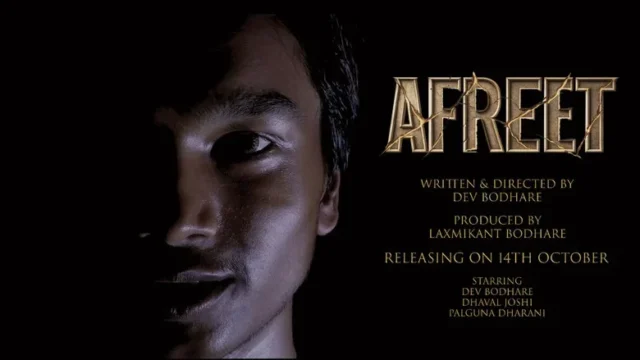
Afreet – A Never Ending Night (2026): A Never Ending Night (2026): Dev Bodhare’s Horror Short Fumbles Its Own Terror
The most frightening thing about a 23-minute horror short is how fast the clock runs out on atmosphere. Afreet – A Never…
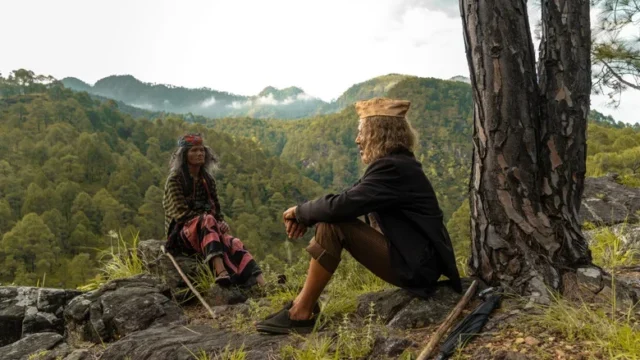
Pyre (2026): Padam Singh Kapri Anchors a Quiet, Devastating Mountain Elegy
Vinod Kapri opens on a precipice, not a plot. An old man leads his ailing wife toward the edge of a Kumaon…