Drishyam: The Conclusion (2026): Ajay Devgn’s Vijay Salgaonkar Returns in a Sequel That Guards Its Secrets Too Well

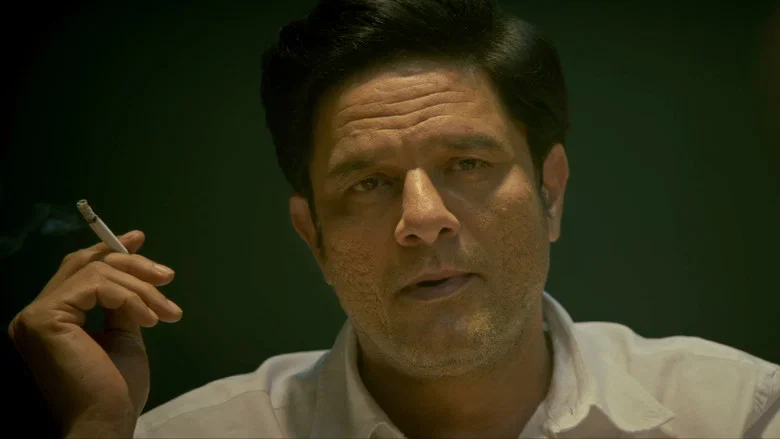
The rain-slicked verandah of the Salgaonkar house is the first thing we see, and it tells us everything: this family has been holding its breath for years. Abhishek Pathak opens on stillness, on a household that has learned to speak in lowered registers and glance at doorways. The threat this time has a name and a rank.
A Family That Never Exhaled Is Not the Same as a Family at Peace
The film’s smartest inheritance is its refusal to grant Vijay Salgaonkar any real closure. The earlier murder isn’t a wound that healed; it’s a tenant that never left. Pathak stages the domestic scenes with the furniture of ordinary Goan middle-class life, but every frame carries the weight of a lie that has calcified into routine.
Where Toxic front-loaded its tension into a single bravura opening before deflating, this sequel distributes its dread more patiently. It trusts the audience to remember why a knock at the door matters.
That patience is both the film’s discipline and its liability. For long stretches, the screenplay mistakes vigilance for momentum. Vijay watches. Vijay calculates. Vijay says very little. The silence is intentional, but intention is not the same as dramatic pressure.
Jaideep Ahlawat Arrives With a Civil Servant’s Smile and a Predator’s Patience
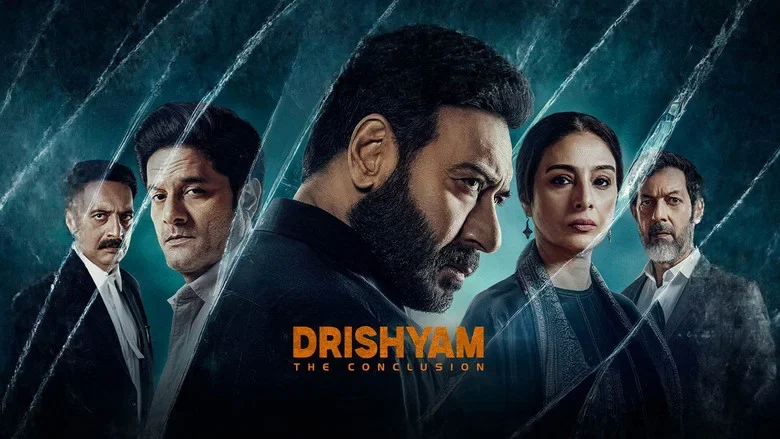
The new Crime Branch officer, Rajveer Tomar, is the film’s best structural decision. Ahlawat plays him without theatrical menace. He sits with his knees apart, hands folded, and asks questions in a voice pitched for a conference room rather than an interrogation cell. The threat lives in his composure.
Watch his first visit to the Salgaonkar home. He compliments the tea. He lets his eyes drift across the photographs on the wall a beat longer than courtesy requires. Ahlawat understands that the most frightening investigator is the one who never raises his voice because he has no need to.
Tabu’s Meera Deshmukh remains the franchise’s emotional spine, and she plays grief here as a kind of administrative discipline. She moves through rooms with the posture of a woman who once commanded officers and now commands only her own composure. The performance is largely physical: a tightening at the jaw, a hand that grips a chair arm a fraction too long.
The contrast with Ahlawat’s procedural calm is the film’s most productive friction. Two people pursuing the same truth from opposite ends of a wound. The screenplay gives them too few scenes together, and it is the film’s clearest missed opportunity.
Ajay Devgn’s Restraint Is a Choice, but Restraint Can Also Be a Retreat
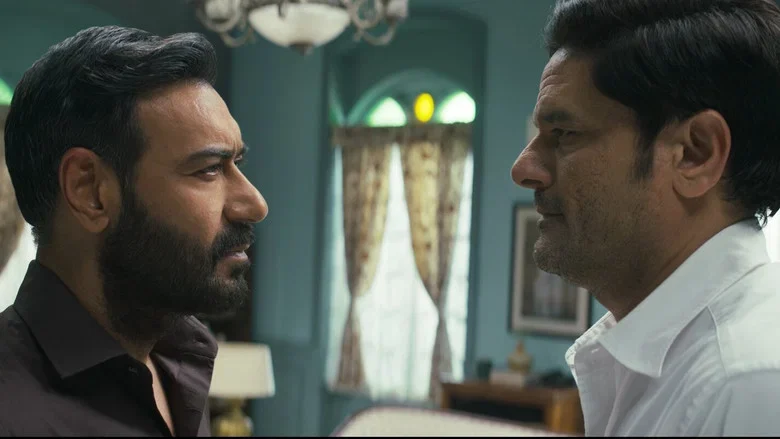
Devgn has played Vijay Salgaonkar across three films now, and the role has gradually shed its expressive range. Here he is almost entirely reactive: a man who absorbs information, files it, and responds only when cornered. The performance is coherent, but it has narrowed into a single register.
The physical exhaustion Devgn brings to the climactic confrontation recalls the psychological weight of his turn in Afreet – A Never, though here the weariness is earned rather than decorative. He is a father who has spent years being the smartest person in every room, and the cost of that is visible in how slowly he now moves.
Shriya Saran and Ishita Dutta do what the screenplay asks of them, which is to register fear and then suppress it. The daughters have become narrative furniture rather than active participants in the family’s survival. That is a structural failure, not a performance one.
The Middle Hour Mistakes Withholding for Suspense
Pathak’s direction favors close shots and shallow focus, which suits the claustrophobia of a family under surveillance. Interiors are lit with practical sources, and the recurring image of windows with curtains half-drawn becomes a visual motif for a household that can never fully open itself to the world.
But the second act runs on fumes. Investigative beats repeat without escalating. Rajveer discovers something, Vijay anticipates it, the family adjusts. The cycle is theoretically sound, but the film never varies the rhythm enough to make each turn feel like a genuine reversal.
The screenplay resists the kinetic sensationalism that overtook Vibe, which is admirable in principle. Yet where that film’s bloat came from excess, this one’s comes from scarcity. Too much is held back for too long, and when the reveals arrive, they land with less force than the withholding promised.
The Climax Resolves the Plot and Avoids the Question
What the film does well in its final act is refuse the easy catharsis of legal vindication. The resolution is morally ambiguous in a way that respects the franchise’s central thesis: that a family can survive an investigation without surviving its own conscience. The last shot is quiet and devastating in its ordinariness.
What it avoids is the harder question the premise demands. If the earlier crime was justified, what does it mean that the family has never been able to live as though it were? The film gestures at this without interrogating it. The ambiguity is present but underdeveloped, a theme acknowledged rather than explored.
Panorama Studios Bets on Franchise Loyalty Over Fresh IP
The commercial calculus here is straightforward. Panorama Studios, alongside T-Series and Viacom18, is banking on a franchise that has already delivered twice in Hindi and once more in Malayalam. The theatrical sequel is a safer bet than an original thriller in a market where audiences increasingly wait for streaming.
Ajay Devgn’s box-office leverage remains substantial, particularly in the tier-two and tier-three markets where the Drishyam brand carries generational recognition. But the film’s reliance on prior investment rather than new narrative invention raises a question the industry will have to answer: how many more times can this family be investigated before the audience stops caring about the outcome?
This patient, morally serious approach to franchise storytelling reflects a broader maturity across contemporary Hindi thrillers, even when the execution doesn’t fully deliver on the ambition. The instinct is right. The follow-through is uneven.
The Verdict: A Sequel That Protects Its Secrets Better Than Its Story
Drishyam: The Conclusion is a film made by people who understand what made the earlier installments work, and that understanding is both its strength and its limitation. It knows how to build a household under pressure. It knows how to cast an antagonist who doesn’t need to shout. What it doesn’t quite know is how to make the third iteration feel necessary rather than dutiful.
The performances carry it further than the screenplay deserves. Ahlawat and Tabu, in particular, create a tension that the film’s structure never fully exploits. Devgn is reliable but increasingly recessive, a protagonist who has become the sum of his own strategies.
What lingers is not the resolution but the image of a family that has learned to live inside a lie and has mistaken that survival for peace. The film understands that truth better than it knows how to dramatize it. That gap is the difference between a sequel that concludes something and one that merely continues.

Recommended for You
DC (2026): Arun Matheswaran’s Romantic Action Gamble Remains A Mystery
Arun Matheswaran is a director who doesn’t do small. After the brutal *Saani Kaayidham* and the sprawling *Captain Miller*, his next move…

Aali (2026): A Malayalam Romance That Trusts Its Quiet Moments
There is a particular stillness in Malayalam romantic dramas that Hollywood often rushes past, the pause before a confession, the weight of…

Vo Ladki (2026): A Wristwatch, A Memory, And The Weight Of Letting Go
The last meeting arrives with a wristwatch as its only currency. Pathik walks toward Devyani not to reconcile, but to return an…