Manithee: the fire bird (2026): MJ Nitharsan’s Ambitious Tamil Fantasy-Thriller Burns Bright But Flickers Out

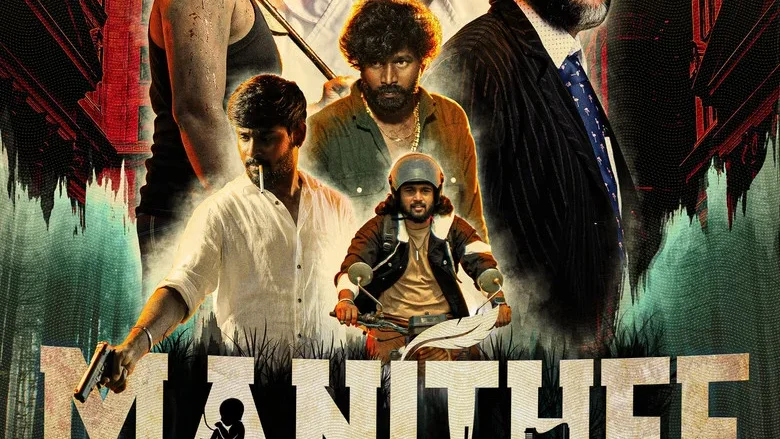
MJ Nitharsan’s Manithee: The Fire Bird opens with a premise that sounds like two different films wrestling for the same runtime. A female physicist chases breakthrough technology. A village filmmaker chases a world-class dream. Then a mysterious forest swallows them both.
The setup carries genuine intrigue, two dreamers from disparate worlds, trapped in a space that doesn’t care about either ambition. But the film’s first act moves so briskly toward entrapment that we barely understand who these people are before the trees close in. Ambition becomes a plot device rather than a character trait.
What emerges is a survival narrative that wants to be about something larger: the collision of scientific rationality and artistic obsession against nature’s indifference. Nitharsan’s screenplay gestures at these themes but rarely pauses long enough to let them breathe. The forest, for all its atmospheric promise, functions more as a narrative obstacle than a living, breathing antagonist.
When Technology And Art Collide, The Rules Stay Hidden
The physicist’s breakthrough technology remains frustratingly opaque throughout. We understand she wants to change the world. We never quite grasp what her invention does, how it works, or why the forest matters to its success. This isn’t mystery, it’s omission dressed as intrigue.
Similarly, the filmmaker’s creative aspirations get reduced to shorthand: he wants to make something great. The script never articulates what kind of film he dreams of, what stories drive him, or why a village artist’s vision should matter to anyone beyond himself. The parallel ambitions should create thematic friction. Instead, they run on separate tracks that only intersect when the plot demands it.
The recent theatrical landscape has seen similar ambition-versus-environment struggles in Toxic, a film that at least understood how to weaponize its opening energy before losing momentum. Manithee struggles with the opposite problem, it never quite finds that initial spark.

Vithu Vanni Anchors The Chaos With Physical Commitment
Vithu Vanni, credited as Ranga, brings a wiry, restless energy to the film’s center. In the early forest sequences, his eyes dart between treelines, his shoulders stay coiled, and his breathing shifts audibly when the environment turns hostile. It’s a performance built on physical alertness rather than dialogue, which suits a screenplay that gives him little to say.
His work here recalls the psychological exhaustion that anchored Kitti, another recent Tamil release where a performer had to carry narrative weight that the script refused to lift. Vanni doesn’t quite reach those depths, the material won’t let him, but he makes Ranga’s desperation legible even when the film’s logic isn’t.
The supporting cast, including Rathitharan Kathiresu and Ravee Murali, registers more as ambient presences than fully drawn characters. They appear when the plot requires bodies in the frame and recede when it doesn’t. It’s not their fault; the screenplay simply doesn’t give them enough to do.
The Forest As Character: Promise Unfulfilled
Cinematographically, the forest sequences show genuine ambition. There’s a deliberate contrast between the cool, clinical lighting of the physicist’s world and the dappled, disorienting shadows of the woods. The camera holds longer on empty spaces than most Tamil thrillers would dare, suggesting Nitharsan understands that dread lives in stillness.
But the film doesn’t trust that stillness. Just as a scene begins to build atmospheric pressure, the editing cuts away to another plot beat. The result is a movie that feels simultaneously rushed and underdeveloped, 98 minutes that somehow contain both too much incident and not enough consequence.
The thematic sibling Enna Vilai demonstrated how a contained setting can amplify social and psychological tension without sacrificing narrative clarity. Manithee has similar structural ambitions but lacks the discipline to execute them.
A Resolution That Arrives Before It’s Earned
The climax, such as it is, resolves the characters’ external conflicts without addressing the internal ones. The physicist and filmmaker emerge from the forest changed, but the film never shows us what changed or why it matters. Their dreams are achieved, or at least gestured toward, through narrative convenience rather than earned transformation.
This is a film that wants to say something about perseverance, about the cost of ambition, about the relationship between human innovation and natural mystery. It says none of these things clearly. Instead, it offers a series of genre signifiers, the mysterious forest, the breakthrough technology, the artistic dream, without building them into a coherent statement.
For audiences hungry for Tamil cinema that reaches beyond formula, this patient character study signals a welcome tonal maturity across contemporary Tamil thrillers. But ambition alone doesn’t make a film. Craft does. And Manithee: The Fire Bird never quite finds its footing.
Rating: 2.5 / 5
There’s a moment early in the forest where Ranga stops running, looks up through the canopy, and simply breathes. For three seconds, the film becomes what it could have been, a meditation on human smallness against indifferent nature. Then the plot kicks back in, and the fire bird never takes flight.

Recommended for You
The India Story (2026): Shreyas Talpade the lifts key stretches, not the full runtime
Talpade plays a man wrestling with a system that has failed him. His face carries the exhaustion of someone who has seen…

Accused (2026): Konkona Carries a Film Too Cautious to Fully Commit
A surgeon stands over an open incision and calls her colleague’s work a bloody disaster, cool, clinical, almost bored in her contempt.…

Monkey In A Cage (2026): Kashyap Pins Celebrity Crisis on Bobby Deol’s Controlled Descent
A fading television star blocks his ex-girlfriend’s attempts to reconnect, but her escalating response, a rape accusation, traps him in a corrupt…