Qaid (2026): Dhruv Jain s lands hard though the screenplay stays patchy

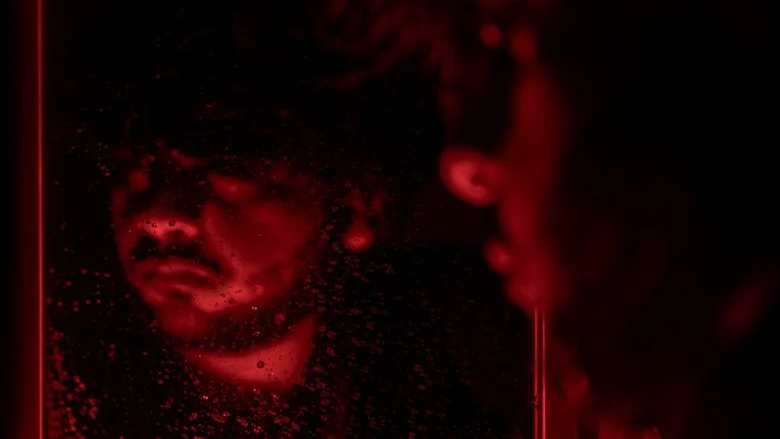
There is a moment in Qaid where Dhruv Jain simply sits still, and the camera refuses to blink. The film trusts that one face, that one held breath, to carry the entire weight of its premise. It’s a gamble that mostly pays off because Jain understands the geometry of fear, how it starts in the shoulders before it reaches the eyes.
Jain’s performance is built on micro-decisions. He doesn’t perform panic; he performs the suppression of it, which is far more unnerving. For a 23-minute runtime, that restraint is not just admirable, it’s structurally necessary.
Prakhar Pandey Directs Like a Man With Something To Prove
Prakhar Pandey’s direction shows a clear strength: he knows how to create unease without relying on jump scares or a screeching score. The silence in this film is a character, and Pandey uses it to stretch seconds into what feels like minutes.
The flaw is that the screenplay doesn’t give him enough to work with. The premise is a cage, but the writing never fully tests its bars. You feel the tension, but you rarely feel the stakes expand beyond what the opening frames promise.
The Thriller Mechanics: A Study in Controlled Release
Qaid operates on a single, simple principle: confinement breeds paranoia. The film doesn’t need a sprawling location because it understands that the most terrifying geography is the space between two people who don’t trust each other. Pandey stages his setpieces with a claustrophobic eye, keeping the frame tight and the exits hidden.
The editing is the real co-director here. Every cut feels like a decision, not a default. The pacing in the first half is deliberately slow, almost suffocating, but the second half accelerates with a sharpness that rewards your patience. It’s a short film that respects the value of a well-timed silence.
However, the genre’s greatest tool, the reveal, feels slightly undercooked. The film builds toward a moment that should land like a punch, but it lands more like a tap on the shoulder. It’s effective, but you leave wondering what a bolder climax might have achieved.
Aaditya Mehta and Jay Gupta: The Pressure Cooker’s Other Ingredients
Aaditya Mehta serves as the perfect counterweight to Jain’s coiled intensity. Where Jain internalizes, Mehta externalizes, and that friction generates the film’s real heat. His presence signals a classic thriller dynamic: the agitator versus the observer.
Jay Gupta rounds out the trio with a performance that feels like the film’s moral compass, even if that compass is slightly bent. His casting suggests a deliberate attempt to ground the story in a recognizable reality, preventing the short from floating into pure abstraction.
Together, the three actors create a triangle of suspicion that is the film’s most compelling special effect.
The Short-Form Problem: Ambition vs. Execution
Qaid is a calling card, not a statement. It announces Prakhar Pandey as a director with a keen eye for tension, but it also reveals the limits of a 23-minute canvas. The political and social commentary that might have given this thriller a sharper edge is absent, leaving the film as a pure genre exercise.
What it does, it does well. But you watch it knowing that the same premise, stretched to feature length with more character detail, could have been something far more dangerous. The audience reception will likely hinge on whether you view this as a complete meal or just a very good appetizer.
For those who appreciate the mechanics of a tight, well-constructed thriller, this is worth your time. Explore more Hindi Thriller reviews to see how it stacks against the genre’s heavyweights.
Qaid is a smart, efficient piece of work that understands its limitations and works within them. It’s the kind of film that makes you curious about what Pandey does with a bigger budget and a longer runtime. Watch it for Jain’s performance and the editing, but don’t expect it to reinvent the wheel.
Qaid is a promising debut that earns a solid 3 out of 5 for its craft, even if its story leaves you wanting more.
If you appreciated the controlled tension here, you might find a similar spirit in Vo Ladki review.
For a different take on narrative structure, check out how Hai Jawani verdict balances charm against logic.

Recommended for You
Comrade Kalyan (2026): Sree Vishnu’s Double Act Can’t Hold a Fractured Revolution
The film opens in 1992 on the Andhra–Odisha border, where a local theatre owner named Kalyan (Sree Vishnu) grins his way through…
Sanjeev (2026): Anil Nakka’s One-Man Gamble on Grit and Grief
There is a particular kind of tension that arrives when a filmmaker steps in front of his own camera, and Anil Nakka’s…

Toxic: A Fairy Tale for Grown-ups (2026): The Opening Scene gives the film energy despite weak payoffs
The first glimpse of Raya is pure spectacle. Yash towers over the frame, the Goa underworld bending to his will as the…