Babita Singh Reporting (2026): Nimisha Sajayan turns lifts key stretches, not the full runtime

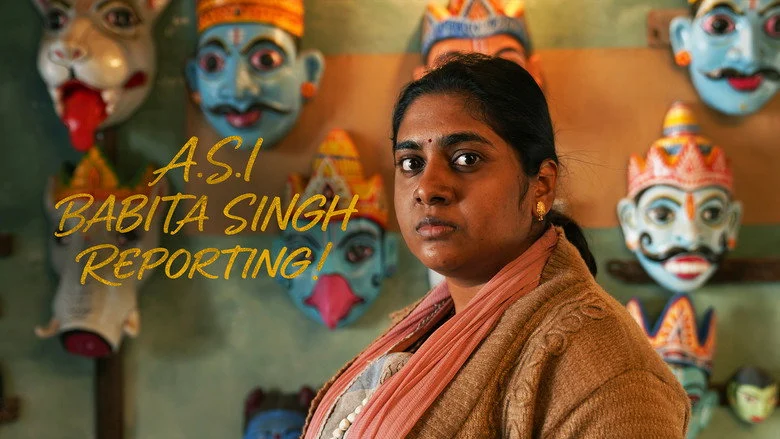
The boating sequence arrives early, and it tells you everything about Babita Singh’s world before the murder even surfaces. A sister-in-law’s body-shaming remark lands in front of the family, and Nimisha Sajayan’s Babita absorbs it with a stillness that reads less as acceptance and more as a woman calculating the cost of every word she does not speak. This is the film’s foundational tension: a police officer who must solve a crime while the people closest to her refuse to see her as anything more than a subordinate.
Director Ambiecka Pandit’s feature debut is an investigative drama that understands its protagonist better than it understands its plot. The mystery of Bansi’s death becomes the vehicle for a larger inquiry into patriarchy, self-worth, and the exhausting labor of being heard in a household and a police station that both treat you as furniture. For audiences who value character over twists, this is a patient watch. For those expecting procedural escalation, it may test your tolerance.
Nimisha Sajayan turns silence into a performance language
Sajayan is the reason this film exists on any serious level. She makes Babita’s restraint legible as internal conflict rather than passivity, especially in the domestic scenes where her in-laws speak over her as if she isn’t in the room.
Her first serious steps into the murder inquiry carry a quiet defiance that the screenplay doesn’t always earn. When the case loses momentum, she keeps the emotional thread intact through sheer presence.

Ambiecka Pandit grounds the frame but loses the plot’s pulse
Pandit’s direction keeps the story rooted in everyday institutional pressure, framing domestic spaces to emphasize constraint and social scrutiny. The small-town setting works as a character in itself – everyone watches, everyone judges.
The weakness is structural. The central mystery is too familiar in execution, and the dramatic escalation feels uneven, particularly when the thriller elements should be tightening rather than stalling.
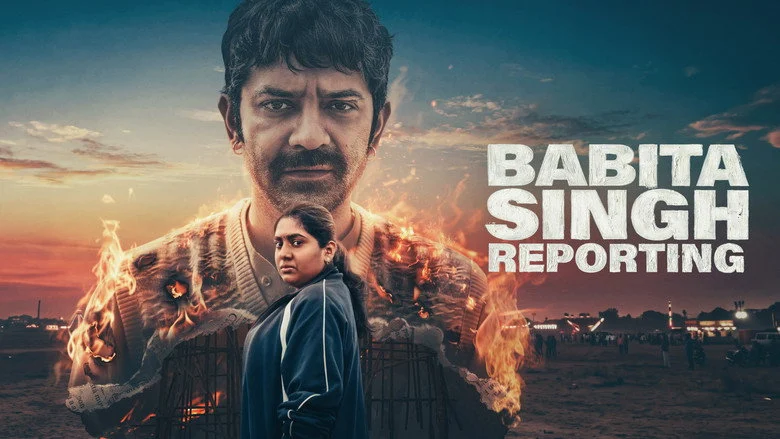
The investigation is a social drama wearing a crime’s clothes
This is not a high-action procedural, and it never pretends to be. The film uses a slow-burn structure where tension stays tied to family dynamics and workplace hierarchy, not clue-chasing or chase sequences. Babita’s pursuit of the case while being treated as professionally minor is the real investigation here.
The genre execution relies on atmosphere and performance more than twists. That choice works when the domestic conflict is sharp, but the investigative passages feel underwritten and predictable, especially when compared to benchmarks like Paatal Lok or Kohrra, which this film does not match in narrative complexity.
What it does better than those comparisons is center a female investigator’s domestic and professional conflict directly. The murder inquiry becomes inseparable from Babita’s fight to be taken seriously at home and at work, and that thematic clarity keeps the film honest even when the plotting wobbles.
Supporting cast grounds the world, even when underwritten
Rajesh Kumar as SI Sethi adds natural credibility to the police setting, making the institutional resistance feel lived-in rather than theatrical. His scenes with Sajayan carry a bureaucratic weariness that rings true.
Anshumaan Pushkar plays Sharad with restraint and sincerity, though the role is underused. Barun Sobti fits Bansi, but the character’s limited scope means he registers more as a plot device than a person whose death we feel deeply. Sunita Rajwar appears without a defined role in the coverage, but her casting signals the film’s intent to populate Babita’s world with recognizable, grounded faces.
For more like this, browse our Hindi Drama reviews.
A social conscience without a controversial edge
There is no political firestorm here, and that’s almost the point. The film’s provocation is quieter – it asks why a woman’s voice is treated as an inconvenience in both her home and her workplace. The audience response mirrors the critical consensus: praise for Sajayan’s lead turn and the handling of gender pressure, complaints about predictable beats and slow middle sections.
Times of India and NewsBytes converge around a 3.5 average, and one review puts it plainly: “Nimisha Sajayan is terrific and carries the movie on her shoulders, if only the writing were good and supported her performance.” That sentence is the film in miniature.
Babita Singh Reporting is a watch for Sajayan’s performance and Pandit’s grounded direction, but go in knowing the mystery won’t surprise you. It’s a quiet, thoughtful investigation into patriarchy and self-worth, best experienced on OTT where its measured pace can breathe. I found myself wishing the screenplay had trusted its lead as much as the camera does.
If the restrained character work here appeals to you, Once More review offers a similar solo-performance lift.
Babita Singh Reporting earns a respectable 3 out of 5 – a film carried by its lead, held back by its writing, and worth your time only if you value character over crime.
For another take on performance-driven storytelling, check out Toxic verdict.

Recommended for You

KJQ (2026): A Gritty Crime Drama Trapped in Its Own Trailer
Dheekshith Shetty walks into KJQ as Raju, a man whose friendship curdles into rivalry. The trailer positions him in a confrontational space,…
Drishyam 3 (2026): Ajay Devgn Returns to Finish What Deception Built
Vijay Salgaonkar sits in the shadows of his own life, waiting for the past to resurface, and it does, with new evidence…

The Odyssey (2026): Matt Damon s lifts key stretches, not the full runtime
Matt Damon’s Odysseus does not roar. He broods. In the opening stretch, he leaves Ithaca not as a victorious general but as…