The Transition (2026): A Documentary’s Ghost Haunts Berlin’s Changing Streets

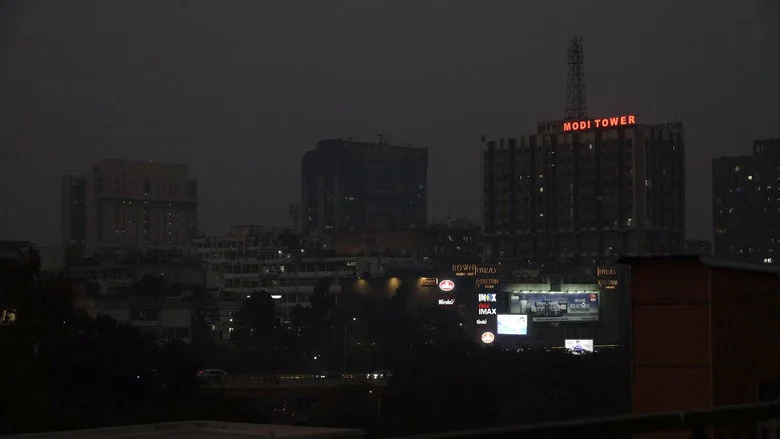
There is a peculiar weight to any film that begins as someone else’s final project. The Transition arrives carrying the ghost of documentarian Thomas Heise, who set out to capture Berlin’s Schönhauser Allee before his unexpected death. Directors Peter Badel and Chris Wright now shoulder that unfinished vision, and the responsibility shows in every careful frame.
The premise alone raises questions the film never fully answers. Whose story is this – Heise’s or the street’s? The tension between tribute and independent vision creates an uneasy but fascinating push-pull throughout the runtime.
A Street Becomes the Lead Character Here
Schönhauser Allee is not merely a location in this film; it functions as the emotional anchor, a silent witness to Berlin’s relentless reinvention. The directors treat the boulevard with the reverence usually reserved for a lead actor, letting its architecture and its people share equal billing.
Badel and Wright’s direction shows genuine restraint, resisting the urge to impose dramatic structure onto documentary reality. Yet the screenplay – or rather, the narrative assembly – struggles with pacing, lingering on transitional moments that feel more like filler than meaningful observation.
The Documentary Craft Balances Memory and Present Tense
This is where The Transition earns its most compelling passages. The film operates as a meditation on what it means to document a place that refuses to stay still, weaving archival impulses with present-day footage of a Berlin neighborhood in flux. The editing between what Heise might have shot and what Badel and Wright capture creates a layered, almost haunted texture.
One specific sequence stands out: the camera resting on a storefront that has clearly changed hands multiple times, the layers of signage visible like geological strata. It is a quiet moment that speaks volumes about gentrification, memory, and the erasure that comes with urban progress.
But the film’s commitment to its meditative tone occasionally becomes a liability. The middle stretch sags under repetitive imagery of tram lines and facades, testing the patience of viewers who might crave a stronger narrative spine to guide them through the observation.
Thomas Heise’s Presence Looms Over Every Choice
Though Heise himself appears only through the project’s origin story, his influence shapes the film’s DNA. The directors seem acutely aware that they are caretakers of another artist’s final impulse, and that awareness translates into a respectful, almost deferential approach to the material.
What emerges is a film caught between homage and authorship – respectful of its source while attempting to find its own voice. The result will frustrate viewers expecting a conventional biography of Heise or a straightforward urban study; this is something more elusive, a document about the difficulty of documenting itself.
Who This Film Is For – and Who Should Walk Away
Berlin cinephiles and students of documentary form will find genuine rewards here, particularly in how the film interrogates its own making. The Transition speaks most directly to viewers fascinated by process – how films get made, how cities change, how artists leave work unfinished.
Casual audiences seeking narrative momentum will likely feel adrift. This is contemplative cinema that demands patience and rewards attention, not a crowd-pleasing exploration of a famous street. I found myself wishing the directors had pushed harder against Heise’s shadow to claim more daring territory of their own.
For those intrigued by the intersection of urban studies and cinematic memory, this remains a worthwhile, if demanding, experience. Watch it when you have the mental space to sit with its questions rather than expecting answers.
For more explorations of how filmmakers wrestle with place and memory, browse these Hindi Drama reviews.
The Transition is a respectful, occasionally meandering tribute that never quite escapes the shadow of the artist it honors. It earns a modest 2.5 out of 5 for its thoughtful craft and its willingness to sit with difficult questions about legacy and urban change – but it will test all but the most patient viewers.
If this meditation on unfinished artistic visions resonates, Mirzapur review offers a very different take on legacy and consequence.
For a lighter contrast in how filmmakers handle place and character, Romanchakam verdict takes a breezier route through similar terrain.

Recommended for You
Karavali (2026): Kambala Spectacle Can’t Hide A Fractured Narrative
The Kambala races thunder across the screen with mud-splattered ferocity, and for a moment, Gurudatta Ganiga’s coastal drama feels like it might…

Jeevan Bheema Yojana (2026): The Lookalike Reveal lands hard though the screenplay stays patchy
Picture this: a debt-ridden couple staring at a stranger who is the spitting image of the husband. The insurance scam idea lands…
Krishnavataram Part 1: The Heart (Hridayam) (2026): Works Better as a Devotional Drama Than a Blockbuster
Krishnavataram Part 1: The Heart tries to retell Lord Krishna’s story through emotion instead of spectacle alone. Rated 3.5/5, the film leans…