Kaali Kheti (2026): Jackie Shroff’s Grim Horror-Thriller Wastes a Lean 109 Minutes

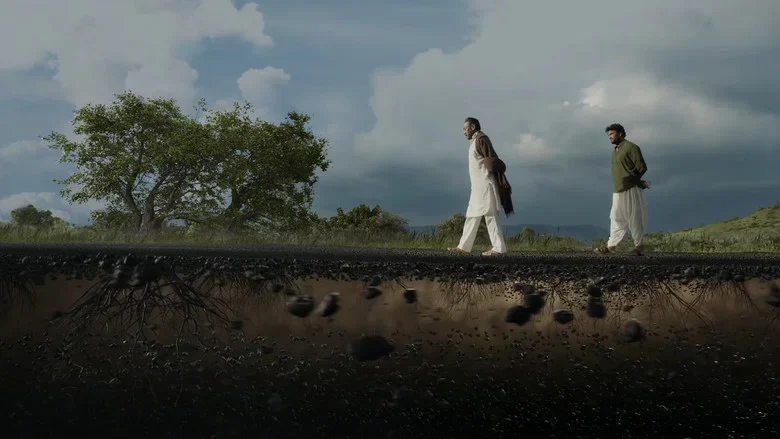
The lights cut, the projector coughs to life, and within ninety seconds of Kaali Kheti you can feel a familiar dread settling into the row behind you. Haris Imtiyaz Khan’s Hindi horror-thriller arrives with an A certificate and a trim 109-minute runtime, promising the kind of unfiltered adult scare that the genre rarely delivers.
A Contained Runtime That Never Earns Its Brevity
The 109-minute format is the film’s first smart instinct and its first betrayal. A horror picture this short should move like a snapped trap, each scene tightening the screw. Instead, the middle stretch drifts through corridors of atmosphere without a single escalation that justifies the compression.
Khan stages his scares in wide, patient compositions, letting shadows pool in the frame’s corners before anything lunges. The discipline is real. The problem is that patience without payoff curdles into tedium, and by the third act the audience has stopped flinching.
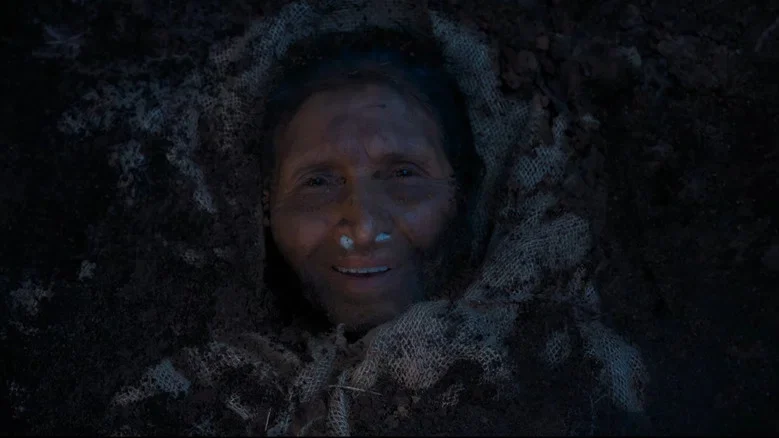
Jackie Shroff Grounds the Chaos While Sharad Kelkar Simmers
Shroff carries his scenes with a stillness that borders on exhaustion, his shoulders set low, his voice dropped to a register that barely rises above the score. When he finally snaps, the shift is physical first, a twitch in the jaw, a hand that won’t unclench, and vocal second.
Sharad Kelkar operates in a different key entirely, all coiled tension and short, clipped exchanges. The two actors share a handful of confrontations staged at close quarters, and the spatial tension between them is the film’s most reliable engine.
What the screenplay refuses to give either performer is a psychological throughline. The restrained physical exhaustion Shroff brings to the final stretch recalls the weight of his turn in Bachelor Party D'eux, but here the material never lets the character breathe long enough to matter.
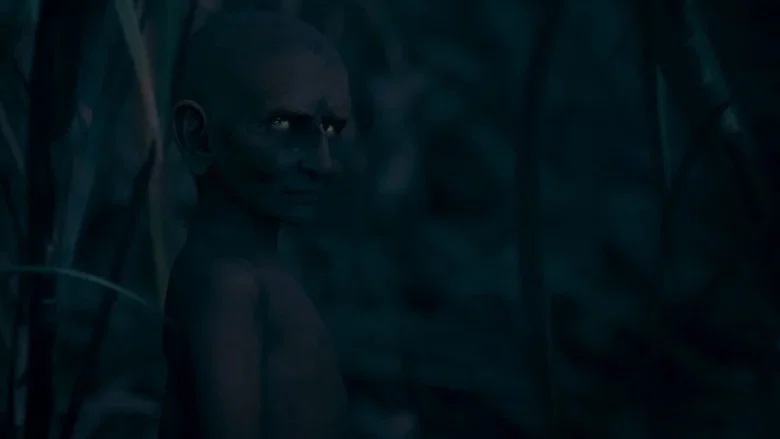
The Horror Mechanics Borrow Without Building
Khan’s scare grammar leans heavily on the contemporary Hindi horror playbook, the low-frequency drone, the mirror that catches something it shouldn’t, the door that opens a half-inch. These beats land with competence but no invention.
The screenplay, working from an uncredited draft, treats its supernatural rules as decoration rather than architecture. By the time the third act arrives, the audience still doesn’t understand what the threat wants or why it can be stopped.
That absence of internal logic is precisely the failure that sank the ambitions of Afreet – A Never, and Khan’s film repeats the mistake with more polish but no more conviction. The A certificate signals adult intent, yet the horror itself stays bloodless and abstract.
Where the Camera Helps and Where It Abandons the Cast
The cinematography favors natural light and deep shadow, with several sequences staged in near-darkness that forces the audience to lean forward. It’s a bold choice that occasionally pays off in pure sensory discomfort.
But the editing betrays the atmosphere at key moments, cutting away from a scare just as it gathers momentum. The score, all subsonic rumble and sudden string stabs, does the heavy lifting that the staging should have done itself.
Compared to the tonal control on display in Aakasamlo Oka Tara, this film feels like it’s still searching for its own rhythm in the cutting room.
A Lean Cast That Never Gets Room to Breathe
The supporting ensemble, the village elders, the relatives who hover at the frame’s edge, register as faces rather than characters. They exist to react, to gasp, to be removed from the board when the plot needs a body.
That thinness isn’t a failure of the actors so much as a failure of the writing to give anyone outside the central duo a reason to be there. Horror thrives on the texture of its community, and Kaali Kheti keeps its community at arm’s length.
The Box-Office Math for a Mid-Budget Hindi Horror
The producing banners behind this release are betting on the current appetite for adult-skewing Hindi horror, a segment that has quietly grown more reliable at the theatrical window. The A certificate narrows the audience but sharpens the pitch to the core horror crowd.
Shroff’s marquee value remains a draw for older multiplex audiences, though his recent theatrical leverage has been inconsistent. For the filmmakers, the real test is whether the horror faithful show up on opening weekend before word-of-mouth settles in.
The broader trajectory of contemporary Hindi horrors suggests an audience hungry for genuine dread, and this film’s lean runtime and adult positioning are commercially sensible even if the execution falls short.
A Resolution That Leaves the Genre Where It Found It
When the final reel unspools, the film resolves its central mystery with a shrug rather than a gut-punch. The survivors walk away, the threat recedes, and the audience is left holding a question the movie never bothered to answer.
That ambivalence isn’t ambiguity, it’s indecision. A horror film can leave its ending open, but it has to earn that openness with a clear understanding of what it was actually about.
Kaali Kheti is a competent, occasionally atmospheric entry into a genre that deserves more ambition than this. It will find its audience among the horror faithful, but it won’t convert anyone who isn’t already converted.
Explore Cinema Hubs

Recommended for You
Jana Nayagan (2026): Vijay s Vetri stands out while the narrative loses grip
C. Joseph Vijay, credited here as Thalapathy, delivers a performance that holds a sprawling 183-minute runtime together. He plays Vetri Kondan, an…

John Doe (2026): Arjun Das Anchors a Procedural That Buries Its Own Best Instincts
Madhumita Sundararaman opens on a dead child with no name and a living one who has just vanished, and for a while…
Saheb Bhai ki khoi Redmi (2026): A Phantom Release That Never Reached The Projector
There is no film. Not a bad one, not a compromised one, not even a fascinating failure, simply nothing that ever unspooled…