KillR (2026): Jyothi Poorvaj’s Fragmented Sci-Fi Identity Puzzle Runs on Ambition, Not Coherence

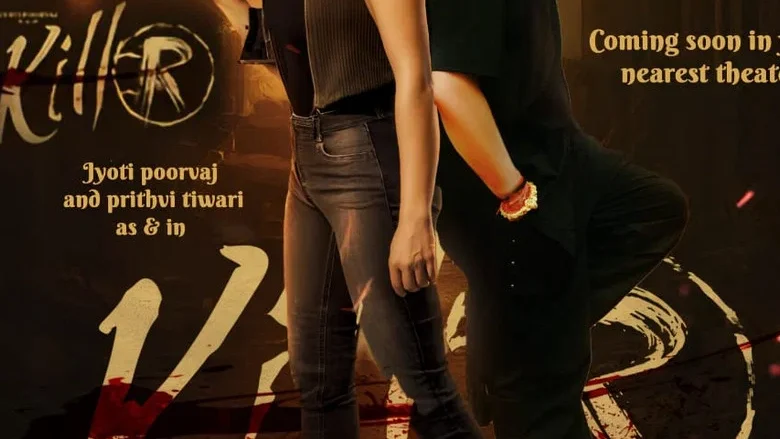
Poorvaaj opens his film on a face that refuses to settle, Jyothi Poorvaj’s Rania staring back at us, then dissolving into Raktika, then Julia, then Sia, each woman wearing the same bone structure but a different weather system behind the eyes. It is a striking entrance, and for a while the disorientation feels earned.
The premise is a genuine high-wire act: one woman, five credited identities, an AI-driven avatar, and a genius scientist (Poorvaaj himself) orbiting the whole experiment. The question the film wants us to hold, terrorist, spy, actress, vampire, or all of them at once, is a deliciously unstable hook.
When A Multi-Persona Mystery Forgets To Build The Rules
The central mechanism is memory fragmentation under scientific control, and the screenplay treats each persona shift as a revelation. That works in the first act, where the ambiguity is the point.
By the second hour, though, the film starts confusing withheld information with narrative depth. A mystery needs an internal logic the audience can eventually verify; here, the rules of the AI experiment are gestured at rather than dramatised, so each new identity lands as a surprise rather than an inevitability.
The comparison to a more disciplined identity-driven drama is instructive. Where Pyre trusted silence and spatial restraint to carry its emotional weight, KillR reaches for another reveal every time the tension needs a jolt.
Jyothi Poorvaj Carries The Film On Shifting Shoulders
What holds the centre is the lead performance. Jyothi Poorvaj differentiates her personas through posture and vocal register rather than costume, Rania holds her chin level and speaks in clipped declaratives; Julia slouches, lets her hands hang loose, and smiles a half-second too late.
It is a physically intelligent turn, and the AI-avatar sequences give her a stillness that reads as genuinely uncanny. The problem is that the script keeps asking her to reset rather than accumulate, so the performance never gets to build a continuous interior life across the identities.
That fragmentation is exactly the trap a performer can fall into when the writing doesn’t anchor the selves to a shared core. The contrast with the more grounded emotional throughline in #Cult is hard to ignore, there, silence did the connective work; here, silence is mostly used as a pause before the next twist.
The Scientist Who Should Be The Villain But Isn’t Quite
Poorvaaj casts himself as Dr. Poorvaaj, the genius scientist at the centre of the experiment, and the film never quite decides whether he is a father figure, a manipulator, or a captive of his own creation.
He plays the role with a flat, clinical calm, hands folded, eyes tracking his subject like a lab technician reading a printout.
That ambiguity could be the film’s richest asset. Instead, the screenplay keeps him at arm’s length, so his moral alignment stays unresolved in a way that feels less like mystery and more like indecision.
The supporting ensemble, Manish Gilada, Chandra Kanth Kollu, Vishal Raj, Archana Ananth, Gautham Chakradhar Koppisetty, are listed as key cast but are given almost no scene-level function to register.
They appear, they register as presence, they exit. For a film this interested in identity, it is oddly uninterested in the identities of anyone who isn’t the protagonist.
Direction That Trusts Atmosphere More Than Architecture
Poorvaaj’s direction has a clear visual instinct: cool, desaturated interiors, tight close-ups on Jyothi Poorvaj’s face during transitions, and a recurring motif of reflective surfaces that double the frame. The camera holds on her eyes a beat longer than comfort allows, and that discomfort is the film’s best suspense tool.
Where the craft betrays the drama is in the editing rhythm. The first half builds its mystery through patient accumulation; the second half accelerates into action beats that feel imposed rather than earned, as if the film is racing to satisfy a genre contract it never fully signed.
The AI-avatar concept, which should be the film’s most distinctive visual and thematic asset, is treated as a plot device rather than a philosophical provocation. A more patient screenplay might have asked what it means to be copied, this one mostly asks who is chasing whom.
That impatience is a familiar hazard in the current wave of contemporary Telugu thrillers, where high-concept hooks often outrun the discipline needed to land them. KillR has the ambition of a film that wants to be about something; it just doesn’t always trust its own ideas enough to sit with them.
The Ending That Explains More Than It Resolves
The climax arrives with the expected confrontation, the woman against the forces that engineered her, and the film does deliver a resolution of sorts. What it doesn’t deliver is a satisfying answer to the question it spent two hours asking.
The final reveal lands as information rather than revelation, and the emotional beat that should follow it is swallowed by the mechanics of the plot. The film ends, but it doesn’t quite conclude.
The Box Office Reality For A High-Concept Telugu Experiment
Poorvaaj wears three hats here, director, producer, and actor, which means the commercial risk sits almost entirely on his shoulders. That is an unusual position for a Telugu science-fiction release, and it makes the film’s theatrical performance a test case for whether multi-persona, AI-driven premises can sustain a wide release without a star-driven safety net.
The film’s UA16+ classification narrows its family audience, and its identity-mystery structure asks more of the casual viewer than a conventional action thriller. In a market where the theatrical window is increasingly contested by streaming, a film this structurally adventurous needs either overwhelming word-of-mouth or a franchise hook to justify its exhibition footprint.
Neither is guaranteed here. The film’s commercial fate will likely depend on whether audiences treat its ambiguity as a feature or a frustration, and on whether the Telugu sci-fi audience, still relatively young as a theatrical segment, shows up for a premise this fragmented.
The Verdict: A Film That Asks The Right Question And Then Talks Over The Answer
KillR is a genuinely ambitious piece of genre filmmaking, and Jyothi Poorvaj’s multi-persona performance is the reason to see it on a big screen. The film’s central question, whether a woman can be several selves at once and still be one person, is the kind of idea that could anchor a great thriller.
What it lacks is the discipline to let that question breathe. The screenplay keeps answering before the audience has finished asking, and the result is a film that feels less like a mystery and more like a series of reveals in search of a throughline.
Still, there is something worth respecting in a Telugu film that trusts its audience with this much instability. KillR doesn’t fully cohere, but it leaves a residue, the image of Jyothi Poorvaj’s face shifting between selves, never quite landing, and the quiet suggestion that maybe none of them were the real woman at all.
Explore Cinema Hubs

Recommended for You
Bhaskara Bharanam (2026): Roopesh Peethambaran Doubles lifts key stretches, not the full runtime
The forced cohabitation premise lands with an almost theatrical bluntness: a father and son who can barely stand each other, now locked…
Enna Vilai (2026): A Fisherman, a Gold Pendant, and the Quiet Machinery of Injustice
The first image that sells Enna Vilai is almost insultingly simple: a coin sinking through green water, caught between a devotee’s fingers…

Tadviruddha (2026): A Dense Kannada Mystery That Values Evidence Over Excitement
Vikram Ramaiah’s retired officer Anthony sits with a fading crime photograph, the kind of grainy 1990s evidence that demands patience. There is…