VISA – Vintara Saradaga (2026): Vintara Saradaga (2026): Ashok Galla’s Campus Romance Is All Setup, No Payoff

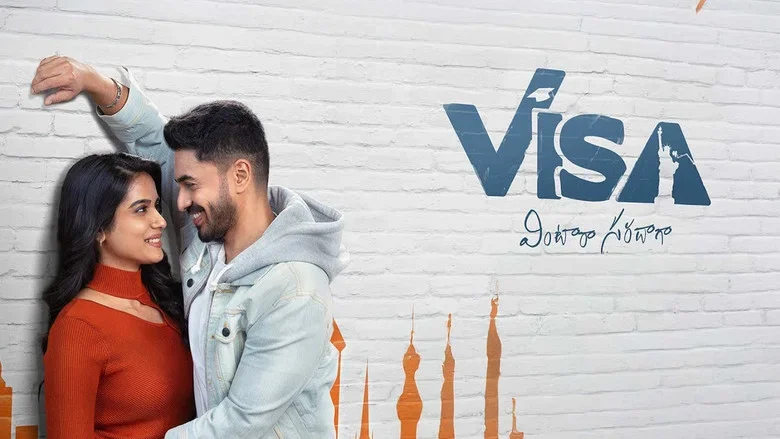
The first voice you hear in VISA – Vintara Saradaga belongs to a radio jockey, narrating the small comedies of an Indian student’s life in America. It’s a smart framing device on paper, a built-in chorus for the diaspora experience, and it’s also the most revealing thing about Udbhav Raghu’s debut: a film that would rather tell you about its world than let you live inside it.
Ashok Galla and Sri Gouri Priya headline a Sithara Entertainments production that promises friendship, romance, and the bureaucratic grind of chasing a future abroad. What it delivers, at least in the promotional material, is a mood board of student-life vignettes waiting for a dramatic engine to arrive.
A Radio Jockey Narrates A Story That Needs A Protagonist
The premise is genuinely fertile: Telugu students navigating academic pressure, homesickness, and the quiet humiliations of life on a student visa. The radio-jockey conceit theoretically gives the film an observational intimacy, a narrator who can find poetry in a grocery run or a group call home.
But narration is a crutch when the protagonist isn’t given enough dramatic interiority to carry a scene on his own. The teaser positions Galla as a commentator on his own life rather than a participant in it, and that distance keeps the audience at arm’s length from the emotional stakes.
Where the film needs a central friction point, a failed exam, a visa crisis, a friendship ruptured by ambition, it offers instead the vague promise of “unexpected complications.” Just as the uneven rural drama in Garividi Lakshmi buried its own fire under atmospheric drift, this one risks mistaking ambience for conflict.
The Chemistry Is Real; The Characters Are Not Yet
The promotional song “Anaga Anaga America” was widely noted for the lead pair’s natural rapport, and that’s the film’s clearest asset. Sri Gouri Priya has an easy, unforced screen presence, she listens with her whole face, tilts her head into a joke before the punchline lands, and makes the romantic sequences feel like memories rather than choreography.
Galla, for his part, is looser here than in his previous outings, trading leading-man stiffness for a scruffier, more observational energy. The physical dynamic between them, shoulder-to-shoulder walking, shared earbuds, the half-second hesitation before a hand reaches out, suggests a director who understands intimacy is built from small gestures rather than grand declarations.
What’s missing is any evidence that these characters have an inner life beyond the romance. The restrained physical exhaustion Anupama Parameswaran brought to Crazy Kalyanam is the kind of grounding this film needs, a performance that acknowledges the body’s memory of stress, not just the face’s response to it.
The Supporting Ensemble Is Present Without Being Defined
The film’s ensemble, Rahul Vijay, Shivathmika Rajashekar, Harsha Chemudu, and a roster of comic regulars, appears in the promotional material as a group rather than as individuals. There’s a lot of group laughter, a lot of crowded apartment scenes, a lot of people reacting to things without the audience knowing what those things mean to them.
This is the risk of the overseas-student genre: the friend group becomes a set of reaction shots rather than a network of distinct relationships. Without a clear sense of who needs what from whom, the ensemble scenes function as filler between romantic beats.
A sharper film would have defined at least one friendship by its specific texture, the friend who’s failing, the friend who’s about to leave, the friend whose family back home is running out of patience. The screenplay, at least as far as the promotional material reveals, keeps its conflicts generic.
Where The Film’s Visual Language Actually Works
The romantic sequences have a clean, unfussy visual grammar, medium shots that keep both performers in frame, natural light that flatters without overwhelming, a color palette that leans warm without becoming saccharine. It’s not showy filmmaking, but it’s confident enough to suggest Udbhav has a real instinct for intimacy.
The problem is that the same restraint doesn’t extend to the film’s emotional architecture. The songs are pleasant, the locations are attractive, and the leads are appealing, but the film’s stakes remain abstract. “Pursuing a future abroad” is a theme, not a plot.
The screenplay’s linear structure follows the students through their daily lives without ever forcing a reckoning. Compare that to the way a film like Thella Kaagitham used its romantic framework to interrogate the emotional cost of its characters’ choices, the difference is that this film seems content to observe rather than press.
Sithara And Fortune Four Are Betting On A Familiar Formula
Sithara Entertainments has built its reputation on youth-oriented entertainers with strong musical components, and this film fits comfortably into that slate. The producer duo of Naga Vamsi and Sai Soujanya know the Telugu student-abroad market well, and the film’s promotional campaign has targeted that audience with precision.
But the theatrical landscape for overseas-campus romances has tightened considerably. Audiences who once turned out for feel-good diaspora stories now expect either sharper comedy or deeper emotional excavation, and the film’s refusal to define its central conflict, no villain, no clear external obstacle, no disclosed climax, makes it a harder sell than its charming leads deserve.
For Ashok Galla, this is a pivotal release. Two previous films have underperformed, and the industry will be watching whether his easy rapport with Sri Gouri Priya can translate into a genuine box-office draw. The early signs suggest a film that will need strong word-of-mouth from the student demographic to sustain beyond opening weekend.
The broader appetite for these intimate, location-specific dramas continues to grow across contemporary Telugu dramas, but that appetite comes with higher expectations for narrative rigor. A film that coasts on atmosphere alone risks being forgotten by the time the next campus romance arrives.
The Ending We Can’t Verify Is The Film’s Biggest Question Mark
No verified source has disclosed how VISA – Vintara Saradaga resolves its characters’ competing goals, whether the lovers stay together, whether the protagonist returns home, whether the film treats America as a destination or a detour. That ambiguity isn’t just a promotional strategy; it’s a structural problem.
A coming-of-age film lives or dies on its final act, on the moment its protagonist chooses who they’re going to be. Without a clear sense of what that choice will cost, the film’s emotional payoff remains hypothetical.
The radio-jockey framing device might turn out to be the key to that resolution, a narrator who finally steps out from behind the microphone and into his own life. Or it might remain a stylistic flourish that never quite earns its place. The theatrical release will decide which.
What’s clear now is that the film’s charms are real but thin: a winning pair of leads, a promising premise, and a director with an eye for intimacy. What remains unproven is whether any of that can cohere into something that lingers after the credits roll.

Recommended for You

Welcome to the Jungle (2026): Akshay Kumar’s Action Comedy Navigates Gang Wars and Narrative Quicksand
The first thirty minutes of Welcome to the Jungle feel like being stuck in a traffic jam with a dozen clowns on…

America America 2 (2026): Nagathihalli’s Seattle Gamble Never Quite Pays Off
Nudi flies into Seattle chasing a work contract and walks straight into the one man she spent years trying to forget. The…

Srinivasa Mangapuram (2026): Jaya Krishna Ghattamaneni’s debut – raw talent trapped in recycled conflict
The first time we see Vasu Babu, he’s already carrying the weight of a romance that will soon be tested by forces…