Vo Ladki (2026): A Wristwatch, A Memory, And The Weight Of Letting Go

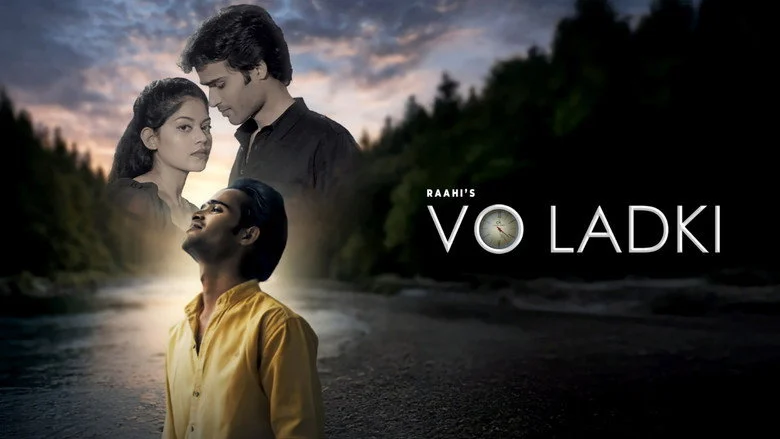
The last meeting arrives with a wristwatch as its only currency. Pathik walks toward Devyani not to reconcile, but to return an object that holds every unresolved hour between them. It is a quiet, almost clinical setup for a romance that refuses to announce itself loudly.
This is not a film about grand gestures. It is about the small, heavy decision to finally hand something back and walk away.
Raahi’s Pathik: Restraint As A Performance Choice
Raahi, credited here as Dharmendra Ahirwar, builds Pathik through introspective silences rather than expressive outbursts. His performance is anchored in the physical act of carrying that wristwatch, a prop that becomes an extension of his character’s emotional paralysis. The role demands a specific kind of stillness, and Raahi commits to it without reaching for melodrama.
The emotional restraint works in the memory-driven scenes, where the past is discussed rather than re-enacted. It is a performance of quiet endurance, though the lack of a wider emotional range leaves Pathik feeling slightly one-note in the middle stretch. The actor holds the frame, but the film rarely asks him to do more than hold it.
The Wristwatch As The Film’s True Antagonist
There is no villain in Vo Ladki, and that is precisely the point. The conflict is not between Pathik and a person, but between Pathik and the memory of a person. The screenplay, credited to Raahi and Shubham Vishwakarma, uses the wristwatch as a narrative hinge, a physical reminder of time that has passed but not been processed.
This object-driven storytelling gives the film a conceptual clarity that many bigger-budget romances lack. The premise is simple: a man decides to move on, but must first confront the symbol of what he is leaving behind.
However, the screenplay’s reliance on this single device limits its momentum. The linear structure, moving toward one final meeting, creates a sense of inevitability that borders on predictability. The film trusts its concept deeply, but it does not always find enough dramatic friction to sustain the journey between the setup and the handover.
Supporting Cast: A Circle Without Defined Edges
Sanit Swami’s Vimal and Pooja Kandare’s Nimmi are listed among the cast, but their roles remain frustratingly undefined in the available narrative. Their presence signals a world beyond the central pair, yet the film’s tight focus on Pathik and Devyani leaves these characters as outlines rather than people. The casting suggests an intention to build a community around the lead, but the execution does not deliver on that promise.
Aditi Lakhpati, Tina Rao, Samar Chourey, Roshan Verma, and Yash Soni fill out the credits, but their contributions are not documented in any accessible critical commentary. This is a film that hinges entirely on its central relationship, and the supporting cast’s lack of footprint in the public conversation reflects how narrowly the narrative is drawn.
A Micro-Budget Premise With A Festival Heart
With an estimated budget of ₹1, 500, 000, according to IMDb, Vo Ladki is a micro-budget production that wears its scale on its sleeve. The film premiered in February 2026 before a limited theatrical release in June, a distribution pattern that signals festival-oriented intentions rather than commercial ambition. This is a film designed for class audiences who appreciate relationship stories told on an intimate canvas.
The absence of a documented critical consensus is itself a data point. This is not a film generating heated debate or polarizing takes; it is a quiet release that asks to be discovered rather than debated. For viewers seeking a conventional antagonist-driven plot or spectacle, this will feel underwhelming. For those who value the craft of a single emotional gesture, the premise holds genuine appeal.
For more on how small-scale Hindi dramas navigate their emotional terrain, browse our Hindi Drama reviews.
I find myself wishing the film had trusted its own silence a little less and pushed Pathik’s internal conflict harder in the second half. The final confrontation with Devyani is the most praised scene in the available summaries, and it is easy to see why, as it is the moment where the wristwatch’s symbolism finally pays off. But the journey to that moment could have used more friction, more obstacles between the decision and the deed.
Vo Ladki is a film that understands the weight of an object in a love story, but it struggles to translate that understanding into sustained dramatic momentum. It is a watch for patient viewers, a story that rewards those willing to sit with unresolved feelings rather than demand immediate resolution. Watch it on OTT or a regular screen, with the expectation of a slow burn, not a blaze.
If you appreciate films that prioritize emotional restraint over narrative velocity, you may find a similar register in Hai Jawani review.
Vo Ladki is a sincere, small-scale romance that earns a 2.5 out of 5 for its conceptual clarity, even as it leaves you wishing the execution had matched the ambition of its central idea.
For another Kannada drama that also places interiority above plot acceleration, consider Your s verdict.

Recommended for You
Oh..! Sukumari (2026): A Rural Comedy That Never Finds Its Rhythm
The opening stretch of Oh..! Sukumari introduces Yadagiri (Thiruveer) as a village innocent whose romantic entanglement with Damini (Aishwarya Rajesh) promises the…
Bhaskara Bharanam (2026): Roopesh Peethambaran Doubles lifts key stretches, not the full runtime
The forced cohabitation premise lands with an almost theatrical bluntness: a father and son who can barely stand each other, now locked…
The India Story (2026): Shreyas Talpade the lifts key stretches, not the full runtime
Talpade plays a man wrestling with a system that has failed him. His face carries the exhaustion of someone who has seen…