Hai Jawani Toh Ishq Hona Hai (2026): A Farce That Runs on Charm, Not Logic

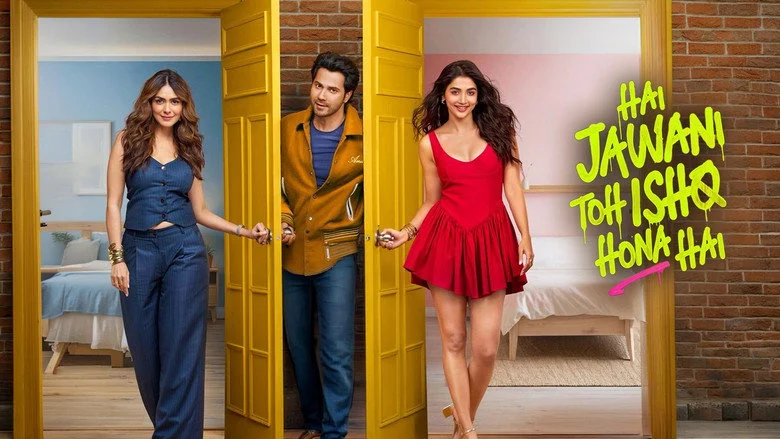
In the opening courtroom scene, Jass sits across from his wife Baani as a judge listens to her complain that her husband wants intimacy “too often”, a setup that announces David Dhawan’s return to the comedy of embarrassment with zero subtlety. The film wants you to laugh at the mess, not question it, and for a while, that bargain almost works.
Varun Dhawan’s Panic Is the Engine That Keeps This Running
Varun Dhawan plays Jass as a man perpetually one step away from being caught, and his performance depends on rapid switches between charm, panic, and outright evasion. His court scenes anchor the film’s comic tempo, letting him oscillate between defensive husband and desperate liar.
The party sequence, where he tells Preet he is “fully single” while his marriage waits back home, is where his timing earns the audience’s patience. He carries the central deception arc so completely that the film’s credibility rests entirely on his ability to sell the lie.

David Dhawan’s Rhythm Still Works, Even When the Script Doesn’t
Dhawan’s direction remains focused on brisk comic timing and ensemble movement, using quick reversals and loud situational escalation to keep energy high. The first half is structured cleanly around setup, the marriage, the second romance, the concealment, and it moves with the confidence of a director who knows exactly what his audience expects.
But the screenplay, co-written by Danish Devgn and Rumi Jaffery, leans on contrivance rather than layered characterization. The coincidence of both women becoming pregnant strains credibility, and the secrecy becomes harder to sustain logically as the runtime stretches past its natural length.
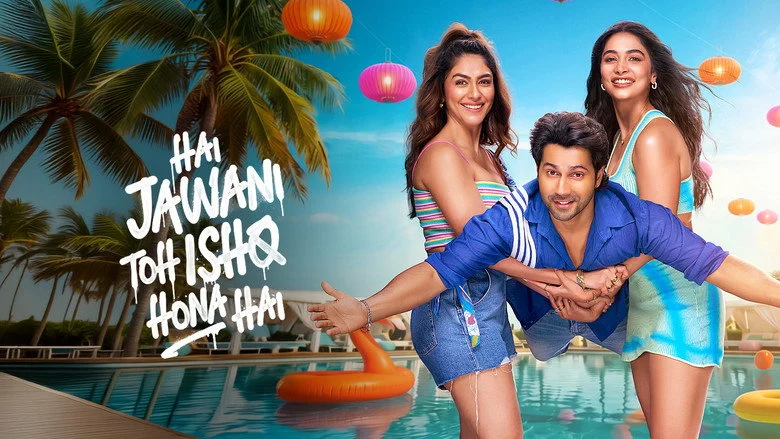
The Farce Works in Bursts, Then Collapses Into Repetition
The film’s genre-core execution is pure farce, mistaken identity, concealment, and rapid reversals drive every complication. The court sequence establishes the premise through conflict-first exposition, while the party scene where Jass lies about being single shows the escalation technique at its most effective.
Romantic tension is secondary to the mechanics of the setup; the humor depends on timing, entrances, and social embarrassment rather than emotional realism. The ensemble keeps the farce moving from one complication to the next, and when it works, it generates intermittent laughs through Dhawan’s comic rhythm.
But the second half compresses everything into chaotic escalation, and the dual-pregnancy reveal leans heavily on coincidence and broad farce. The premise, once established, doesn’t vary enough, it stretches a narrow deception into a 136-minute runtime that often feels longer than it is.
For those who enjoy this brand of mainstream Hindi comedy, there’s plenty more to explore in our Hindi Romance reviews.
Mrunal Thakur and Pooja Hegde Ground the Chaos, Briefly
Mrunal Thakur’s Baani functions as the grounded counterweight to Jass’s chaos, and her court and pregnancy-reveal scenes define the emotional stakes that the farce keeps threatening to flatten. She plays the wronged wife with enough dignity to make the deception feel consequential, even when the script treats it as a setup for jokes.
Pooja Hegde’s Preet is positioned as the second romantic line, but her scenes escalate the farce rather than deepen the relationship. She triggers the central complication with the party lie, yet the film never gives her character enough interiority to make the triangle feel like anything more than a plot device.
Maniesh Paul provides comic support to keep the pace buoyant in ensemble passages, while Chunky Panday functions as part of the farcical apparatus. Jimmy Sheirgill and Mouni Roy add texture to the cast lineup, though neither gets a major character arc in the available material.
A Familiar Setup With a Mixed Verdict From Critics and Audiences
Bollywood Hungama gave the film 3.5/5, noting that “Varun Dhawan & Co deliver laughs in this flawed and at times fun entertainer.” The first week pulled in ₹36.85 crore net domestically, as reported by Hindustan Times citing Sacnilk, with a worldwide total of ₹74.82 crore gross including ₹14.10 crore overseas, a modest performance that trade analysts have called “average” rather than a breakout.
The trailer’s fast-paced setup was praised for clearly explaining the core conflict, and audiences responded positively to Varun Dhawan’s comic energy. But the premise was criticized as old-fashioned and dependent on confusion comedy, with some viewers finding the romance triangle hard to accept because of the deception at its center.
Critics pointed to a flawed plot built on repetition and implausible misunderstandings, with the writing described as uneven once the premise shifts from setup to escalation. The humor, they noted, depends too heavily on broad situations rather than sharp dialogue, a fair charge against a film that never quite earns its emotional beats.
Hai Jawani Toh Ishq Hona Hai is an entertainer that makes audiences smile, as one review put it, but it’s the kind of smile that fades quickly after leaving the theater. If you’re in the mood for undemanding comic chaos with a capable lead, this works fine for a single watch, but don’t expect the sharpness of Dhawan’s better crowd comedies. Varun Dhawan’s energy carries it to a 3/5, best enjoyed with lowered expectations and a willingness to laugh at the absurdity.
For a comedy that handles its deception premise with more discipline, see how Your s review approaches memory and momentum.
Hai Jawani Toh Ishq Hona Hai is a functional farce that never rises above its premise, a 3/5 for fans of the genre, a skip for everyone else. The film’s reliance on charm over craft makes it forgettable, though Jeevan Bheema verdict shows how a similar premise can land harder with sharper writing.

Recommended for You
Apology (2026): A Friend-Search Comedy Caught Between Ambition and Runtime
A gravel road stretches through a nondescript Uttar Pradesh town, three men on a rickety scooter scanning each face they pass, the…
Mister Middle Class (2026): Srikanth carries the stands out while the narrative loses grip
Srikanth is the reason this film is even being discussed. His emotional stretches land with a sincerity that the screenplay never earns,…
Hum Angrezon Ke Zamane Ke Jailor Hai (2026): Asrani’s Nostalgia Play Stumbles on Narrative Clarity
A murder mystery unfolds within the confines of family dispute and criminal escalation, with investigators Dev and Rana tasked to unravel layers…