Accused (2026): Konkona Carries a Film Too Cautious to Fully Commit

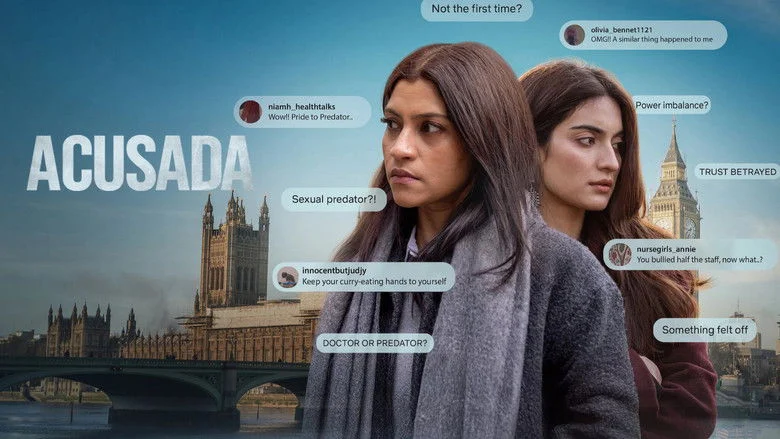
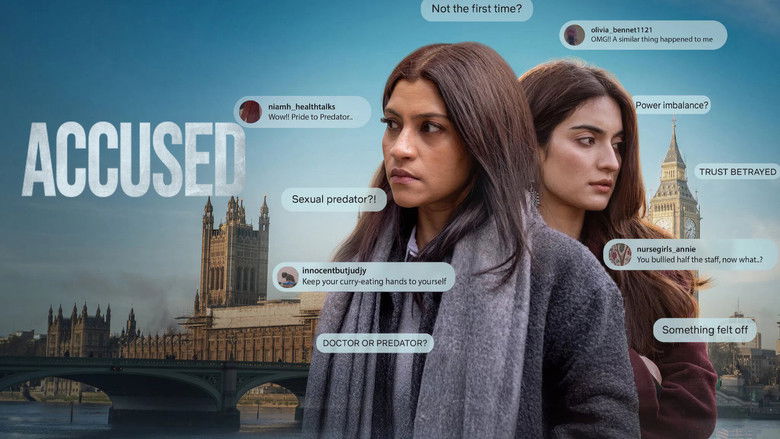
A surgeon stands over an open incision and calls her colleague’s work a bloody disaster, cool, clinical, almost bored in her contempt. That opening scene tells you everything about Dr. Geetika Sen, and also about the kind of film Accused wants to be: sharp, unsparing, morally uncomfortable.
Unfortunately, Anubhuti Kashyap’s psychological thriller delivers on that promise only in fragments, coasting on a genuinely strong central performance while the screenplay repeatedly flinches from the harder edges of its own premise.
Konkona Sen Sharma Is the Only Reason to Stay Seated
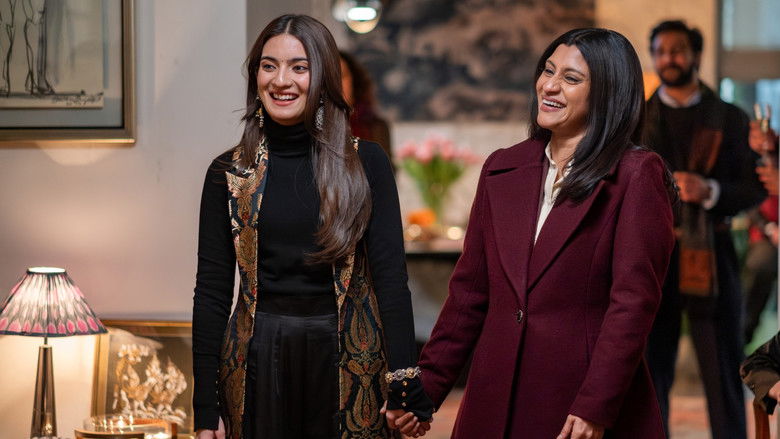
From that surgery-room humiliation to the quietly fractured reconciliation scenes with Meera, Konkona builds Geetika as someone whose armour is almost indistinguishable from her personality. The paranoia that sets in once allegations multiply is rendered with real precision, not melodrama, but slow dread.
What makes this performance genuinely interesting is that Konkona never asks you to sympathise unconditionally. Geetika is guilty of cruelty, even if not of the specific charge. That ambiguity is carried entirely in the performance, rarely in the writing.
Kashyap’s Direction Has a Pulse, But the Screenplay Draws Blood Too Slowly
Kashyap engineers a genuine gear shift in the second half, when Accused pivots from marital drama into an investigation thriller. The IP address tracing sequence, Geetika hacking the hospital server and tracing coordinated allegations to identical source locations, is the film’s most kinetically satisfying stretch.
But the screenplay’s structural flaw is stubborn. The institutional machinery is shown as hopelessly ineffective, which may be realistic but drains the thriller of urgency. Geetika essentially investigates herself because no one else will bother with any conviction.
The antagonist reveal, Dr. Logan, a rival gunning for the same deanship, lands with a predictability that feels almost apologetic. A premise this sharp deserved a more treacherous third act.
If you follow Hindi thrillers that wrestle with institutional power and personal stakes, there is plenty more to explore in Hindi Thriller reviews across the platform.
Pritibha Ranta’s Meera Deserved More Screen Architecture
Pritibha Ranta carries the film’s emotional counterweight as Meera, Geetika’s wife and fellow doctor. The moment she discovers Sophie’s photographs, and quietly decides to hire a private investigator rather than confront Geetika directly, is the film’s most psychologically loaded beat. It says more about eroded trust than any dialogue scene manages to.
The problem is that Ranta is given too little to actually work with. Meera exists largely as a barometer for Geetika’s emotional state, and the queer relationship at the centre of this film is given far too little texture to generate the chemistry the story demands. Rogers Movie Nation put it bluntly: the film has No Guts and No Romance Means No Glory, and on the romantic axis, they are not wrong.
Mashhoor Amrohi and Monica Mahendru Are Wasted in Functional Roles
Mashhoor Amrohi as investigator Jaideep Bhargav is credible but underwritten. He exists to legitimise the investigation procedurally, not to complicate it dramatically. There is no moment where his presence genuinely threatens or surprises Geetika.
Monica Mahendru as Simran, the HR head, is given one pointed character note, she is described as entirely too tolerant of Geetika’s abusive behaviour, but the film never pursues what that tolerance actually costs the institution or Simran herself. I found myself more curious about Simran’s complicity than the screenplay ever bothered to be.
The #MeToo Angle Is Handled With Caution Where It Needed Courage
Accused deserves credit for approaching the false accusation angle within a #MeToo framework. That is still a genuinely difficult narrative lane in Indian cinema, and Kashyap does not sensationalise it.
But the film’s central thematic insight, that truth restores reputation publicly while trust must be rebuilt privately, is articulated more clearly in the plot mechanics than in any emotionally resonant scene. Geetika gets the deanship offered back and declines it. The irony is clean. The feeling is not.
Audience response has been notably warmer toward the queer representation and the investigative second half than toward the film as a whole. That split reaction is telling: the idea of this film is stronger than its execution.
If you are drawn to Hindi OTT dramas where relationships fracture under institutional pressure, the quiet Telugu romance Charitha Kamakshi review handles emotional rebuilding with considerably more delicacy.
Accused is worth a single Netflix sitting for Konkona’s performance and the sharp second-half pivot, both earn your attention. Skip it if you want a thriller that genuinely keeps you off-balance, or a romance that breathes. This is a film that identifies the right questions and then backs carefully away from the most uncomfortable answers.
Accused (2026) is worth watching once for its lead performance alone, but as a psychological thriller it too often settles for procedure over provocation, a 2.5 out of 5 that lands closer to intelligent misfire than to the gutsy drama it clearly aspired to be.
For another 2026 OTT drama that commits more fully to its emotional stakes, Subedaar 2026 verdict shows what conviction looks like when a film refuses to flinch.

Recommended for You

Arulvaan (2026): Arulnithi anchors a sincere but uneven rural drama
There is a scene early in Arulvaan where Arulnithi’s character watches his daughter (Krithika Balasubramanian) trace alphabets on a dusty slate, her…
Jana Nayagan (2026): Vijay s Vetri stands out while the narrative loses grip
C. Joseph Vijay, credited here as Thalapathy, delivers a performance that holds a sprawling 183-minute runtime together. He plays Vetri Kondan, an…

Ottam Thullal (2026): A Rural Family Entertainer Banking on Ensemble Comfort
There is a certain comfort in the familiar rhythm of a Malayalam rural family entertainer, the kind that promises a village square,…