Monkey In A Cage (2026): Kashyap Pins Celebrity Crisis on Bobby Deol’s Controlled Descent


A fading television star blocks his ex-girlfriend’s attempts to reconnect, but her escalating response, a rape accusation, traps him in a corrupt legal system where survival demands more than denial. Sameer Mehra’s world collapses not through a single dramatic act, but through the machinery of accusation, arrest, and institutional rot, each phase tightening the noose with methodical precision.
Anurag Kashyap constructs a thriller where the real antagonist isn’t a person, it’s the system itself. The film premiered at Toronto International Film Festival in September 2025, signaling international reach, before its theatrical arrival in June 2026. What emerges is a character study wrapped in legal suspense, examining how a public figure’s personal unraveling mirrors institutional collapse.
Bobby Deol’s Vulnerability Becomes the Film’s Central Architecture
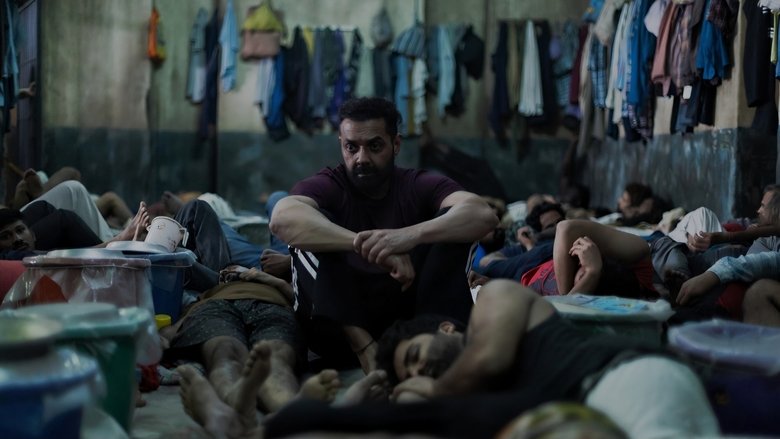
Deol inhabits Sameer as a man whose greatest weakness is his refusal to engage directly with consequences. When Gayatri attempts to return, he simply blocks her, a gesture of avoidance that triggers everything that follows. His performance must navigate the trap between innocence and guilt while the law presumes the latter, requiring him to project controlled panic rather than dramatic outbursts.
The role demands a performer who understands restraint. Deol’s post-comeback work has demonstrated this caliber, but Sameer Mehra pushes deeper into moral ambiguity. He cannot be purely sympathetic because his denial, of responsibility, of engagement, of accountability, generates the very crisis that consumes him. This is actor work built on subtle erosion, not explosion.
Kashyap’s Setup Balances Character Decline With Procedural Tension
The direction establishes suspense through escalation: private conflict becomes public accusation becomes legal warfare. The structure permits both intimate character study and courtroom pressure, two registers most thrillers struggle to hold simultaneously. Kashyap uses the accusation not as a plot twist but as a structural pivot, the moment private shame transforms into institutional jeopardy.
Yet the screenplay, co-written by Sudip Sharma and Abhishek Banerjee, appears linear in its delivery, setup, arrest, legal entanglement, resolution withheld. The weakness lies not in what’s present but in what remains unclear: whether the film earns its moral ambiguity or simply exploits it for suspense. Without the climax, that judgment stays suspended.
Crime Thriller Architecture Built on Institutional Corruption
The film constructs its thriller engine through shifting alliances and legal pressure rather than action setpieces. Sameer’s arrest marks the transition from personal drama into procedural battle, where the system itself becomes the antagonist. This is thriller craft that relies on conversation and consequence rather than spectacle, a register suited to Kashyap’s sensibility.
The accusation functions as the film’s central suspense mechanism because it generates uncertainty not about guilt but about survival. Can Sameer navigate a corrupt system designed to keep him jailed? The question sustains tension through institutional logic rather than external threat. This approach demands precise screenplay work to avoid becoming static or didactic.
The setup allows for exploration of how fame amplifies vulnerability and how public scrutiny distorts private conflict. A fading television star carries less institutional protection than a rising one, making his legal crisis simultaneously personal and systemic. Kashyap’s interest appears focused on this intersection, where individual failure meets institutional indifference.
For cinephiles seeking deeper engagement with Hindi cinema’s darker impulses, Hindi Thriller reviews on this site offer context for how Kashyap positions himself within the genre’s moral landscape.
Sanya Malhotra and Sapna Pabbi Anchor the Emotional Fault Lines
Malhotra as Khushi represents Sameer’s attempt at renewal, the new relationship that becomes collateral damage in his legal collapse. Her presence marks the contrast between a fading past and an impossible future, a woman caught between her partner’s crisis and institutional machinery. The casting suggests emotional ground rather than plot function.
Pabbi as Gayatri operates as the narrative’s central counterforce, not as a conventional antagonist but as the person whose accusation becomes the film’s hinge point. Her decision to accuse Sameer after being blocked carries weight precisely because the film doesn’t frame her as a villain. She is consequence made manifest, the result of avoidance rather than malice.
Festival Premiere Signals Kashyap’s International Positioning, Raises Ethical Stakes
The film’s selection for Toronto International Film Festival indicates that Saffron Magicworks and Kashyap positioned this work for international festival discourse rather than domestic commercial appeal alone. TIFF audiences expect moral complexity and institutional critique, not clear verdicts. The film’s central theme, love, lies, responsibility, and power, gains urgency when examined across cultural contexts.
What remains ambiguous is whether the film interrogates these themes or simply dramatizes them for thriller effect. Festival selection doesn’t guarantee the former, only that the work was deemed worthy of international scrutiny. This is where craft execution becomes decisive: does Kashyap deepen the questions his premise raises, or does he settle for suspense?
Watch this if you’re drawn to crime thrillers that prioritize institutional pressure over physical threat, and if you trust Kashyap to navigate moral ambiguity without collapsing into judgment. Theatrical exhibition is essential, the film’s legal procedural texture requires the screen’s immersion, not streaming convenience.
*Monkey In A Cage* demands viewers comfortable with ambiguous characters and institutional critique, positioning itself as character-driven thriller work rather than populist entertainment; Kashyap earns festival selection through premise alone, but whether the execution sustains that promise remains the central question, 3.5 out of 5.
Sapna Pabbi’s structural role recalls the casting strategy in Mollywood Times review, where supporting actors carry thematic weight beyond surface plot function.
Bobby Deol’s performance under legal pressure mirrors the institutional entrapment explored in Maa Behen verdict, where domestic chaos meets systemic vulnerability.

Recommended for You
Maharaja Hostel (2026): Horror-comedy held together by its cast’s energy
The teaser opens on a rundown hostel with peeling paint and flickering lights, a visual shorthand for the horrors to come. Three…

Thella Kaagitham (2026): Harsh Roshan Leads A Tender 2000s Romance That Keeps Its Biggest Scene Off-Screen
The most discussed scene in Thella Kaagitham never appears in the film. Weeks before its 2 October 2026 release, an intimate sequence…
Magudam (2026): Vishal s Crown lifts key stretches, not the full runtime
The harbour air in Visakhapatnam carries salt, rust, and the memory of a 1965 child-trafficking escape that opens this 185-minute revenge saga.…